What Is Solar System For Preschoolers
What is the Solar System for Preschoolers? A Cosmic Adventure Guide for Little Learners!
Parents, educators, caregivers – ever seen a preschooler’s eyes light up at the mention of planets or stars? That’s the magic of the cosmos! Introducing young children to the solar system isn’t just about teaching facts; it’s about igniting a lifelong spark of curiosity, wonder, and a love for discovery. You want to answer their endless “why” questions about the sky in a way they can actually understand, without overwhelming them. You want to make learning about space an exciting adventure, not a dry lecture. And guess what? It’s easier and more fun than you might think! This guide will help you explain our incredible solar system in simple, engaging ways, complete with activities that will have your little explorers reaching for the stars.
Table of Contents
- What is the Solar System for Preschoolers? A Cosmic Adventure Guide for Little Learners!
- Our Cosmic Neighborhood: What Exactly is the Solar System?
- Why Should Preschoolers Learn About the Solar System? Beyond Just Facts!
- Sparking Curiosity and Wonder
- Building Early Science Literacy
- Encouraging Imagination and Creativity
- Developing Vocabulary and Language Skills
- Meet Our Solar System Family: The Sun and Eight Planets (Simplified)
- Beyond Planets: Other Cool Stuff in Our Solar System for Little Ones
- The Moon: Earth’s Best Friend
- Stars: Twinkling Lights Far Away
- Asteroids & Comets (Very Briefly): Space Rocks and Icy Tails
- Making Learning Fun: Engaging Activities for Preschoolers
- Hands-On Play & Crafts
- Story Time & Songs
- Stargazing (Safe & Simple)
- Digital Adventures (Screen Time in Moderation)
- Common Questions from Little Scientists (and Their Grown-Ups!)
- Conclusion
Our Cosmic Neighborhood: What Exactly is the Solar System?
Imagine your house. Now imagine your street, your town, your country, and then Earth. Our solar system is like our cosmic neighborhood – it’s our home in space! At the very center of this neighborhood is a giant, super hot, bright star we call the Sun. It’s the biggest thing around and gives us all our light and warmth.
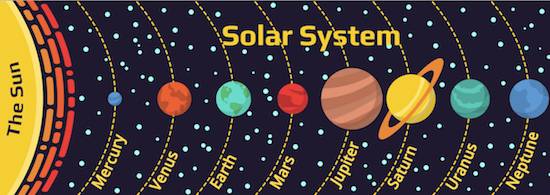
Around the Sun, like a family holding hands and spinning, are eight special objects called planets. These planets don’t just float randomly; they follow a specific path, or orbit, around the Sun. Think of it like cars driving on a racetrack – they all go around the same central point. Along with the planets, there are other cool things orbiting the Sun too, like smaller dwarf planets, our own Moon, and even tiny space rocks called asteroids and comets.
So, in the simplest terms for your preschooler:
Our Solar System is made up of the Sun (our big, bright star) and everything that travels around it, especially the eight planets that are our cosmic neighbors. It’s our special place in the universe!
Why Should Preschoolers Learn About the Solar System? Beyond Just Facts!
You might wonder if preschoolers are too young for such big concepts. The truth is, their natural curiosity makes them perfectly primed for it! Learning about the solar system offers a universe of benefits beyond just knowing planet names.
Sparking Curiosity and Wonder
Preschoolers are full of “why?” questions. Introducing them to the vastness and beauty of space naturally sparks their wonder. They begin to observe the world around them differently – looking up at the sky, noticing the Moon, and asking about the stars. This initial spark can lead to a lifelong love of learning and exploration. It teaches them that there’s always something new and amazing to discover.
Building Early Science Literacy
Understanding the solar system introduces fundamental scientific concepts in a playful way. They learn about gravity (things orbiting), rotation (day and night), different sizes and colors, and the idea of cause and effect (the Sun giving light). These aren’t just isolated facts; they’re foundational building blocks for future scientific understanding. You’re laying the groundwork for critical thinking and observation.
Encouraging Imagination and Creativity
Space is the ultimate playground for the imagination! Talking about aliens, rockets, distant planets, and what it might be like to live somewhere else encourages incredible creative play. Children might draw space scenes, build rocket ships out of boxes, or pretend to be astronauts. This kind of imaginative play is crucial for cognitive development, problem-solving, and emotional expression.
Developing Vocabulary and Language Skills
Think about all the new words preschoolers encounter when learning about space: planet, star, orbit, astronaut, telescope, moon, sun, mercury, venus, earth, mars, jupiter, saturn, uranus, neptune, galaxy! Introducing these terms expands their vocabulary and helps them understand more complex sentences. Discussing these topics also provides opportunities for them to practice expressing their ideas and asking questions, boosting their language and communication skills.
Meet Our Solar System Family: The Sun and Eight Planets (Simplified)
Let’s get to know the main members of our solar system family! Remember, the Sun is the big boss, the heart of everything, and all the planets dance around it. Think of the Sun as a super-bright, super-warm grown-up, and the planets are its children, each with their own unique personality and way of moving.
First, the Sun:
Our Sun is not a planet; it’s a magnificent star! It’s super, super hot and incredibly bright, like a giant yellow ball of fire that gives us all our light and keeps our Earth perfectly warm for us to live. Without the Sun, our planet would be a very dark, frozen, and lonely place. It’s truly the engine and the heart of our entire solar system, pulling everything towards it and keeping it in a beautiful, graceful dance called an orbit.
Now, let’s meet the eight planets, starting closest to the Sun and moving outwards:
- Mercury: This is the smallest planet in our solar system, even smaller than some moons! It’s also incredibly close to the Sun, which means it gets super, super hot during the day. Imagine trying to stand next to a giant campfire – that’s how hot it feels on Mercury! But because it has almost no air to trap the heat, at night it gets super, super cold. Mercury is a speedy little planet, zooming around the Sun faster than any other. Think of it as a tiny, hot race car constantly doing laps around the Sun.
- Venus: Venus is Earth’s close neighbor, and it’s a beautiful, bright planet in our sky. Sometimes you can even see it in the morning or evening without a telescope! However, don’t let its beauty fool you. Venus is covered in thick, yellowish clouds that trap a lot of heat, making it the hottest planet, even hotter than Mercury! It’s like a giant greenhouse, always warm and toasty. It’s also a bit of an oddball because it spins backward compared to most other planets.
- Earth: Hooray, that’s our home! Earth is incredibly special because it’s the only place we know of where plants, animals, and people can live. Why? Because it has just the right amount of water (that’s why it looks so blue from space!) and air for us to breathe. Earth spins around like a top, giving us day and night, and it makes one big trip around the Sun every year, which gives us our seasons. It’s often called the “Blue Planet” because of all the beautiful oceans covering its surface.
- Mars: Mars is known as the “Red Planet” because of its reddish-orange color, which comes from rusty iron in its soil. It’s smaller than Earth and also very dusty. Scientists are super curious about Mars because they want to know if anything can live there or if it ever had life in the past. Brave robots have even been sent to Mars to explore and send back pictures! It has big mountains, deep valleys, and even giant dust storms, just like a wild desert in space.
- Jupiter: Wow, Jupiter is enormous! It’s the biggest planet in our solar system – so big, in fact, that all the other planets could fit inside it! Jupiter is a gas giant, which means it’s made mostly of swirly gases, not solid ground like Earth. You couldn’t land a spaceship on it; you’d just sink into its thick clouds. It has a famous big red spot that’s actually a gigantic storm, much bigger than Earth, that has been raging for hundreds of years!
- Saturn: Saturn is famous for its absolutely beautiful, shiny rings! These rings are not solid, but made of countless tiny bits of ice and rock, some as small as dust grains and others as big as houses, all orbiting around the planet. Imagine millions of sparkly diamonds floating in a cosmic hula hoop! Like Jupiter, Saturn is also a gas giant, and it’s so light that if you could find a bathtub big enough, it would actually float! Its pale yellow and golden colors make it look regal and mysterious.
- Uranus: Uranus is a chilly, blue-green planet far, far away from the Sun. It’s a bit of a sleepyhead because it spins on its side, like a rolling ball instead of a spinning top! This unique tilt means it has really strange seasons, where one pole might be pointed at the Sun for many Earth years. It’s an ice giant, meaning it’s mostly made of icy materials and gas, giving it that cool, serene look.
- Neptune: Neptune is the farthest planet from the Sun, making it super, super cold and incredibly windy. It’s a beautiful deep blue color, similar to the deepest parts of our oceans, because of the gases in its atmosphere. Because it’s so far away, Neptune takes a very, very long time to orbit the Sun – one year on Neptune is almost 165 Earth years! Imagine having to wait that long for your birthday! It’s a mysterious and distant world, shrouded in fast-moving clouds.
Here’s a simple table to help your little one remember our planetary friends:
| Planet Name | Fun Fact for Preschoolers | Special Color |
|---|---|---|
| Mercury | Smallest, super hot, zooms fast! | Gray/Brown |
| Venus | Hottest planet, Earth’s cloudy neighbor. | Yellow/White |
| Earth | Our blue home with water and air! | Blue/Green |
| Mars | The “Red Planet,” scientists want to visit! | Red/Orange |
| Jupiter | The biggest planet, has a giant red spot storm! | Orange/Brown stripes |
| Saturn | Has beautiful, icy rings! | Pale Yellow/Gold |
| Uranus | A cold, blue-green planet that rolls on its side. | Light Blue/Green |
| Neptune | Farthest, super cold, deep blue. | Deep Blue |
Beyond Planets: Other Cool Stuff in Our Solar System for Little Ones
Our solar system isn’t just about the Sun and planets. There are other fascinating objects that you can introduce to your preschooler, especially those visible from Earth!
The Moon: Earth’s Best Friend
The Moon is probably the easiest space object for preschoolers to observe! It’s Earth’s natural satellite, which means it orbits around our planet, just like the Earth orbits the Sun.

- What to tell them: “See that big, round light in the night sky? That’s our Moon! Sometimes it looks like a full circle, and sometimes it looks like a banana or a slice. It doesn’t make its own light; it reflects the Sun’s light, like a giant mirror in space!”
- Fun facts: Astronauts have walked on the Moon! It’s covered in craters, which are like big holes from space rocks hitting it a long, long time ago.
Stars: Twinkling Lights Far Away
Beyond our Sun, there are countless other stars!
- What to tell them: “Those tiny, twinkling lights you see at night? Those are stars! They are actually giant, hot balls of gas, just like our Sun, but they are so, so far away that they look like tiny sparkles to us. They give off their own light.”
- Distinguishing from planets: Planets look like steady points of light, while stars tend to twinkle. This can be a fun observation activity.
Asteroids & Comets (Very Briefly): Space Rocks and Icy Tails
For preschoolers, you can keep these concepts very simple:
- Asteroids: “Imagine big, bumpy space rocks floating around! Those are asteroids.”
- Comets: “Comets are like dirty snowballs with long, beautiful tails made of ice and dust. They fly through space!”
These are less crucial for initial learning but can add to the wonder of the “space neighborhood.”
Making Learning Fun: Engaging Activities for Preschoolers
Learning about the solar system doesn’t have to be limited to books or screens. The best way for preschoolers to learn is through hands-on play, sensory experiences, and creative expression.
Hands-On Play & Crafts
Engaging with the solar system through touch and creation is one of the best ways for preschoolers to solidify their understanding and make learning joyful.
- Model Making: Gather supplies like Play-Doh, clay, or even paper mache. Encourage your child to create miniature planets. You can guide them by discussing colors – “Which one is red like Mars?” or “Which one needs rings like Saturn?” Don’t worry about perfect perfect scale; focus on recognizing unique features. Once dry, you can string them up to create a simple solar system mobile, letting them “orbit” around a painted yellow ball representing the Sun. This activity helps with fine motor skills and creative problem-solving.
- Planet Painting: Provide round paper plates (different sizes if you have them) and a variety of paints. Talk about the distinct color of each planet as your child paints. For Saturn, adding glitter glue or actual glitter for its famous rings can be a sparkling delight! For Earth, they can use blue and green to represent water and land. This visual association helps immensely with recall.
- Sensory Bins: Create a “space bin” by filling a large container with black beans, dark-colored rice, or even shredded black paper (for the void of space). Add small plastic planet toys, sparkly pom-poms or beads (for stars), and maybe some small toy astronauts, rockets, or alien figures. Children can dig, pour, and explore, making up their own space adventures while learning about the different elements. This is fantastic for sensory development and imaginative play.
- “Orbit” Game: This is a fantastic way to understand how planets move. Have your child be a “planet” and you be the “Sun” standing in the middle. Ask them to walk or run in a circle around you, demonstrating an orbit. You can add other “planets” (siblings, friends, or even stuffed animals) to show how different planets have different paths and speeds. For older preschoolers, you can introduce the concept of “spinning” (rotation) while they “orbit.”
- Galaxy Jar Craft: Using a clear jar, cotton balls, water, glitter, and a few drops of food coloring, you can create a beautiful “galaxy in a jar.” Layer the cotton, add colored water, and sprinkle glitter. This simple craft visually represents the vastness and sparkle of space in an enchanting way.
Story Time & Songs
Narrative and rhythm are powerful tools for preschool learning.
- Picture Books: Invest in a few high-quality, age-appropriate picture books about space and the solar system. Look for ones with vibrant illustrations, simple text, and engaging characters or stories. Authors often simplify complex ideas into relatable adventures. Reading together is a fantastic bonding experience and helps build early literacy skills. Examples might include books about friendly aliens exploring Earth or a journey through the planets.
- Simple Songs & Rhymes: Adapt familiar tunes (e.g., “Twinkle, Twinkle Little Star” to “Spinning, Spinning Little Planet”) or search online for specific solar system songs designed for young children. Many educational YouTube channels offer catchy space songs. Repetition helps with memory, vocabulary retention, and phonological awareness. You can even make up your own simple rhymes about each planet.
- Storytelling: Unleash your inner storyteller! Invent your own tales about an astronaut visiting different planets, or a friendly alien getting lost in space and trying to find their way home. Encourage your child to add details to the story, fostering their creativity and verbal expression. “What color is the alien’s spaceship?” “What funny food did they eat on Mars?”
Stargazing (Safe & Simple)
Connecting abstract concepts to real-world observations is vital.
- Moon Watching: On a clear night, bundle up and step outside with your preschooler to look at the Moon. Talk about its different shapes (phases) – “Tonight it looks like a banana! Last week it was a big round cookie!” Discuss how it seems to follow you as you move. If you have binoculars, a safe, supervised peek can reveal amazing details like craters and shadows.
- Identifying Bright Stars: Point out any very bright stars or even visible planets like Venus or Jupiter (if visible in your sky). Emphasize that these are “real stars” or “real planets,” not just dots of light. Talk about how far away they are.
- Constellation Stories: If you live somewhere with minimal light pollution, introduce very simple, recognizable constellations like the Big Dipper as “dot-to-dot” pictures in the sky. You can make up your own simple stories about the shapes you see, encouraging their pattern recognition and imagination.
Digital Adventures (Screen Time in Moderation)
While hands-on is best, technology can supplement learning effectively when used thoughtfully.
- Age-Appropriate Apps & Videos: Explore educational apps designed for preschoolers that feature the solar system. Look for interactive ones that allow children to tap on planets to hear their names or watch simple animations. Websites like NASA Space Place for Kids offer fantastic, free, age-appropriate videos and articles that can visually enhance their learning. Always preview content to ensure it’s suitable and engaging for their age.
- Virtual Field Trips: Some children’s museums or science centers offer simple virtual tours or interactive online exhibits that can give a sense of being in space or exploring a planetarium. These can be a fun way to experience “space” from the comfort of home.
Common Questions from Little Scientists (and Their Grown-Ups!)
Preschoolers are natural question-askers. Here are some common questions they might have, and simple ways to answer them:

- “Can we go to the Moon/Mars?” “Yes, people have been to the Moon! And scientists are working very hard to send people to Mars in the future. It’s a very long trip!”
- “What do astronauts do?” “Astronauts are brave explorers who travel into space! They live on space stations, fix things outside our Earth, and learn new things about the planets and stars.”
- “Is space really dark?” “Yes, when you’re far away from a star like our Sun, space can be very dark. But the stars and planets still shine brightly!”
- “Are there aliens?” “That’s a fun question! We don’t know for sure if there are other living things in space, but scientists are always looking and hoping to find out!” This encourages scientific inquiry without making definitive claims.
- “Why can’t we see the stars in the daytime?” “The Sun is so bright during the day that its light makes it hard for us to see the much dimmer lights of the other stars. They are still there, though!”
Remember to encourage all their questions, even if you don’t have all the answers. The act of asking and exploring together is key!
Conclusion
Introducing the solar system to preschoolers is truly a cosmic adventure waiting to happen. It’s not about memorizing facts, but about fostering a deep sense of wonder, curiosity, and a love for learning. By using simple language, relatable analogies, and engaging hands-on activities, you can transform complex space concepts into magical discoveries for your little explorer. So go ahead, look up at the sky tonight with your preschooler, point out the Moon, and watch their imagination soar. Who knows? You might just be sparking the next generation of astronauts, astronomers, or simply, lifelong lovers of our incredible universe. Keep exploring, keep asking, and keep dreaming big – just like the universe itself!
Frequently Asked Questions
What is the solar system in simple terms for a preschooler?
The solar system is our cosmic neighborhood! It’s made up of the Sun (our giant, super bright star) and everything that travels around it, especially the eight planets, including our home, Earth. Think of it as a big family in space, all dancing around the Sun.
Which are the eight planets in our solar system?
The eight planets, starting closest to the Sun, are Mercury, Venus, Earth, Mars, Jupiter, Saturn, Uranus, and Neptune. Each one is unique, with its own special color and features, like Saturn’s beautiful rings or Jupiter’s giant red spot!
Why is it important for preschoolers to learn about space?
Learning about space sparks their natural curiosity, builds early science skills, boosts their imagination, and helps them learn new words. It teaches them to wonder about the world beyond our planet and encourages a love for discovery.
What’s the difference between a star and a planet for a young child?
The Sun is a star, and it’s a giant, super-hot ball of light that gives off its own glow. Planets, like Earth, don’t make their own light; they reflect the Sun’s light and orbit around a star. Stars are like giant light bulbs, and planets are like big balls that go around them.
What are some fun activities to teach preschoolers about the solar system?
You can make planet models with Play-Doh or paper mache, paint planets on paper plates, create a space-themed sensory bin, play an ‘orbit’ game where your child circles you (the Sun), read engaging picture books, or sing simple space songs. Stargazing at the Moon is also a magical experience!
Do aliens live on other planets?
That’s a fun question that scientists are still trying to answer! Right now, we don’t know for sure if there are other living things in space. It’s a big mystery, and it’s exciting to imagine what might be out there!


Post Comment