What Is The Best Solar Inverter Brand
What Is The Best Solar Inverter Brand? Your Definitive Guide to Powering Your Home
So, you’re diving into solar. Smart move! But then you hit a wall: the inverter. You see names like Enphase, SolarEdge, SMA, and suddenly you’re wondering, “What in the world is the *best solar inverter brand for my home?”
Table of Contents
- What Is The Best Solar Inverter Brand? Your Definitive Guide to Powering Your Home
- Understanding Solar Inverters: The Brains Behind Your Solar System
- Why Your Inverter Choice Matters More Than You Think
- The Core Types of Solar Inverters: Micro vs. String vs. Hybrid
- String Inverters: The Traditional Workhorse
- Microinverters: Precision Power at the Panel Level
- Power Optimizers (MLPEs): Bridging the Gap (SolarEdge Model)
- Hybrid Inverters: Ready for Battery Storage
- The Best Solar Inverter Brands in 2024-2025: Top Contenders & Why
- Enphase: The Microinverter Leader
- SolarEdge: Optimized String Performance
- SMA: German Engineering & Robust Reliability
- Fronius: Smart & Durable String Inverters
- Sungrow: High-Efficiency & Value (Especially for Larger Systems)
- Huawei: Tech Giant with Smart Solutions
- Tesla: Seamless Integration with Powerwall
- Sol-Ark: Versatile Hybrid & Off-Grid Master
- In-Depth Comparison: Key Factors for Choosing Your Solar Inverter
- Efficiency Ratings: More Power from Your Panels
- Warranty & Reliability: Long-Term Peace of Mind
- Monitoring & Smart Features: Keeping an Eye on Your Energy
- Compatibility with Battery Storage: Future-Proofing Your System
- Customer Support & Installer Network: When Things Go Wrong
- Price & Value: Balancing Cost and Performance
- How to Choose the BEST Solar Inverter for YOUR Home (Actionable Steps)
- Step 1: Assess Your Roof & Sunlight Exposure
- Step 2: Determine Your Energy Goals (Grid-Tied, Battery Backup, Off-Grid)
- Step 3: Understand Your Budget
- Step 4: Consult with Certified Installers (Get Multiple Quotes!)
- Step 5: Prioritize Key Features (e.g., monitoring, expandability)
- The Future of Solar Inverters: What’s Next?
- The Bottom Line: Making an Informed Inverter Decision
It’s a crucial question, and honestly, it’s one of the most impactful decisions you’ll make for your solar system. The inverter is the brain of your solar setup, converting the raw power from your panels into usable electricity for your home. Get it wrong, and you could be leaving efficiency, reliability, and even future expandability on the table.
I’m here to cut through the noise. Having seen countless installations and worked with various technologies, I can tell you there isn’t one single “best” inverter for everyone. It’s about finding the best fit for your specific needs, roof, budget, and future energy goals. But there are certainly top contenders that consistently deliver.
Key Takeaways:
- No Single “Best”: The ideal inverter depends on your roof, shading, budget, and energy goals.
- Main Types: String, Microinverters, and Hybrid are the primary options, each with distinct advantages.
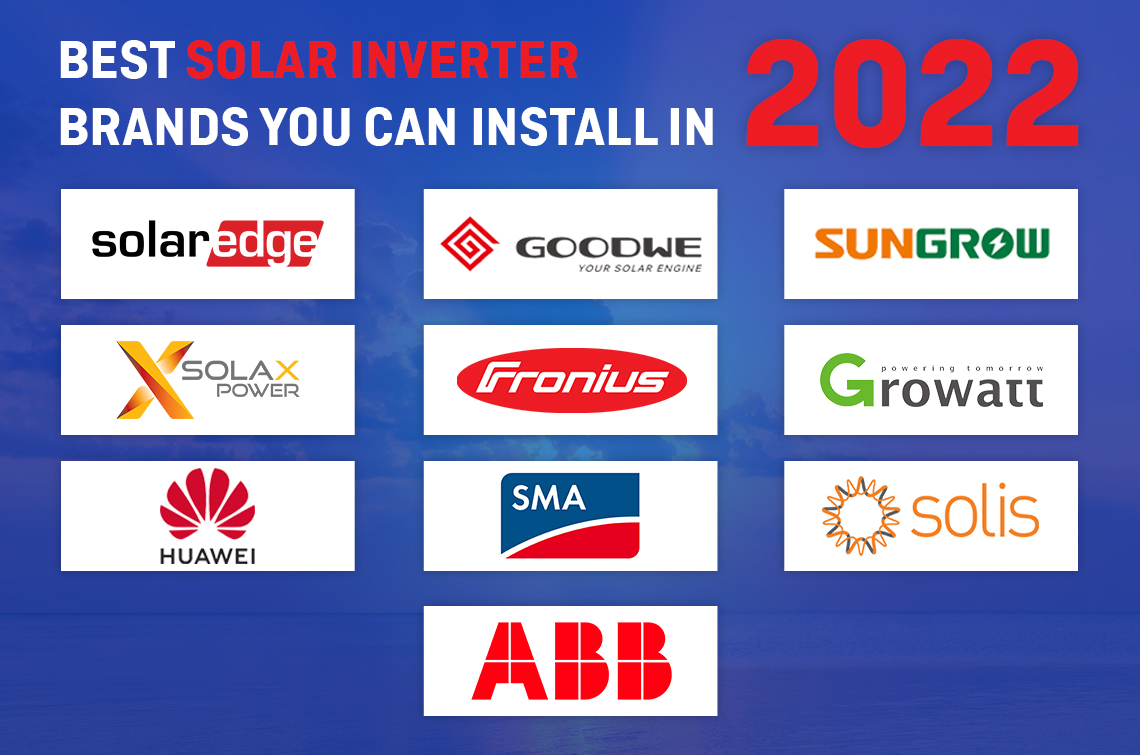
- Top Brands: Enphase (microinverters), SolarEdge (optimized string), SMA (robust string), Fronius (smart string), Sungrow (value), Huawei (tech-forward), Tesla (ecosystem), and Sol-Ark (hybrid/off-grid) are market leaders.
- Factors to Consider: Efficiency, warranty, monitoring, battery compatibility, and installer support are paramount.
Understanding Solar Inverters: The Brains Behind Your Solar System
Let’s get foundational for a moment. What does a solar inverter actually do? Your solar panels produce Direct Current (DC) electricity – the same kind of power that comes from a battery. Your home, however, runs on Alternating Current (AC) electricity. The solar inverter’s job is to convert that DC power into usable AC power.
But it’s more than just a converter. A modern inverter also:
- Optimizes Power Production: It constantly seeks the maximum power point from your panels.
- Monitors Performance: It provides data on how much electricity your system is generating.
- Ensures Safety: It shuts down when the grid goes down (a critical safety feature for utility workers).
- Manages Grid Interaction: It communicates with the utility grid, ensuring seamless integration.
Why Your Inverter Choice Matters More Than You Think
Choosing the right inverter isn’t just about getting power from DC to AC. It impacts:
- System Efficiency: A good inverter minimizes energy loss during conversion, meaning more usable power for your home.
- Reliability & Longevity: Inverters are often the hardest working component in a solar system. A reliable brand means fewer headaches and less downtime.
- Monitoring & Control: Advanced inverters offer detailed monitoring, allowing you to track performance, diagnose issues, and even manage energy usage.
- Scalability & Future-Proofing: If you plan to add a battery storage system or expand your solar array later, your inverter choice now can make that process smooth or incredibly difficult.
- Safety Features: Modern inverters come with rapid shutdown capabilities and other safety protocols essential for homeowner peace of mind and regulatory compliance.
The Core Types of Solar Inverters: Micro vs. String vs. Hybrid
Before we dive into specific brands, you need to understand the fundamental types of inverters. This is where most of the decision-making begins.
String Inverters: The Traditional Workhorse
This is the most common and often the most cost-effective type of inverter. Panels are wired together in a “string,” and all the DC power from that string flows to one central inverter, usually mounted on a wall in your garage or utility room. The inverter then converts the DC power for the entire string into AC power.
Pros:
- Cost-Effective: Generally the cheapest option upfront.
- Simpler Installation: Fewer components means potentially faster installation.
- Easy Troubleshooting: All electronics are in one accessible place.
Cons:
- Shade Vulnerability: If even one panel in a string is shaded, it can reduce the output of all panels in that string. This is like a string of Christmas lights – one goes out, they all dim.
- Less Panel-Level Monitoring: You typically see the overall string performance, not individual panel data.
- Shorter Warranties: Often 5-12 years, though some go up to 20.
Ideal Scenarios:

- Roofs with minimal or no shading.
- Budgets that prioritize upfront cost savings.
- Homeowners who don’t need granular panel-level monitoring.
Microinverters: Precision Power at the Panel Level
Unlike string inverters, microinverters are installed directly underneath or on each individual solar panel. Each panel gets its own small inverter, converting DC to AC right there on the roof. This means each panel operates independently.
Pros:
- Excellent Shade Tolerance: Shading on one panel won’t affect the output of others. Each panel maximizes its own production.
- Panel-Level Monitoring: You can see the performance of every single panel.
- Easier Expansion: Adding more panels later is simpler, as each is independent.
- Longer Warranties: Typically 20-25 years, matching panel warranties.
- Enhanced Safety: DC wiring is limited to the panel, with AC running through the rest of the system, reducing high-voltage DC risks.
Cons:
- Higher Upfront Cost: More components mean a higher initial investment.
- Rooftop Installation: Troubleshooting requires roof access.
Ideal Scenarios:
- Roofs with varying levels of shade throughout the day.
- Complex rooflines with multiple orientations.
- Homeowners who want maximum power production and detailed monitoring.
Power Optimizers (MLPEs): Bridging the Gap (SolarEdge Model)
Power optimizers are a middle-ground solution, most famously pioneered by SolarEdge. They are small devices installed on each panel (similar to microinverters) but they don’t convert DC to AC. Instead, they condition the DC power and send it to a single, central string inverter. This allows for panel-level optimization while keeping the bulk of the electronics in an accessible location.
Pros:
- Excellent Shade Tolerance: Like microinverters, optimizers ensure each panel performs independently.
- Panel-Level Monitoring: You get granular data.
- Centralized Inverter: Major electronic components are easily accessible.
- Longer Warranties: Optimizers often have 25-year warranties, while the central inverter has a standard string inverter warranty (typically 12 years).
Cons:
- Higher Cost Than Basic String: More expensive than a simple string inverter setup.
- Proprietary Systems: Often locked into specific brands (e.g., SolarEdge optimizers only work with SolarEdge inverters).
Ideal Scenarios:
- Roofs with some shading where you still want panel-level optimization.
- Homeowners who want the benefits of microinverters with the ease of a single central inverter.
Hybrid Inverters: Ready for Battery Storage
Hybrid inverters combine the functions of a traditional solar inverter and a battery inverter into one unit. This means they can manage power flow from solar panels, to the home, to the grid, and to a battery storage system, all from a single device. They are essential if you plan on adding a home battery now or in the future.
Pros:
- Battery Integration: Designed for seamless connection with battery storage.
- Streamlined System: Often reduces the number of components needed for solar-plus-storage.
- Grid Independence: Enables self-consumption and backup power during outages.
Cons:
- Higher Cost: More advanced technology comes at a higher price point.
- Complexity: More features can mean a slightly more complex installation/setup.
Ideal Scenarios:
- Homeowners planning to install a battery storage system now or in the future.
- Those seeking energy independence, backup power, or time-of-use optimization.
The Best Solar Inverter Brands in 2024-2025: Top Contenders & Why
Now for the names you’ve been waiting for! Remember, there’s no universally “best” brand. It’s about finding the right fit. Here are the leading players in the U.S. market and what makes them stand out:

Enphase: The Microinverter Leader
If you’re considering microinverters, Enphase is the undisputed champion. They practically invented the modern microinverter and continue to innovate with their IQ series. Their latest IQ8 microinverters are a game-changer, capable of forming a microgrid even during a power outage without a battery (though a battery greatly enhances this capability).
- Key Strengths: Unmatched reliability, panel-level optimization, superior shade performance, excellent monitoring, long warranties (25 years), rapid shutdown compliance.
- Ideal For: Complex roofs, shaded areas, homeowners prioritizing maximum individual panel production, safety, and detailed monitoring, or those wanting to easily add battery storage with their Enphase IQ Battery.
- Considerations: Higher upfront cost.
SolarEdge: Optimized String Performance
SolarEdge pioneered the power optimizer concept, pairing individual optimizers with a central string inverter. Their systems offer many of the benefits of microinverters (panel-level optimization, shade tolerance, monitoring) but with fewer components on the roof and a single, accessible inverter.
- Key Strengths: Excellent for roofs with partial shading, panel-level monitoring, high efficiency, often a good balance of performance and cost, their Energy Hub inverter integrates seamlessly with their batteries and EV chargers.
- Ideal For: Homes with some shading, homeowners who want panel-level optimization without microinverters, those looking for an integrated smart energy ecosystem.
- Considerations: Proprietary system – optimizers and inverter must be SolarEdge.
SMA: German Engineering & Robust Reliability
SMA Solar Technology AG, based in Germany, has been a global leader in string inverters for decades. Known for their robust build quality, high efficiency, and reliability, SMA is a solid choice for straightforward, no-fuss systems.
- Key Strengths: Extremely reliable, high efficiency, excellent customer support, suitable for a wide range of system sizes, strong track record. Their Sunny Boy and Sunny Tripower series are industry benchmarks.
- Ideal For: Unshaded roofs, homeowners prioritizing proven reliability and high performance, larger commercial systems, those who might pair it with a separate battery inverter.
- Considerations: Less granular monitoring than MLPEs, limited shade tolerance compared to microinverters/optimizers.
Fronius: Smart & Durable String Inverters
Another strong contender from Austria, Fronius is renowned for its innovative features, durability, and ease of service. Their inverters often boast advanced cooling systems and user-friendly interfaces.
- Key Strengths: Excellent build quality, innovative features (like SnapINverter mounting for easy service), high efficiency, good monitoring, often integrate well with smart home systems. The Fronius Primo and Symo are popular choices.
- Ideal For: Homeowners seeking a premium string inverter with smart features, unshaded roofs, those who value ease of maintenance.
- Considerations: Similar to SMA regarding shade and monitoring limitations for individual panels.
Sungrow: High-Efficiency & Value (Especially for Larger Systems)
Sungrow, a major Chinese manufacturer, has rapidly grown to become one of the largest inverter suppliers globally. They offer a wide range of reliable and efficient string and hybrid inverters, often at a competitive price point, making them popular for both residential and large-scale projects.
- Key Strengths: High efficiency, competitive pricing, good performance-to-cost ratio, comprehensive product range including hybrid solutions, solid warranties.
- Ideal For: Budget-conscious homeowners, larger residential systems, those looking for good value without compromising too much on quality.
- Considerations: Brand recognition might be lower in the U.S. compared to European or American brands, though their quality is very strong.
Huawei: Tech Giant with Smart Solutions
While known for telecommunications, Huawei has made significant inroads into the solar inverter market with its “FusionSolar” smart PV solutions. They leverage their tech expertise to offer inverters with advanced AI and smart features, often combining optimizers with a central inverter.
- Key Strengths: Advanced digital features, AI-powered optimization, robust build, good efficiency, strong for larger residential or commercial applications.
- Ideal For: Tech-savvy homeowners, larger systems where advanced monitoring and optimization are desired, those considering future smart home integration.
- Considerations: Political concerns have impacted their presence in some markets, though their products are technically strong.
Tesla: Seamless Integration with Powerwall
Tesla’s inverters are primarily designed to work seamlessly within their own ecosystem, specifically with the Powerwall battery storage system and Tesla solar panels (or Solar Roof). If you’re going all-in on Tesla for solar and storage, their inverter is a natural fit.
- Key Strengths: Unmatched ecosystem integration, sleek design, simple monitoring via the Tesla app, ideal for Powerwall owners.
- Ideal For: Homeowners committed to the full Tesla solar and storage ecosystem.
- Considerations: Less flexible if you want to mix and match components from other brands, support is tied to the broader Tesla experience.
Sol-Ark: Versatile Hybrid & Off-Grid Master
Sol-Ark has gained a cult following for its highly versatile hybrid inverters, particularly popular in the off-grid and battery backup markets. Their inverters are renowned for their robust capabilities, ease of installation, and ability to handle multiple power sources (solar, grid, generator) simultaneously.
- Key Strengths: Excellent for battery backup and off-grid scenarios, high surge power, advanced monitoring, supports multiple battery chemistries, incredibly flexible.
- Ideal For: Homeowners prioritizing energy independence, robust battery backup, or off-grid living; those who want a highly customizable and resilient system.
- Considerations: Can be more expensive than basic string inverters, might be overkill for simple grid-tied systems without battery plans.
In-Depth Comparison: Key Factors for Choosing Your Solar Inverter
With those top brands in mind, let’s look at the critical factors you should evaluate for any inverter decision. This table provides a quick reference, but I’ll elaborate on each point below.
| Brand | Primary Type | Efficiency Range (CEC) | Warranty (Inverter/Optimizers) | Monitoring | Key Strengths | Ideal Use Case |
|---|---|---|---|---|---|---|
| Enphase | Microinverter | 97.5% – 97.8% | 25 Years | Panel-level, highly detailed app | Shade performance, reliability, safety, modularity | Shaded roofs, complex layouts, battery integration (IQ Battery) |
| SolarEdge | Optimized String | 97.5% – 99.0% | 12-25 Years (Inverter/Optimizers) | Panel-level, robust online portal | Shade mitigation, high efficiency, integrated ecosystem | Partial shade, homeowners wanting single inverter with panel-level optimization |
| SMA | String / Hybrid | 97.0% – 98.0% | 5-10 Years (standard), up to 20 with extension | System-level, reliable portal | Proven reliability, German engineering, robust for unshaded roofs | Unshaded roofs, reliability focus, larger systems |
| Fronius | String / Hybrid | 97.0% – 98.0% | 5-10 Years (standard), up to 20 with extension | System-level, advanced features, user-friendly app | Durability, smart features, ease of service, European quality | Unshaded roofs, smart home integration, premium string option |
| Sungrow | String / Hybrid | 97.0% – 98.5% | 10-12 Years | System-level, mobile app and web portal | High efficiency, competitive pricing, wide range of solutions | Budget-conscious, larger residential systems, value proposition |
| Huawei | Optimized String / Hybrid | 97.0% – 98.6% | 10-12 Years (inverter), 25 Years (optimizers) | Panel-level (with optimizers), AI-powered monitoring | Advanced tech, AI optimization, strong performance | Tech-savvy users, larger systems, shade mitigation needs |
| Tesla | Hybrid (Ecosystem Specific) | 97.0% – 97.5% | 10-12 Years (tied to Powerwall/Solar Roof) | System-level (via Tesla App) | Seamless integration with Powerwall/Solar Roof, simple user experience | Full Tesla ecosystem homeowners |
| Sol-Ark | Hybrid | 96.0% – 97.0% | 5 Years (standard), extendable | Detailed local and remote monitoring | Off-grid/backup power, versatility, high surge power, robust | Off-grid homes, extensive battery backup, energy independence |
Efficiency Ratings: More Power from Your Panels
An inverter’s efficiency tells you how much of the DC power generated by your panels is successfully converted into usable AC power for your home. A 98% efficient inverter means only 2% of the power is lost during conversion. While differences might seem small (e.g., 97% vs. 98%), over 25 years, that 1% can add up to significant kWh. Look for CEC (California Energy Commission) weighted efficiency ratings for a standardized comparison.
Warranty & Reliability: Long-Term Peace of Mind
Inverters are electronic devices working hard under various conditions. A strong warranty is crucial. Microinverters often come with 25-year warranties, matching your solar panels. String inverters typically offer 5-12 year warranties, often with options to extend. SolarEdge offers 12 years for the inverter and 25 for the optimizers. Always check:
- Warranty Length: How many years are parts and labor covered?
- Company Stability: Is the company likely to be around to honor the warranty? (All brands listed above are well-established).
- Replacement Process: How easy is it to get a replacement if needed?
Monitoring & Smart Features: Keeping an Eye on Your Energy
Modern inverters offer sophisticated monitoring platforms, usually accessible via a web portal or mobile app. This allows you to:
- Track daily, monthly, and annual energy production.
- See real-time energy consumption (if equipped with consumption monitoring).
- Receive alerts for system issues.
- For microinverters and optimized string systems, you’ll see panel-level performance.
Consider how important detailed data is to you. Some homeowners love digging into the numbers; others just want to know their system is working.
Compatibility with Battery Storage: Future-Proofing Your System
Are you planning to add a battery storage system down the line? This is a critical consideration. Hybrid inverters are designed specifically for this, streamlining the process. Some string and microinverter systems also have excellent battery compatibility, often with specific battery brands or their own proprietary solutions (e.g., Enphase IQ Battery, SolarEdge Energy Bank, Tesla Powerwall). Ensure your chosen inverter can integrate with your desired battery solution without requiring an entirely new system.
Customer Support & Installer Network: When Things Go Wrong
Even the best equipment can have issues. The quality of a brand’s customer support and the availability of certified installers in your area are paramount. Reputable brands invest heavily in training and support networks. Ask your potential solar installers about their experience with specific brands and their processes for warranty claims or troubleshooting.
Price & Value: Balancing Cost and Performance
While often a primary driver, focusing solely on the lowest price for an inverter can be a false economy. A cheaper inverter with lower efficiency or a shorter lifespan could cost you more in lost production or replacement costs over the system’s lifetime. Balance the upfront cost with: long-term efficiency, warranty, features, and overall reliability to determine the true value.
How to Choose the BEST Solar Inverter for YOUR Home (Actionable Steps)
Ready to make a decision? Follow these steps to narrow down your options:
Step 1: Assess Your Roof & Sunlight Exposure
- No Shade, Simple Roof: A high-quality string inverter (SMA, Fronius, Sungrow) could be a very efficient and cost-effective choice.
- Partial Shade, Complex Roof: Microinverters (Enphase) or power optimizers (SolarEdge, Huawei) are likely your best bet to maximize production from every panel.
Step 2: Determine Your Energy Goals (Grid-Tied, Battery Backup, Off-Grid)
- Pure Grid-Tied (no battery plans): String inverters, microinverters, or optimized string systems all work well.
- Battery Backup (now or later): Hybrid inverters (Sol-Ark, Sungrow, Fronius Gen24) or systems designed for seamless battery integration (Enphase, SolarEdge, Tesla) are essential.
- Off-Grid: Sol-Ark is a very strong contender here, offering robust off-grid capabilities.
Step 3: Understand Your Budget
- Budget-Friendly: Quality string inverters (Sungrow, Solis) can offer great value.
- Mid-Range: SolarEdge provides an excellent balance of features and cost.
- Premium/Max Performance: Enphase microinverters or top-tier SMA/Fronius string inverters will be at the higher end.
Step 4: Consult with Certified Installers (Get Multiple Quotes!)
This is arguably the most important step. A good installer will assess your specific needs, recommend suitable brands, and explain why* certain options are better for your situation. Don’t settle for just one quote; get at least three. Ask:
- What brands do they prefer and why?
- What is their experience with warranty claims for those brands?
- How do they handle troubleshooting or replacements?
Step 5: Prioritize Key Features (e.g., monitoring, expandability)
What matters most to YOU? Is it maximum production in shade? The longest warranty? The most detailed monitoring? Battery readiness? Rank these features in order of importance, and let that guide your final decision.
The Future of Solar Inverters: What’s Next?
The solar inverter landscape is constantly evolving. We’re seeing more intelligent, integrated systems capable of much more than just DC to AC conversion. Expect to see:
- More AI and Machine Learning: Inverters will become even smarter at optimizing energy flow based on weather forecasts, consumption patterns, and grid conditions.
- Virtual Power Plants (VPPs): Inverters will play a key role in aggregating distributed home solar and battery systems to act as a collective power plant for the grid.
- Enhanced Cybersecurity: As smart homes become more interconnected, inverter security will become even more critical.
- Integrated EV Charging: Inverters that seamlessly manage solar power for home consumption and EV charging are becoming more common.
The Bottom Line: Making an Informed Inverter Decision
Choosing the best solar inverter brand for your home is a significant decision that will impact your system’s performance, reliability, and future flexibility for decades. There’s no one-size-fits-all answer, but by understanding the types, recognizing the top brands, and evaluating the key factors, you’re now equipped to make an incredibly informed choice.
Remember to prioritize your specific needs – your roof’s characteristics, your energy goals, and your budget. Most importantly, partner with a reputable, certified solar installer who can guide you through the process and help you select the inverter that truly is “the best” for you.
Frequently Asked Questions
What’s the main difference between microinverters and string inverters?
Microinverters are installed on each individual solar panel, converting DC to AC at the panel level, which allows for panel-level optimization and better performance in shaded conditions. String inverters collect DC power from multiple panels (a ‘string’) and convert it all at a central location, making them generally more cost-effective but more susceptible to system-wide performance drops from shading on a single panel.
Which solar inverter brand is best for a shaded roof?
For roofs with partial or significant shading, brands offering microinverters (like Enphase) or power optimizers (like SolarEdge or Huawei) are typically the best choice. These technologies allow each panel to operate independently, minimizing the impact of shade on overall system performance.
Are hybrid inverters worth the extra cost?
Hybrid inverters are definitely worth the extra cost if you plan to integrate a battery storage system now or in the future. They streamline the process by combining solar and battery management into one unit, offering benefits like backup power during outages, energy independence, and the ability to optimize energy usage based on time-of-use rates. For simple grid-tied systems with no battery plans, they might be overkill.
How long do solar inverters typically last?
The lifespan of solar inverters varies by type and brand. Microinverters typically come with 25-year warranties, often matching the lifespan of solar panels. String inverters usually have warranties ranging from 5 to 12 years, though some premium brands offer extensions up to 20 years. Their actual lifespan can often exceed their warranty period with proper care.
What’s the importance of an inverter’s efficiency rating?
An inverter’s efficiency rating indicates how much of the DC power from your solar panels is successfully converted into usable AC power for your home. Higher efficiency (e.g., 98% vs. 96%) means less energy is lost during conversion, resulting in more usable electricity for your home over the system’s lifetime. While seemingly small differences, they can add up to significant savings.
Can I mix and match different inverter brands with my solar panels?
Generally, no. Inverter systems are often proprietary. For example, SolarEdge power optimizers only work with SolarEdge inverters. While panels are fairly universal, the inverter (and sometimes optimizers/microinverters) must be compatible within a specific manufacturer’s ecosystem. It’s best to stick to a single brand for your inverter and any associated optimization devices.


Post Comment