Diy Sun Tracker For Solar Panels
DIY Sun Tracker For Solar Panels: Maximize Your Energy, Minimize Your Costs
Ever look at your solar panels in the late afternoon and wish they could just… turn? You’re not alone. Fixed solar panels are great, but they miss out on a significant chunk of the sun’s energy as it moves across the sky. Imagine capturing up to 40% more power from your existing setup. Sounds like a game-changer, right?
Table of Contents
- DIY Sun Tracker For Solar Panels: Maximize Your Energy, Minimize Your Costs
- Why Bother with a DIY Solar Tracker? The Undeniable Benefits
- Increased Energy Yield: More Power from the Same Panels
- Faster ROI: Get Your Money Back Sooner
- Customization & Learning: Your System, Your Way
- Off-Grid Freedom: Enhanced Energy Independence
- Understanding Solar Trackers: Types and Technologies
- Fixed Mounts: The Baseline
- Single-Axis Trackers
- Dual-Axis Trackers
- Active vs. Passive Tracking Systems
- Essential Components for Your DIY Sun Tracker
- 1. Solar Panels: The Payload
- 2. Actuators or Motors: The Muscle
- 3. Control System: The Brain
- 4. Frame & Mounting: The Backbone
- 5. Power Supply: For the Tracker Itself
- 6. Wiring & Protection: Connections and Safety
- Planning Your DIY Sun Tracker: Before You Build
- 1. Site Assessment: Know Your Sun
- 2. Sizing Your Tracker: Weight, Wind, and Space
- 3. Budgeting & Sourcing Parts: New vs. Salvaged
- 4. Safety First: No Compromises
- 5. Choosing Your Tracker Type: Single vs. Dual-Axis Decision
- Step-by-Step Guide: Building a Basic Single-Axis Solar Tracker
- Step 1: Design and Frame Construction
- Step 2: Mounting the Actuator(s)
- Step 3: Panel Mounting
- Step 4: Wiring the Control System
- Step 5: Programming the Microcontroller (Basic Logic)
- Step 6: Testing and Calibration
- Advanced Considerations & Optimizations
- Dual-Axis Complexity: What Changes?
- Weatherproofing & Durability
- Wind Load Management: Stow Positions
- Energy Consumption of the Tracker Itself
- Remote Monitoring & Control: IoT Integration
- Troubleshooting Common DIY Tracker Issues
- The Future is Bright: Evolving Solar Tracker Technology
- Conclusion: Your Power, Your Way
That’s where a DIY sun tracker for solar panels comes in. Forget shelling out thousands for commercial systems; with a bit of ingenuity and some elbow grease, you can build your own. This isn’t just about saving money; it’s about taking control of your energy, understanding your system inside and out, and squeezing every last watt out of that glorious sunshine.
In this definitive guide, I’m going to walk you through everything you need to know: why trackers are worth the effort, the different types you can build, the essential components, a practical build overview, and critical considerations for success. Let’s unlock your solar panel’s true potential.
Why Bother with a DIY Solar Tracker? The Undeniable Benefits
If you’ve already invested in solar, you’re probably thinking, “Is this really worth the extra effort?” Absolutely. Here’s why:
Increased Energy Yield: More Power from the Same Panels
This is the big one. Fixed solar panels are optimized for a specific angle, usually for midday sun or seasonal averages. A sun tracker, however, constantly repositions your panels to face the sun directly, maximizing their exposure throughout the day. This can translate to a significant boost in electricity generation.
| Tracking System | Typical Efficiency Gain (vs. Fixed) | Best Use Case |
|---|---|---|
| Fixed Tilt | Baseline (0%) | Simple, low-cost, space-constrained installations. |
| Single-Axis Tracker | 20% – 30% | Moderate space, good cost-efficiency, significant gains. |
| Dual-Axis Tracker | 30% – 40%+ | Maximum energy harvest, larger installations, off-grid systems. |
Faster ROI: Get Your Money Back Sooner
While a DIY tracker requires an initial investment of time and components, the increased energy production means your solar array will pay for itself faster. For off-grid systems, it can mean the difference between having enough power and constantly managing consumption.
Customization & Learning: Your System, Your Way
Building your own tracker is an incredible learning experience. You’ll gain a deep understanding of mechanics, electronics, and programming. Plus, you can tailor it exactly to your specific needs, panel size, and local environment – something you can’t do with off-the-shelf solutions.
Off-Grid Freedom: Enhanced Energy Independence
For those relying on solar for off-grid living, every watt counts. A tracker significantly boosts your energy autonomy, especially during shorter winter days or periods of higher demand, making your off-grid system more resilient and reliable.
Understanding Solar Trackers: Types and Technologies
Not all trackers are created equal. Knowing the different types will help you decide which one is right for your DIY project.
Fixed Mounts: The Baseline
Most home solar panels are on fixed mounts, meaning they stay in one position. They’re simple, cost-effective, and require no maintenance. However, they’re always a compromise between morning, midday, and afternoon sun.
Single-Axis Trackers
A single-axis tracker follows the sun’s movement along one axis – typically east to west. They’re simpler and less expensive than dual-axis trackers, offering a good balance between cost and performance gain.

- Horizontal Single-Axis: The panels rotate around a horizontal axis. Common for utility-scale projects, but adaptable for DIY.
- Vertical Single-Axis: The panels rotate around a vertical axis. Less common, sometimes used in high-latitude regions.
Dual-Axis Trackers
These are the champions of efficiency. Dual-axis trackers follow the sun both east-to-west (azimuth) and up-and-down (altitude). They constantly position the panels perpendicular to the sun’s rays, maximizing energy harvest. They’re more complex to build and require more components but offer the highest gains.
Active vs. Passive Tracking Systems
How do trackers know where the sun is?
- Active Trackers: These are the most common DIY approach. They use sensors, like Light Dependent Resistors (LDRs), to detect the sun’s intensity. A microcontroller (like an Arduino or Raspberry Pi) processes the sensor data and commands motors or actuators to move the panels towards the brightest spot. This allows for precise, real-time tracking.
- Passive Trackers: Less common for DIY solar panels, these systems often use the expansion and contraction of compressed gas or liquid under solar heating to move the panels. They are simpler mechanically but less precise and harder to scale for larger panels. For this guide, we’ll focus on active tracking as it’s more feasible for DIY solar panel systems.
Essential Components for Your DIY Sun Tracker
Ready to get your hands dirty? Here’s a breakdown of the core components you’ll need, regardless of whether you go single or dual-axis:
1. Solar Panels: The Payload
You’ll obviously need your solar panels! Their size and weight will dictate the strength and type of your tracker’s frame and actuators. Plan for growth if you think you might add more panels later.
2. Actuators or Motors: The Muscle
These are the components that physically move your panels.
- Linear Actuators: These are excellent for solar trackers. They provide push/pull force, are self-locking (preventing wind movement), and come in various stroke lengths and force ratings. You’ll likely need one for a single-axis tracker, and two for a dual-axis system.
- Geared Motors: With a robust gearbox, these can also be used, often combined with a worm drive or lead screw for mechanical advantage.
3. Control System: The Brain
This is where the magic happens, telling the actuators what to do.
- Microcontroller: An Arduino Uno or ESP32/ESP8266 is perfect for beginners. For more complex systems with logging or IoT capabilities, a Raspberry Pi might be considered.
- Light Dependent Resistors (LDRs): These are your ‘eyes’. Usually, you’ll need 2-4 LDRs placed strategically on the tracker to detect differences in light intensity.
- Motor Driver Module: Your microcontroller can’t directly power the actuators. A motor driver (like an L298N or a more robust H-bridge driver for higher currents) acts as an interface, amplifying the signal from the microcontroller to drive the motors.
- Limit Switches: Crucial for safety! These prevent your tracker from over-rotating and damaging itself or the wiring. They tell the microcontroller when the tracker has reached its maximum travel in a given direction.
4. Frame & Mounting: The Backbone
This is the structural support for your panels and the entire tracking mechanism.
- Materials: Steel tubing (square or rectangular) is robust and can be welded. Aluminum is lighter but more expensive and harder for DIY welding. Treated wood can work for smaller, lighter panels but requires more weather protection.
- Bearings/Pivots: Essential for smooth, low-friction movement. Ball bearings or robust pivot points are critical for single-axis rotation. A sturdy rotating base will be needed for dual-axis.
- Foundation: Whether it’s a concrete pier or a securely anchored post, your tracker needs a stable base that can withstand wind and the weight of your panels.
5. Power Supply: For the Tracker Itself
Your tracker needs power to operate its control system and actuators. This can often be a small portion of the power generated by your solar panels, fed through a 12V or 24V battery, or a dedicated small solar panel and battery just for the tracker.
6. Wiring & Protection: Connections and Safety
You’ll need weather-resistant wiring for all connections (sensors, motors, power). Conduits and waterproof enclosures are essential to protect electronics from the elements.
Planning Your DIY Sun Tracker: Before You Build
Don’t just jump in! A little planning goes a long way to avoid headaches later.
1. Site Assessment: Know Your Sun
Walk your property throughout the day, different times of year. Where does the sun rise and set? Are there any significant shading issues from trees or buildings? Understanding the sun’s path is fundamental to designing an effective tracker.
2. Sizing Your Tracker: Weight, Wind, and Space
- Panel Weight: Add up the weight of all your panels. This will determine the force requirements for your actuators and the structural integrity needed for your frame.
- Wind Load: This is often overlooked but critical! Large flat surfaces (like solar panels) catch a lot of wind. Your tracker needs to be able to withstand anticipated wind speeds, especially in an open area. Consider a ‘stow’ position where panels lay flat or vertical during high winds.
- Available Space: Trackers need more space than fixed mounts, especially dual-axis systems, as they will sweep through a wider arc.
3. Budgeting & Sourcing Parts: New vs. Salvaged
DIY means you can control costs. Research prices for new linear actuators, microcontrollers, and steel tubing. Check local surplus stores or online marketplaces for salvaged components. Remember, quality components, especially actuators and structural materials, are an investment in durability and safety.
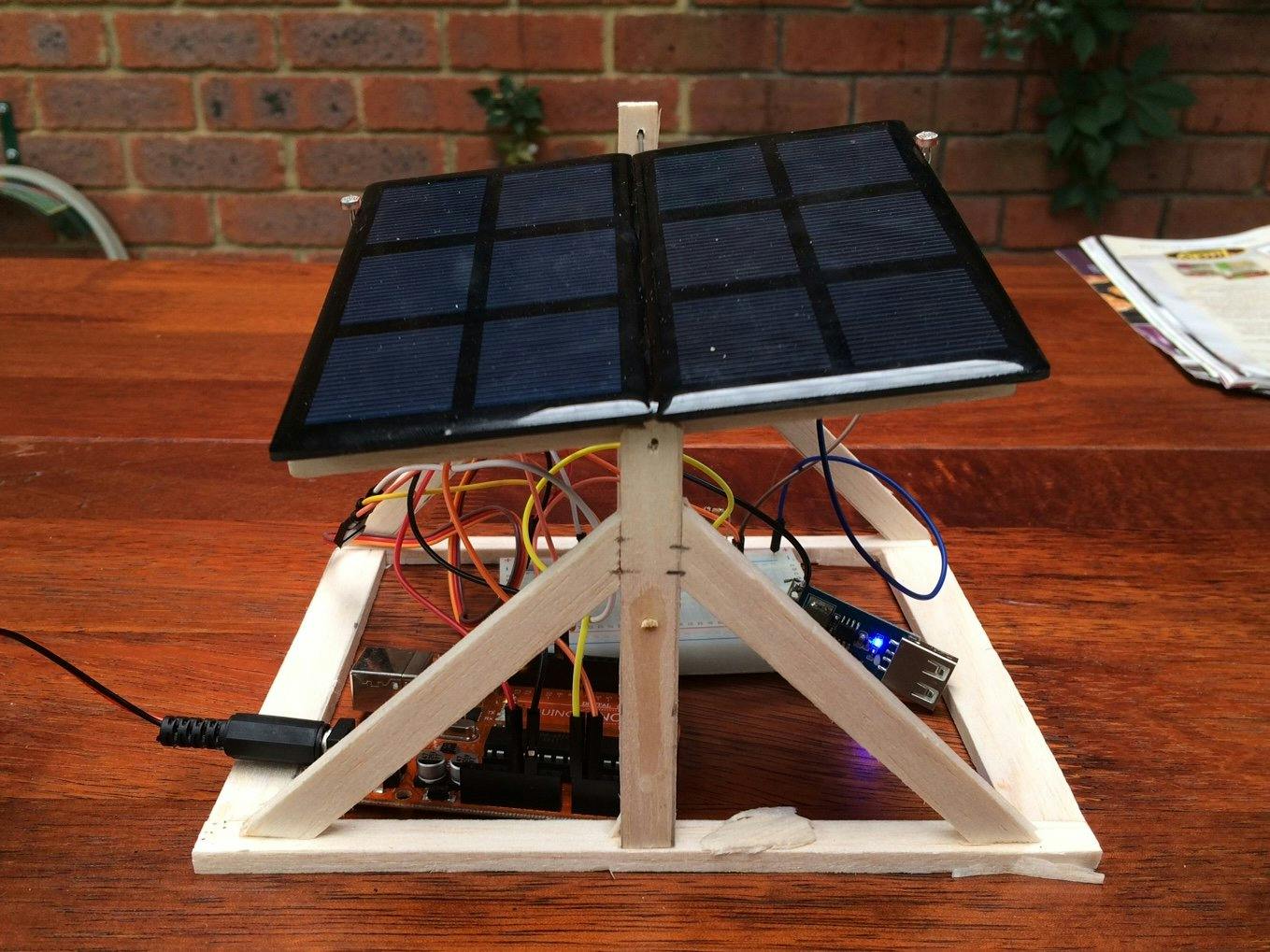
4. Safety First: No Compromises
- Electrical Safety: Always disconnect power before working on wiring. Use proper fuses and circuit breakers.
- Mechanical Safety: Design your frame to be robust. Use limit switches to prevent mechanical damage. Ensure the structure is securely anchored and cannot fall over. Be mindful of pinch points or moving parts during operation.
- Lifting & Assembly: Solar panels can be heavy and awkward. Get help when lifting and mounting.
5. Choosing Your Tracker Type: Single vs. Dual-Axis Decision
Based on your site assessment, budget, and desired efficiency gains, decide if a single-axis or dual-axis system is appropriate. For most DIYers, a robust single-axis tracker is a great starting point, offering significant gains with manageable complexity.
Step-by-Step Guide: Building a Basic Single-Axis Solar Tracker
Let’s outline the general process for constructing an active single-axis tracker. While specific dimensions and code will vary, the principles remain the same.
Step 1: Design and Frame Construction
Start with a detailed drawing. Calculate dimensions, pivot points, and actuator mounting locations. For a single-axis system, you’ll typically have a main base frame and a rotating panel frame. Ensure your pivot points are strong and smooth. If you’re using steel, welding is usually the most robust option. If using aluminum or wood, focus on strong bolted connections and gussets for rigidity.
Step 2: Mounting the Actuator(s)
For a single-axis tracker, one linear actuator is usually sufficient. It needs to be mounted securely between the stationary base and the rotating panel frame. The placement of the actuator is crucial for leverage – too close to the pivot and it needs immense force; too far and its stroke length might be insufficient. Test the range of motion *before* wiring.
Step 3: Panel Mounting
Securely attach your solar panels to the rotating frame. Use weather-resistant bolts and ensure even weight distribution. The panels should be firmly attached so they don’t flex or rattle in the wind.
Step 4: Wiring the Control System
This involves connecting your LDRs, motor driver, limit switches, and power supply to your microcontroller. Use a breadboard for initial testing. Once everything works, move to a more permanent, weather-sealed enclosure with proper terminal blocks.
- LDR Placement: Mount at least two LDRs (preferably with small shade tubes) on opposite sides of a small divider, facing the sky. When the sun is centered, both LDRs should read similar light levels. If the sun moves, one LDR will get more light than the other, creating a voltage difference the microcontroller can detect.
- Motor Driver: Connect the microcontroller’s digital output pins to the motor driver’s input pins, and the motor driver’s output pins to your actuator.
- Limit Switches: Wire these to digital input pins on your microcontroller, typically as normally closed switches that open when activated.
Step 5: Programming the Microcontroller (Basic Logic)
This is where your code tells the tracker what to do. The basic logic for an active single-axis tracker is:
- Read values from LDRs.
- Compare the values.
- If one side is brighter, move the actuator slowly in that direction.
- Stop when the LDR values are roughly equal (meaning the panel is facing the sun).
- Implement a delay to prevent constant micro-adjustments.
- Incorporate logic for limit switches: if a switch is triggered, stop movement in that direction.
- Consider a ‘night mode’ where the tracker resets to an east-facing position, ready for sunrise.
Step 6: Testing and Calibration
With power connected, carefully test your tracker’s movement. Observe its response to light. You’ll likely need to adjust sensitivity in your code (e.g., the threshold for LDR value differences) to achieve smooth, accurate tracking. Fine-tune the limit switch positions. Monitor it for a full day to ensure it follows the sun correctly and resets at night.
Advanced Considerations & Optimizations
Once you’ve got a basic tracker working, you might consider these enhancements:
Dual-Axis Complexity: What Changes?
For dual-axis, you’ll essentially replicate the single-axis mechanism for both azimuth (east-west) and altitude (up-down) movement. This means two actuators, a more complex frame, and slightly more intricate LDR placement (e.g., a 4-LDR cross arrangement) and programming to manage both axes simultaneously.
Weatherproofing & Durability
Your tracker lives outside. All electronics must be in waterproof enclosures (IP65 or better). All mechanical parts should be rust-proofed, painted, or made from corrosion-resistant materials. Regularly check bolts and connections.
Wind Load Management: Stow Positions
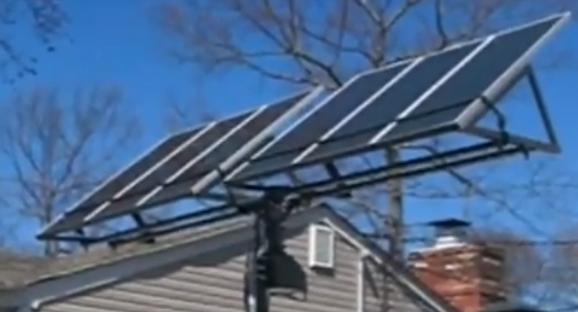
Strong winds can destroy your panels and tracker. Implement a programming routine that senses high winds (e.g., via an anemometer or simply a timer for known stormy periods) and moves the panels to a horizontal or vertical ‘stow’ position to minimize wind resistance.
Energy Consumption of the Tracker Itself
Your tracker consumes some power to operate. Use efficient motors/actuators and design your code to minimize unnecessary movements. The goal is for the energy gains to significantly outweigh the tracker’s parasitic load.
Remote Monitoring & Control: IoT Integration
For the tech-savvy, consider adding Wi-Fi modules (like with ESP32) to your microcontroller. This allows you to monitor the tracker’s status, LDR readings, and even control its movement remotely via a web interface or app.
Troubleshooting Common DIY Tracker Issues
Don’t get discouraged if things don’t work perfectly right away. Here are some common problems and solutions:
- Inaccurate Tracking:
- LDR Placement: Ensure LDRs are precisely mirrored and have small shade tubes to create clear light/dark boundaries.
- Calibration: Adjust the sensitivity threshold in your code. A too-small threshold can cause ‘hunting’ (constant small movements), while a too-large one makes it sluggish.
- Mechanical Binding: Check for friction in pivots or actuators. Ensure everything moves freely.
- Motor/Actuator Failure:
- Underpowered: Is your power supply sufficient for the actuator’s peak current draw?
- Overloaded: Is the actuator struggling to move the panels? The panels might be too heavy or the leverage incorrect.
- Wiring: Check for loose connections or damaged wires.
- Wiring Problems:
- Loose Connections: Re-solder or tighten all terminals.
- Incorrect Polarity: Double-check power and motor connections.
- Short Circuits: Look for exposed wires touching each other or the frame.
- Software Glitches:
- Logic Errors: Review your code step-by-step. Use serial monitor output to debug LDR readings and motor commands.
- Memory Issues: For complex code, ensure your microcontroller has enough memory.
The Future is Bright: Evolving Solar Tracker Technology
The world of solar tracking is constantly innovating. While DIY focuses on proven methods, commercial systems are exploring AI-driven predictive tracking (based on weather forecasts), advanced materials for lighter, stronger frames, and even drone-based inspection. Your DIY project is a stepping stone into this exciting field.
Conclusion: Your Power, Your Way
Building a DIY sun tracker for your solar panels is more than just a project; it’s an investment in greater energy independence, a deeper understanding of renewable technology, and significant savings on your energy bill. It’s challenging, rewarding, and puts you in control of your solar future. So, gather your tools, plan your design, and get ready to harness every last ray of sunshine!
Frequently Asked Questions
How much more energy can I expect from a DIY sun tracker?
A well-designed single-axis tracker can boost your solar panel’s energy output by 20-30% compared to a fixed mount. A dual-axis tracker, while more complex, can achieve even higher gains, often exceeding 30-40% by consistently positioning panels directly facing the sun throughout the day.
Is it difficult to build a DIY solar tracker?
Building a DIY solar tracker is a challenging but rewarding project. It requires basic knowledge of mechanics, electronics, and some programming (often using Arduino). While not for complete beginners, there are many resources and communities to help. Starting with a simpler single-axis design is recommended.
What are the most critical components for a DIY solar tracker?
The most critical components include robust linear actuators or geared motors for movement, a microcontroller (like an Arduino) as the ‘brain’, Light Dependent Resistors (LDRs) as the ‘eyes’ to sense the sun, a motor driver to control the actuators, and a sturdy, weather-resistant frame to hold everything.
What’s the difference between single-axis and dual-axis trackers?
A single-axis tracker follows the sun’s movement along one direction, typically east-to-west, offering good efficiency gains. A dual-axis tracker tracks the sun both horizontally (east-west) and vertically (up-down), providing maximum energy harvest but is more complex and costly to build.
How do I protect my DIY solar tracker from wind and weather?
Protection is crucial. Use weather-resistant materials for the frame (e.g., treated steel, aluminum), waterproof enclosures for all electronics (IP65 rated or better), and consider programming a ‘stow’ position for your panels during high winds. Securely anchor the entire structure to prevent damage.
Can I use a DIY sun tracker with my existing solar panel system?
Yes, absolutely! DIY sun trackers are designed to enhance existing solar panel setups. You’ll need to adapt the frame and mounting to your specific panels, and ensure your control system can handle the weight and power requirements of your array. The panels themselves don’t need modification.


Post Comment