Install Solar Panels Step By Step Pdf
The Definitive Step-by-Step Guide to Installing Solar Panels at Home (USA Edition)
Thinking about joining the solar revolution? You’re not alone. The idea of generating your own clean electricity, slashing utility bills, and reducing your carbon footprint is incredibly appealing. And yes, installing solar panels yourself can be a deeply rewarding project, saving you a significant chunk of change compared to hiring a professional installer.
Table of Contents
- The Definitive Step-by-Step Guide to Installing Solar Panels at Home (USA Edition)
- Is DIY Solar Panel Installation Right for You? (The Honest Truth)
- Assessing Your Skills and Resources
- Weighing the Risks vs. Rewards
- When to Call a Professional (Even for DIYers)
- Phase 1: Planning and Design – Laying the Foundation for Success
- Step 1: Research Local Regulations & Permits (CRITICAL for USA Homeowners)
- Step 2: Assess Your Energy Needs & Site Location
- Step 3: System Sizing and Component Selection
- Phase 2: Permitting and Acquisition – Getting Ready to Build
- Step 4: Obtain Permits and Approvals (Don’t Skip This!)
- Step 5: Source Your Components
- Phase 3: The Installation – Bringing Your Solar Vision to Life
- Step 6: Prioritize Safety Above All Else
- Step 7: Prepare the Site and Roof
- Step 8: Install the Mounting System (Racking)
- Step 9: Mount the Solar Panels
- Step 10: Electrical Wiring – The Heart of Your System
- Step 11: Install Inverter and Other Electrical Components
- Phase 4: Final Steps and Activation – Going Live with Solar
- Step 12: System Inspection and Approval
- Step 13: Interconnection with the Grid (For Grid-Tied Systems)
- Step 14: Monitoring and Maintenance
- Common DIY Solar Installation Pitfalls to Avoid
- Final Thoughts: Your Journey to Energy Independence
But let’s be upfront: this isn’t a weekend DIY project. It’s a serious undertaking that requires careful planning, a solid understanding of electrical systems, adherence to strict safety protocols, and a willingness to navigate local regulations. That’s why I’ve put together this comprehensive, human-first guide. We’re going beyond generic manuals to give you the real-world roadmap for a successful DIY solar panel installation in the USA.
By the end of this guide, you’ll have a clear understanding of every phase, from the initial spark of an idea to flipping the switch and watching your meter spin backward. Let’s get you on the path to energy independence.
Is DIY Solar Panel Installation Right for You? (The Honest Truth)
Before you even think about buying a wrench, let’s talk about whether going solo on solar is genuinely your best move. It’s not for everyone, and there’s no shame in admitting that. This is a big decision with significant implications for your home, your wallet, and your safety.
Assessing Your Skills and Resources
Installing solar panels is a blend of construction, roofing, and electrical work. Do you have experience with:
- Basic carpentry and roofing? You’ll be working on your roof, attaching heavy equipment, and ensuring waterproofing.
- Electrical wiring? This is non-negotiable. You need to understand AC and DC currents, voltage, amperage, grounding, and wiring diagrams. Incorrect wiring can be dangerous and costly.
- Problem-solving? Projects rarely go exactly as planned. You’ll need to troubleshoot and adapt.
- Time and patience? DIY solar is a marathon, not a sprint.
- Budget for tools? You’ll need specialized tools, safety gear, and potentially a lift or scaffolding.
Weighing the Risks vs. Rewards
The primary reward of DIY solar is the significant cost savings. You could save 30-50% on labor costs, potentially tens of thousands of dollars. There’s also immense satisfaction and empowerment in building something so impactful for your home. However, the risks include:
- Safety hazards: Falls from roofs, electric shock, fire risks.
- System underperformance: Incorrect design or installation can lead to less electricity generated than expected.
- Warranty invalidation: Some panel manufacturers might void warranties if not installed by certified professionals.
- Permit and inspection issues: Failing to meet local codes can lead to fines or mandated re-work.
- Time commitment: This could easily be weeks or even months of your life.
When to Call a Professional (Even for DIYers)
Even if you’re tackling most of the project yourself, there are critical junctures where hiring a professional is wise, if not legally required:
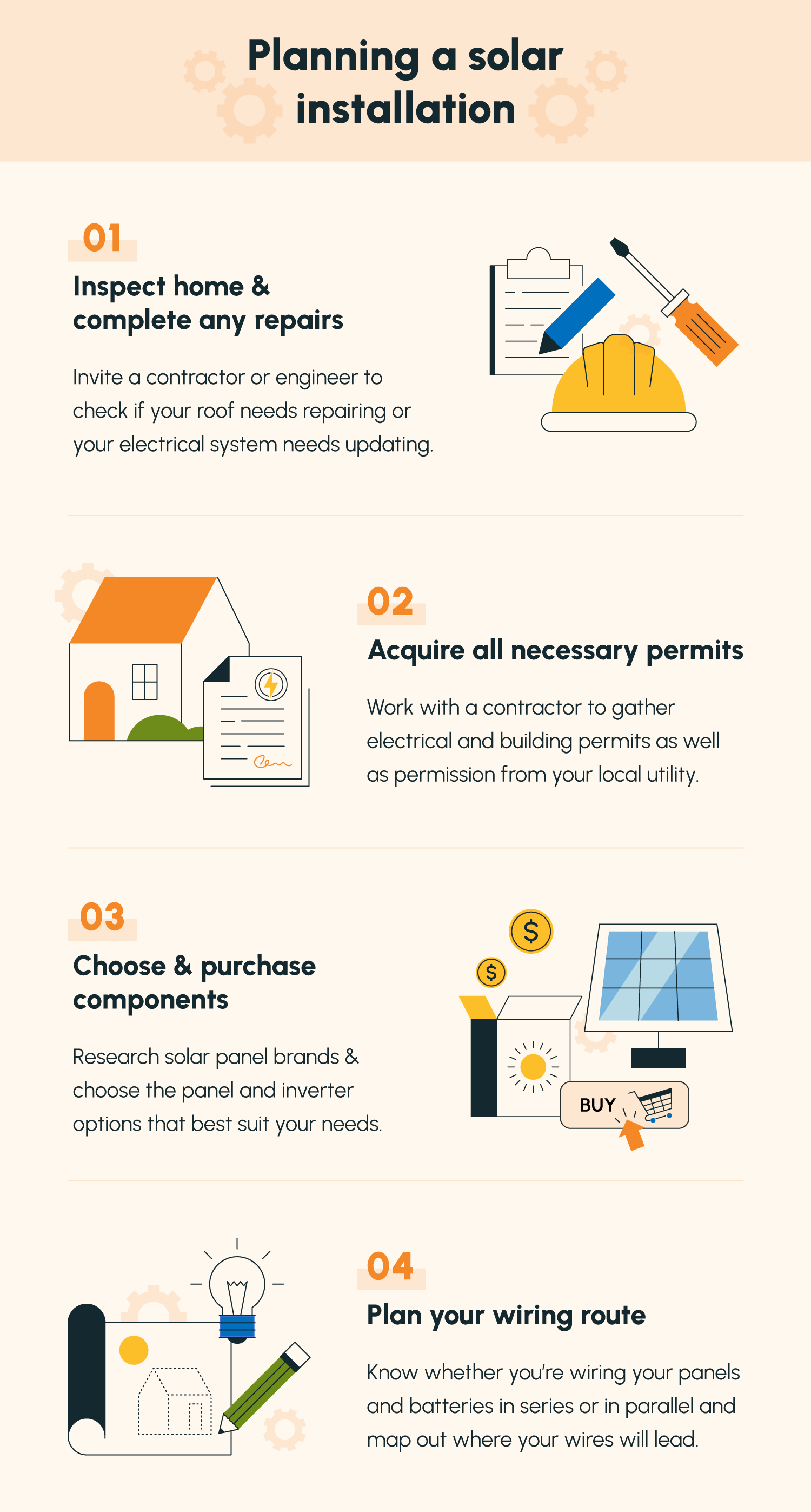
- Structural engineering assessment: Before installing heavy panels, ensure your roof can handle the added weight, especially in areas with snow loads.
- Electrical hookup to the main service panel: Connecting to the grid is complex and often requires a licensed electrician to ensure compliance with NEC (National Electrical Code) and local utility standards.
- Permit application and design: Some jurisdictions require stamped professional plans.
- Complex rooflines or extremely high roofs: Safety first!
If any of this gives you pause, consider a hybrid approach or a full professional installation. The peace of mind might be worth the investment.
Phase 1: Planning and Design – Laying the Foundation for Success
This is arguably the most critical phase. Success here dictates the efficiency, safety, and legality of your entire system. Don’t rush it.
Step 1: Research Local Regulations & Permits (CRITICAL for USA Homeowners)
I cannot stress this enough: DO NOT SKIP THIS STEP. Permitting and local regulations vary wildly by state, county, and even city in the USA. Ignoring them can lead to significant headaches, fines, or having to dismantle your system.
- Authority Having Jurisdiction (AHJ): Contact your local building department, planning office, or utility company. Ask about requirements for solar PV installations.
- Permits: You will almost certainly need electrical and building permits. Understand the application process, required documentation (site plans, electrical schematics, structural analyses), and fees.
- Net Metering: This allows you to send excess electricity back to the grid for credit. Understand your utility’s policies, eligibility, and how you’ll be compensated.
- Incentives: Research federal, state, and local incentives. The federal Investment Tax Credit (ITC) offers a significant percentage off your total system cost. Many states offer additional rebates or SRECs (Solar Renewable Energy Credits).
Step 2: Assess Your Energy Needs & Site Location
You need to know how much power you actually use and how much sun your property gets.
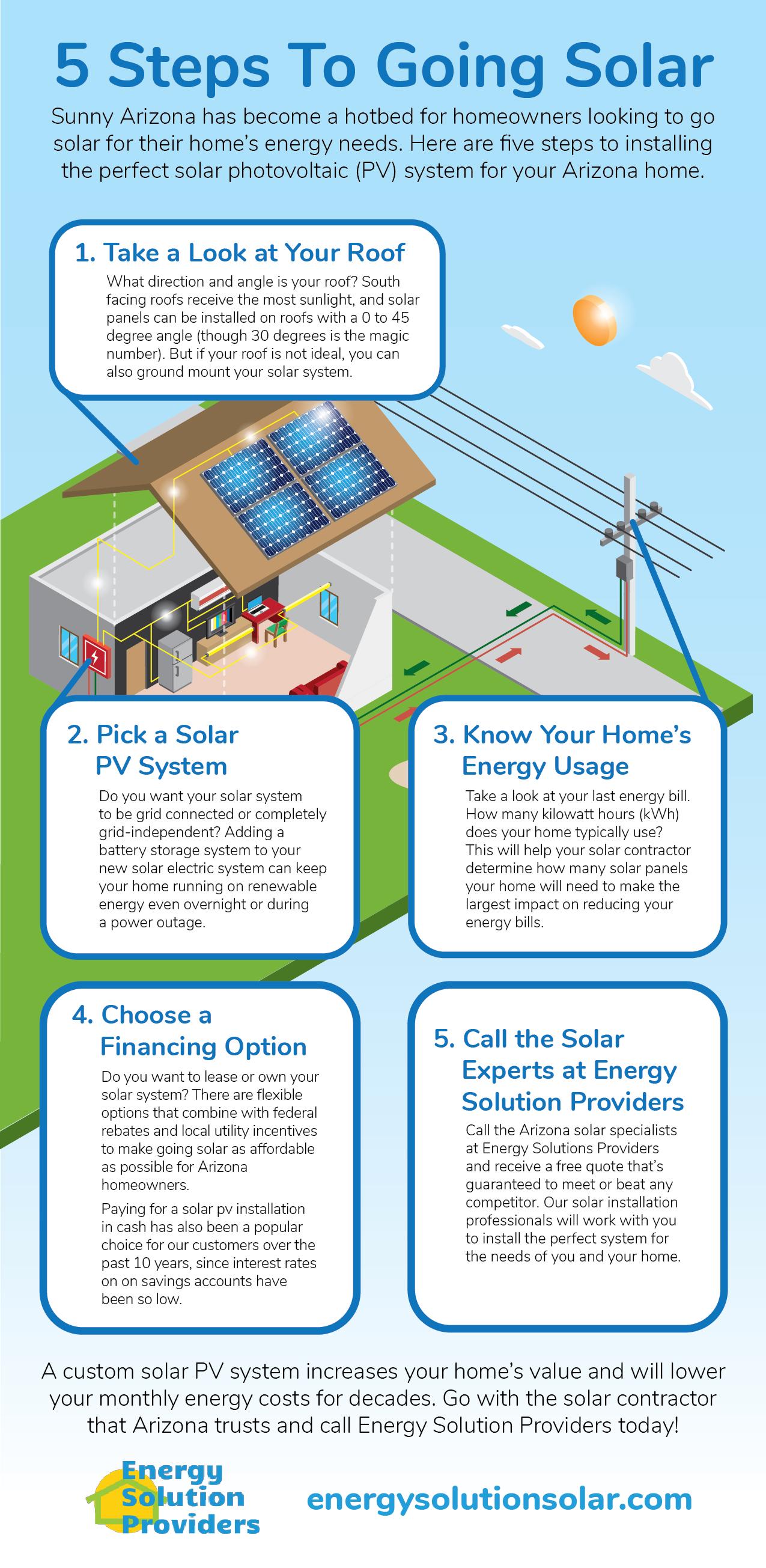
- Analyze Electricity Bills: Look at 12-24 months of bills to understand your average and peak electricity consumption (measured in kWh). This helps determine your system’s required size.
- Roof Assessment: Is your roof suitable?
- Age & Condition: A roof near the end of its life should be replaced *before solar installation.
- Pitch & Orientation: South-facing roofs (in the Northern Hemisphere) are ideal. A pitch between 30-45 degrees is generally optimal.
- Shading: Are there trees, chimneys, or neighboring buildings that cast significant shade on your roof throughout the day, year-round? Shade dramatically reduces panel efficiency. Use tools like Google Project Sunroof or professional solar assessment software.
- Available Area: Do you have enough unobstructed roof space for the number of panels you need?
- Ground-Mount vs. Roof-Mount: If your roof isn’t ideal, consider a ground-mounted system. These are often easier to install and maintain but require more land and potentially more complex trenching for wiring.
Step 3: System Sizing and Component Selection
This is where your research turns into concrete decisions.
- Calculating System Size (kW): Based on your energy usage and the efficiency of the panels you choose, calculate the total wattage needed. Divide your annual kWh usage by 1,200 (a rough estimate for kWh/kW/year in the USA) to get a starting kW estimate.
- Choosing Panel Types:
| Type | Efficiency | Cost (per watt) | Durability | Aesthetics |
|---|---|---|---|---|
| Monocrystalline | Highest (17-22%+) | Higher | Very good | Sleek, uniform black |
| Polycrystalline | Moderate (15-17%) | Lower | Good | Bluer, less uniform |
| Thin-Film | Lowest (10-13%) | Lowest | Good (flexible options) | Varied, can be integrated |
- Inverters: This crucial component converts the DC electricity from your panels into usable AC electricity for your home.
| Type | Best For | Efficiency | Cost | Monitoring | Scalability |
|---|---|---|---|---|---|
| String Inverters | Unshaded roofs, simple setups | Good (system-wide) | Lowest upfront | System-level | Moderate |
| Microinverters | Shaded roofs, complex designs | Excellent (panel-level) | Higher upfront | Panel-level | High (add panels individually) |
| Hybrid Inverters | Battery storage integration | Very good | Highest | System & battery | High |
- Mounting Systems (Racking): Choose a racking system compatible with your roof type (shingle, tile, metal) and panel dimensions. Ensure it’s rated for local wind and snow loads.
- Battery Storage: Are you going completely off-grid, or do you want backup power during outages? This adds significant complexity and cost, requiring a charge controller and a battery bank.
- Balance of System (BOS) Components: This includes all the other bits: wiring (DC and AC), conduit, disconnect switches, circuit breakers, fuses, combiner boxes, and monitoring equipment.
Phase 2: Permitting and Acquisition – Getting Ready to Build
Step 4: Obtain Permits and Approvals (Don’t Skip This!)
With your design finalized, it’s time to submit your plans to your AHJ. This often involves:
- Detailed System Schematics: Professional-grade drawings of your electrical and physical layout.
- Structural Analysis: Proof that your roof can support the load.
- Permit Applications: Filling out the necessary paperwork and paying fees.
Be prepared for questions and potential revisions. Patience is key here.
Step 5: Source Your Components
Once you have approval, it’s time to buy everything. Look for reputable suppliers. Many online solar wholesalers cater to DIYers. Compare prices, warranties, and shipping costs. Ensure all components are certified (e.g., UL listed for electrical components) and compatible with each other.

Plan for delivery and secure storage. Panels are fragile and valuable, and you’ll need a safe, dry place to keep everything until installation day.
Phase 3: The Installation – Bringing Your Solar Vision to Life
This is where the rubber meets the road. Remember everything we discussed about safety and preparation.
Step 6: Prioritize Safety Above All Else
- Personal Protective Equipment (PPE): Hard hat, safety glasses, work gloves, steel-toed boots.
- Fall Protection: A safety harness, ropes, and anchor points are essential when working on a roof. Never work alone.
- Electrical Safety: Always assume wires are live. Test before touching. Lock out/tag out procedures are critical. Use insulated tools.
- Lifting Safety: Solar panels are heavy and awkward. Use proper lifting techniques or mechanical aids.
Step 7: Prepare the Site and Roof
Clear any debris from the roof. If necessary, make any required roof repairs or waterproofing. Mark out the precise layout of your solar array according to your approved plans. This ensures proper spacing and alignment.
Step 8: Install the Mounting System (Racking)
- Locate Rafters/Trusses: Use a stud finder or tap test to precisely locate the structural members beneath your roof deck. Racking must be securely fastened to these.
- Attach Standoffs/Flashings: Drill pilot holes, apply sealant, and securely attach the standoffs or L-feet (depending on your racking system) to the rafters. These typically involve metal flashings to ensure waterproofing.
- Install Rails: Attach the rails to the L-feet. Ensure they are level, straight, and properly spaced to accommodate your panels. You might need to cut rails to size.
- Grounding: Install grounding lugs and run a grounding wire along the rails, connecting all metal components according to code.
Step 9: Mount the Solar Panels
- Lift Panels Safely: Carefully lift panels onto the roof, ideally using a lift or with multiple people.
- Position Panels: Place each panel onto the racking rails, ensuring proper orientation and spacing.
- Secure Panels: Use mid-clamps and end-clamps to secure the panels firmly to the rails. Double-check that all clamps are tightened to the manufacturer’s specifications.
Step 10: Electrical Wiring – The Heart of Your System
This is where precision and adherence to your electrical schematics are paramount. If you’re unsure about any aspect of this, consult or hire a licensed electrician.
- DC Wiring (Panels to Inverter/Optimizers/Microinverters):
- Stringing: Decide whether to wire panels in series (for higher voltage, common with string inverters) or parallel (for higher current, common in smaller systems or with specific microinverters). Most grid-tied systems use series strings into a string inverter, or individual panels connect to their own microinverters.
- Connect Panels: Use the pre-attached MC4 connectors to link panels together. Ensure positive (+) connects to negative (-) when stringing in series.
- Microinverters/Optimizers (if applicable): If using these, attach them to the panel frames (often on the racking) and connect the panel’s DC leads to the inverter/optimizer. Then, connect the AC output of the microinverter/optimizer to a trunk cable.
- Conduit: Run DC wiring through appropriate electrical conduit from the array to your DC disconnect switch and then to the main inverter location.
- Grounding: Ensure every metal component of your array, racking, and inverter is properly grounded back to your main electrical panel’s grounding system. This is a critical safety measure.
- AC Wiring (Inverter to Main Service Panel):
- Inverter Output: Connect the AC output of your string inverter or the main trunk cable from your microinverter system to an AC disconnect switch.
- Main Service Panel Connection: Run appropriate gauge AC wiring from the AC disconnect to a dedicated breaker in your main service panel. This connection must* comply with NEC and local utility requirements and is often where a licensed electrician’s expertise is indispensable.
Step 11: Install Inverter and Other Electrical Components
- Mount Inverter: Securely mount your inverter (string, hybrid, or central) in a cool, dry, easily accessible location, typically near your main service panel.
- Connect DC Disconnect: Wire the DC input from your solar array into the DC disconnect switch, then to the inverter.
- Connect AC Disconnect: Wire the AC output from the inverter to the AC disconnect switch.
- Charge Controller (if applicable): If using batteries, install and wire the charge controller between the solar array and the battery bank.
- Battery Bank (if applicable): Install and wire your batteries according to manufacturer specifications and all safety guidelines. Ensure proper ventilation.
Phase 4: Final Steps and Activation – Going Live with Solar
Step 12: System Inspection and Approval
Before you can turn your system on, it needs to pass muster with local authorities.
- Building/Electrical Inspector: Your local AHJ will send an inspector to verify that your installation complies with all approved plans and local codes. Be prepared for them to check everything from structural integrity to wiring, grounding, and labeling.
- Utility Company Inspection: Your utility company will also inspect the system, particularly the interconnection point, to ensure it meets their requirements for grid connection.
Step 13: Interconnection with the Grid (For Grid-Tied Systems)
Once both inspections are passed, your utility company will grant you Permission to Operate (PTO). This is the green light to energize your system and begin sending excess power back to the grid. They may also install a new meter capable of net metering.
Step 14: Monitoring and Maintenance
Congratulations, your system is live!
- Monitoring: Most modern inverters come with monitoring apps or web portals. Regularly check your system’s performance to ensure it’s generating as expected.
- Basic Maintenance: Keep your panels clean. Dust, pollen, and bird droppings can reduce efficiency. Occasional rinsing with water is usually sufficient. Inspect for any physical damage or loose connections periodically.
Common DIY Solar Installation Pitfalls to Avoid
- Underestimating Complexity: This isn’t assembling IKEA furniture. It’s a significant construction and electrical project.
- Skipping Permits: Never, ever do this. It’s illegal, dangerous, and can lead to major headaches down the line.
- Poor Wiring: Incorrect wiring is a fire hazard and can damage components or prevent your system from working. If in doubt, get an electrician.
- Inadequate Safety Measures: Falls and electrical shocks are real risks. Don’t cut corners on safety equipment or procedures.
- Ignoring Shading: Even a small amount of shade on one panel in a string can drastically reduce the output of the entire string.
- Incorrect Sizing: An undersized system won’t meet your needs; an oversized one is a wasted investment.
Final Thoughts: Your Journey to Energy Independence
Installing solar panels yourself is a monumental achievement. It requires dedication, research, and respect for the process. But the rewards – lower bills, increased home value, and the deep satisfaction of sustainable living – are well worth the effort.
This guide provides a comprehensive overview, but remember that every home is unique. Always refer to manufacturer manuals, local codes, and when in doubt, consult with qualified professionals. Go forth, be safe, and enjoy the sun-powered future you’ve built!
Frequently Asked Questions
Is it legal to install solar panels yourself in the USA?
Yes, it is generally legal to install solar panels yourself in the USA, but you absolutely *must* adhere to all local, state, and federal regulations. This includes obtaining the necessary building and electrical permits, passing inspections by your local Authority Having Jurisdiction (AHJ), and complying with utility company interconnection rules. Failing to do so can result in fines, system shutdown, or even mandated removal.
What are the biggest challenges of DIY solar panel installation?
The biggest challenges include understanding complex electrical wiring (both DC and AC), ensuring structural integrity for roof-mounted systems, navigating the often-intricate permitting and inspection process, and ensuring safety when working at heights and with electricity. It also requires a significant time commitment and a substantial initial investment in components and specialized tools.
Do I need an electrician for DIY solar installation?
While you can handle many aspects of the mechanical installation, it is highly recommended, and often legally required, to have a licensed electrician handle the AC wiring connection to your home’s main service panel and the grid. This ensures compliance with the National Electrical Code (NEC) and local utility standards, which are critical for safety and system functionality.
How do I determine the right size solar system for my home?
To size your system, analyze your electricity bills from the past 12-24 months to determine your average daily or monthly energy consumption (in kWh). Then, factor in your roof’s sun exposure (shading, orientation, pitch), the efficiency of the panels you choose, and any future energy needs (e.g., electric vehicle charging). Many online solar calculators and professional solar designers can help with this calculation.
What’s the difference between string inverters and microinverters?
String inverters convert DC electricity from a ‘string’ of panels into AC at a central point. They are generally more affordable and simpler but can be affected by shading on even one panel. Microinverters are installed under each individual panel, converting DC to AC at the panel level. This optimizes each panel’s output independently, making them better for shaded roofs, offering panel-level monitoring, and improving scalability, but they have a higher upfront cost.
Will my DIY solar system qualify for tax credits and incentives?
Yes, if properly installed and permitted, your DIY solar system can qualify for federal incentives like the Investment Tax Credit (ITC), which currently offers a percentage off the total system cost. State and local incentives (like rebates, SRECs, or property tax exemptions) also typically apply to DIY installations, as long as they meet all official requirements and certifications. Always verify eligibility with the specific program guidelines.
How long does a DIY solar panel installation typically take?
The timeline for DIY solar installation varies widely based on your experience, the system’s complexity, and the local permitting process. The planning and permitting phase alone can take several weeks to a few months. The physical installation (mounting, wiring) can take anywhere from 1-4 weeks of dedicated work, especially if you’re working alone or only on weekends. Factor in potential delays for inspections and utility interconnection.


Post Comment