How Many Solar Panels To Run A 50 Amp Camper
How Many Solar Panels Do You REALLY Need for Your 50 Amp Camper? The Definitive Guide to Off-Grid RV Power
Dreaming of truly escaping the grid in your 50 amp RV? You’re not alone. The allure of parking anywhere, running your favorite appliances, and soaking up the sun’s free energy is powerful. But when you start crunching numbers for a 50 amp setup, things can get complicated fast. How many panels? What size batteries? Can I really run my AC?
Table of Contents
- How Many Solar Panels Do You REALLY Need for Your 50 Amp Camper? The Definitive Guide to Off-Grid RV Power
- Unpacking the 50 Amp RV Mystery: What Does it Actually Mean for Solar?
- 50 Amp vs. 30 Amp: The Crucial Difference (It’s More Than Just Amps!)
- The 12,000 Watt Truth: Why 50 Amps is a Game-Changer
- Step 1: Your Energy Audit – Calculating Your Daily Watt-Hour Needs
- Why This is Critical: Forget the Guesswork
- Identifying Your “Must-Have” Appliances
- Estimating Run Times: Be Realistic!
- Step 2: Sizing Your Solar Panel Array – The Power Generators
- The “Sun Hour” Factor: Why Location and Season Matter
- The Efficiency Tax: Understanding System Losses
- Calculating Your Panel Wattage: The Formula
- Monocrystalline vs. Polycrystalline: Which is Best for RVs?
- Step 3: The Heart of the System – Your Battery Bank
- Why Batteries are More Than Just Storage
- Lithium vs. AGM: Making the Right Choice for Your 50 Amp Rig
- How to Calculate Your Battery Bank Capacity (Ah and kWh)
- Step 4: The Brain and Muscles – Charge Controllers and Inverters
- The Charge Controller: Protecting Your Investment (MPPT vs. PWM)
- The Inverter: Converting Power for Your Appliances
- Putting It All Together: Example 50 Amp Solar System Configurations
- “Weekend Warrior” Setup (Moderate Use, Occasional AC)
- “Full-Time Boondocker” Setup (Heavy Use, Frequent AC)
- Optimizing Your 50 Amp RV Solar Experience
- Shading & Panel Placement Tips
- Energy Conservation Strategies in Your RV
- Monitoring Your System
- Maintenance Matters
- The Investment: What to Expect When Going Solar
- Component Costs Breakdown
- DIY vs. Professional Installation
- The Payoff: Freedom & Sustainability
- Conclusion: Embrace Your Off-Grid Freedom
Forget the guesswork and conflicting advice. This isn’t a simple answer, but it’s a solvable problem. Powering a 50 amp camper with solar is absolutely achievable, but it demands a strategic approach. We’re going to break down exactly what you need, how to calculate it, and how to build a robust system that delivers the off-grid freedom you crave. Let’s dig in.
Unpacking the 50 Amp RV Mystery: What Does it Actually Mean for Solar?
Before we talk panels, we need to talk amps. A 50 amp RV electrical system isn’t just a bigger version of a 30 amp system; it’s fundamentally different and significantly more powerful. This distinction is crucial for understanding your solar needs.
50 Amp vs. 30 Amp: The Crucial Difference (It’s More Than Just Amps!)
Many RVers mistake a 50 amp service for simply being 20 amps more than a 30 amp service. That’s like comparing a bicycle to a motorcycle – they both have wheels, but the power delivery is in a different league.
- 30 Amp RVs: These systems typically operate on a single 120-volt leg, providing a maximum of 3,600 watts (30 amps x 120 volts).
- 50 Amp RVs: This is where it gets interesting. A 50 amp RV utilizes a split-phase 240-volt service, similar to what you’d find in a residential home for high-demand appliances. It actually delivers two separate 120-volt/50-amp lines.
The 12,000 Watt Truth: Why 50 Amps is a Game-Changer
Because a 50 amp RV has two 120V/50A lines, it can deliver a total of 12,000 watts of power (50 amps x 120 volts x 2 lines). This is a monumental difference from a 30 amp system’s 3,600 watts.
What does this mean for you? Your 50 amp camper is designed to handle multiple high-draw appliances simultaneously – think two air conditioners, a microwave, a hair dryer, and a coffee maker, all running at once. While you likely won’t be running all of these off solar all the time, this massive capacity is why your solar system needs to be robust.
When you’re designing a solar system, you’re primarily concerned with watt-hours (Wh) – the total energy consumed over time. Your 50 amp connection tells us about the potential peak power demand your RV can handle, which directly influences the size of your inverter and, indirectly, your battery bank and solar array.
Step 1: Your Energy Audit – Calculating Your Daily Watt-Hour Needs
This is the single most important step. Trying to size a solar system without a precise understanding of your daily energy consumption is like building a house without blueprints – you’re setting yourself up for failure and frustration.
Why This is Critical: Forget the Guesswork
Many people overestimate their panel needs or underestimate their battery needs because they don’t accurately track usage. A properly sized system means you’re not constantly worried about power, and you’re not overspending on equipment you don’t need.
Identifying Your “Must-Have” Appliances
Grab a pen and paper (or a spreadsheet) and list every electrical appliance you plan to use in your RV. Be honest with yourself about your habits. Do you use the microwave daily? How often does the coffee maker run? Is AC a necessity?
Estimating Run Times: Be Realistic!
Next to each appliance, estimate how many hours per day you’ll use it. Remember to consider different scenarios – a sunny day might mean less furnace use, while a hot day might mean more AC. Consider your “worst-case” scenario for off-grid living.
Here’s a table with common RV appliances and their typical wattages. Multiply the wattage by the hours of use to get daily watt-hours.
| Appliance | Typical Wattage (W) | Estimated Daily Use (Hours) | Daily Watt-Hours (Wh) |
|---|---|---|---|
| RV Refrigerator (12V/Propane Hybrid) | 50-150 (when running on 12V) | 12-24 (cycling) | 600-3600 |
| LED Lights | 10-50 (total) | 4-8 | 40-400 |
| Water Pump | 50-70 | 0.5-1 | 25-70 |
| Fan (Ceiling/Vent) | 20-40 | 4-10 | 80-400 |
| Laptop Charging | 50-100 | 2-4 | 100-400 |
| Phone/Tablet Charging | 10-20 | 2-4 | 20-80 |
| TV (LED) | 50-100 | 2-4 | 100-400 |
| Microwave (brief use) | 600-1500 | 0.1-0.25 (6-15 min) | 60-375 |
| Coffee Maker (brief use) | 800-1200 | 0.1-0.25 (6-15 min) | 80-300 |
| Hair Dryer (brief use) | 1000-1800 | 0.05-0.1 (3-6 min) | 50-180 |
| RV Air Conditioner (13,500 BTU) | 1500-2500 | 4-10 (cycling) | 6000-25000 |
Actionable Tip: For precise measurements, invest in a Kill-A-Watt meter (for AC appliances) and monitor your 12V loads over a few days. Many RV power management systems can also display your current draw.
Add up your total daily watt-hours. This number is your golden ticket for the next steps.
Step 2: Sizing Your Solar Panel Array – The Power Generators
Once you know your daily energy consumption, you can determine how many solar panels you’ll need. This isn’t just about the wattage printed on the panel; several real-world factors come into play.
The “Sun Hour” Factor: Why Location and Season Matter
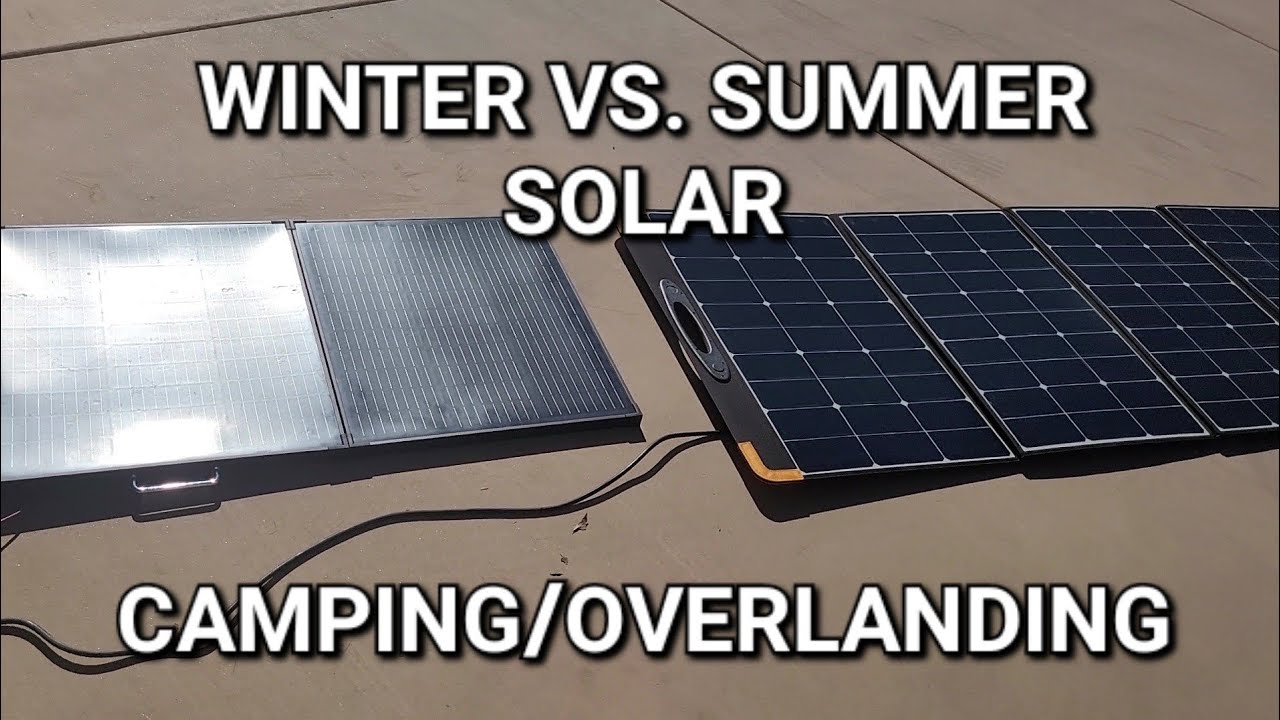
Solar panels only produce their rated wattage under ideal conditions (full sun, optimal temperature, direct angle). The amount of effective sunlight you get each day is measured in “peak sun hours.”
- Southern US (Summer): 5-7 peak sun hours
- Northern US (Summer): 4-6 peak sun hours
- Anywhere (Winter): 2-4 peak sun hours (or even less)
You should size your system based on the lowest peak sun hours you expect during your typical travel season to avoid disappointment.
The Efficiency Tax: Understanding System Losses
No solar system is 100% efficient. You’ll lose power due to:
- Temperature: Panels lose efficiency as they get hotter.
- Wiring: Resistance in cables.
- Charge Controller: Conversion losses (though MPPT controllers are highly efficient).
- Inverter: DC to AC conversion loss (typically 10-15%).
- Shading, Dirt, Angle: Environmental factors.
A good rule of thumb is to factor in a 20-30% system loss. So, if you need 1,000 Wh, you actually need your panels to generate closer to 1,250-1,430 Wh to compensate.
Calculating Your Panel Wattage: The Formula
Here’s the basic formula to determine your needed solar panel wattage:
Required Panel Wattage (W) = (Daily Watt-Hours Needed / Peak Sun Hours) / System Efficiency Factor
Let’s use an example: If you need 5,000 Wh per day, expect 4 peak sun hours, and assume an 80% system efficiency (0.8):
(5,000 Wh / 4 hours) / 0.8 = 1,250 W / 0.8 = 1,563 Watts of solar panels
This means you’d need roughly fifteen 100-watt panels or six 250-watt panels. Keep in mind, this is continuous output, and real-world conditions vary.
| Daily Energy Use (Wh) | Average Peak Sun Hours (e.g., 4) | Estimated Panel Wattage Needed (W) | Example Panels (100W each) |
|---|---|---|---|
| 2,000 (Light Use) | 4 | 625 | 6-7 |
| 5,000 (Moderate Use) | 4 | 1,563 | 15-16 |
| 8,000 (Heavy Use, incl. some AC) | 4 | 2,500 | 25 |
| 12,000 (Very Heavy Use, frequent AC) | 4 | 3,750 | 37-38 |
Remember, this table is an estimation. Your specific peak sun hours and desired efficiency will alter these numbers.
Monocrystalline vs. Polycrystalline: Which is Best for RVs?
- Monocrystalline: Generally more efficient and perform better in low light conditions. They are also more expensive. Ideal for RVers with limited roof space who need maximum power output.
- Polycrystalline: Less efficient, typically larger per watt, and more affordable. A good option if you have ample roof space and a tighter budget.
For a 50 amp system, where roof space can often be at a premium due to multiple AC units, monocrystalline panels are usually the preferred choice for their higher power density.
Step 3: The Heart of the System – Your Battery Bank
Solar panels generate power, but batteries store it for when the sun isn’t shining. Your battery bank is arguably the most critical component for a true off-grid experience, especially for a power-hungry 50 amp RV.
Why Batteries are More Than Just Storage
Batteries serve as your energy buffer. They allow you to draw significant power for your appliances, even at night or on cloudy days, maintaining stable voltage for your electronics. Without a sufficient battery bank, your panels would only be useful when actively producing power.
Lithium vs. AGM: Making the Right Choice for Your 50 Amp Rig
This decision is vital and impacts cost, weight, and performance.
- AGM (Absorbed Glass Mat) Batteries:
- Pros: More affordable upfront, good for occasional use, no maintenance, tolerates colder temperatures better than LiFePO4 without special heating.
- Cons: Heavier, larger, can only be safely discharged to about 50% without damaging them (meaning you need twice the stated capacity for usable power), shorter lifespan (300-1,000 cycles).
- LiFePO4 (Lithium Iron Phosphate) Batteries:
- Pros: Lighter, smaller, can be discharged to 80-100% (meaning higher usable capacity), much longer lifespan (2,000-5,000+ cycles), consistent voltage output, faster charging.
- Cons: Higher upfront cost, can be sensitive to charging in freezing temperatures (though many come with low-temp cutoffs or internal heaters).
For a 50 amp RV, especially if you plan to run AC or have heavy daily usage, LiFePO4 batteries are almost always the superior choice despite the higher initial investment. Their higher usable capacity, lighter weight, and longevity make them ideal for high-demand, long-term off-grid living.
How to Calculate Your Battery Bank Capacity (Ah and kWh)
Your battery bank needs to store your daily watt-hour usage, plus a buffer for cloudy days. Aim for at least 1-2 days of autonomy.
Let’s stick with our example of 5,000 Wh per day of energy consumption. If you want two days of autonomy:
Total required storage = 5,000 Wh/day * 2 days = 10,000 Wh (or 10 kWh)
Now, convert this to Amp-hours (Ah) for a 12V system (common in RVs, though some high-power systems use 24V or 48V). Divide total Wh by your system voltage (e.g., 12V):
Required Ah = 10,000 Wh / 12V = 833 Ah
Now, factor in the usable capacity based on battery type:
- For LiFePO4 (80-100% DoD): You’d need approximately 833 Ah of LiFePO4 batteries (e.g., six 100 Ah batteries for 600 Ah, or three 250-300 Ah batteries).
- For AGM (50% DoD): You’d need double the Ah capacity to get the same usable power: 833 Ah x 2 = 1,666 Ah of AGM batteries. This highlights why AGM isn’t practical for large 50 amp systems due to weight, space, and cost.
| Daily Energy Use (Wh) | Days of Autonomy (e.g., 2) | Total Storage Needed (Wh) | LiFePO4 Ah (12V) | AGM Ah (12V, 50% DoD) |
|---|---|---|---|---|
| 2,000 | 2 | 4,000 | 333 | 666 |
| 5,000 | 2 | 10,000 | 833 | 1,666 |
| 8,000 | 2 | 16,000 | 1,333 | 2,666 |
| 12,000 | 2 | 24,000 | 2,000 | 4,000 |
Step 4: The Brain and Muscles – Charge Controllers and Inverters
Your panels generate DC power, and your batteries store it as DC. But your 50 amp RV often has AC appliances. This is where charge controllers and inverters come in.
The Charge Controller: Protecting Your Investment (MPPT vs. PWM)
A charge controller manages the power flow from your solar panels to your batteries. It prevents overcharging and regulates voltage. For a 50 amp RV system, you’ll almost certainly want an MPPT (Maximum Power Point Tracking) controller.
- PWM (Pulse Width Modulation): Basic, less efficient, suitable for small, simple systems where the panel voltage closely matches the battery voltage. Not recommended for larger RV systems.
- MPPT: Much more efficient (10-30% more efficient than PWM), especially in fluctuating light conditions or when panel voltage is significantly higher than battery voltage. Essential for large arrays and maximizing your solar harvest.
Sizing Your Charge Controller: The charge controller’s amperage rating must be able to handle the maximum current output from your solar array. To calculate: (Total Panel Watts / Battery Voltage) * 1.25 (safety factor). For example, a 1,500W panel array on a 12V system: (1,500W / 12V) * 1.25 = 125A * 1.25 = ~156A. You’d need at least a 160A or 200A MPPT charge controller (or multiple smaller ones).
The Inverter: Converting Power for Your Appliances
Your inverter converts your battery’s DC power into the AC power (120V) that most of your RV appliances (microwave, AC, outlets) use. For a 50 amp RV, you’ll need a powerful inverter.
- Pure Sine Wave: Crucial for sensitive electronics and motors (like those in AC units or microwaves). Produces clean, consistent power. Essential for a 50 amp RV.
- Modified Sine Wave: Cheaper, but can damage sensitive electronics and cause motors to run hot or inefficiently. Avoid for anything but the simplest appliances.
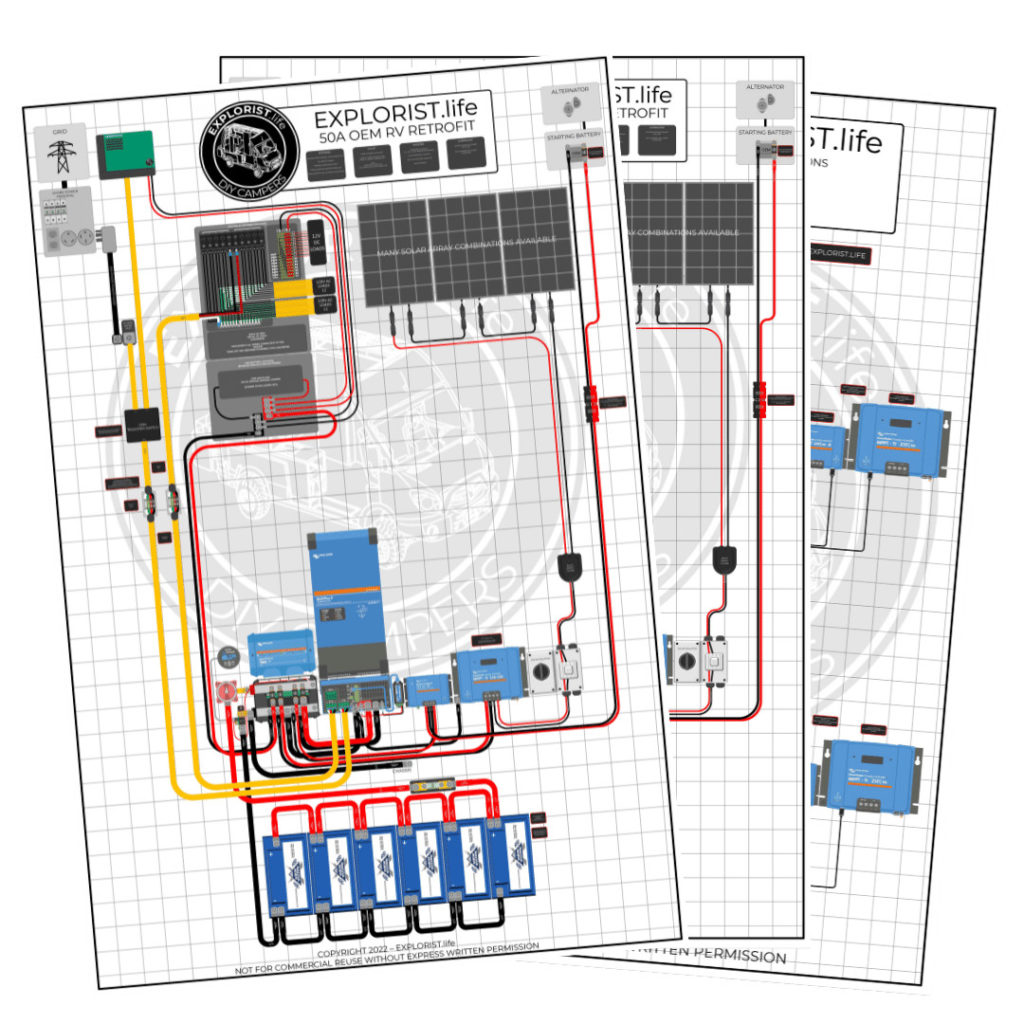
Sizing Your Inverter: Your inverter must be able to handle the peak surge wattage of your highest-demand appliance (often your AC or microwave) and the continuous running wattage of all AC appliances you might run simultaneously. For a 50 amp RV, a 3,000W to 5,000W pure sine wave inverter is common, with some heavy users opting for 8,000W or even 12,000W (for true 50A capacity).
| Component | Sizing Consideration | Typical 50 Amp RV Recommendation |
|---|---|---|
| Charge Controller | Total Panel Watts / Battery Voltage x 1.25 | MPPT; 80A – 200A (or multiple units) |
| Inverter | Highest simultaneous AC load (running & surge) | 3,000W – 5,000W (Pure Sine Wave) for most; up to 12,000W for full 50A capacity |
Putting It All Together: Example 50 Amp Solar System Configurations
Let’s look at a couple of common scenarios for 50 amp RVers to illustrate how the components come together.
“Weekend Warrior” Setup (Moderate Use, Occasional AC)
You use your RV mostly on weekends, perhaps for a week or two at a time. You want to run basic appliances, maybe a microwave occasionally, and run one AC unit for a few hours during the hottest part of the day.
- Daily Energy Need: ~5,000 Wh
- Solar Panels: 1,500 – 2,000 Watts (e.g., six to eight 250W monocrystalline panels)
- Battery Bank: 600 – 800 Ah LiFePO4 (providing 7,200 Wh – 9,600 Wh usable)
- Charge Controller: Two 60A MPPT controllers or one 100A-120A MPPT controller
- Inverter: 3,000W – 4,000W Pure Sine Wave
“Full-Time Boondocker” Setup (Heavy Use, Frequent AC)
You live in your RV full-time, spending extended periods off-grid. You want the comfort of home, including regular AC use (maybe even two ACs), a robust kitchen, and ability to work remotely.

- Daily Energy Need: 10,000 – 15,000+ Wh
- Solar Panels: 3,000 – 4,000+ Watts (e.g., twelve to sixteen 250W monocrystalline panels)
- Battery Bank: 1,000 – 1,600 Ah LiFePO4 (providing 12,000 Wh – 19,200 Wh usable)
- Charge Controller: Two 100A MPPT controllers or three 60A MPPT controllers
- Inverter: 5,000W – 8,000W Pure Sine Wave (or a multiplus inverter/charger combo)
| Component | Weekend Warrior Estimate | Full-Time Boondocker Estimate |
|---|---|---|
| Solar Panels (Watts) | 1500 – 2000W | 3000 – 4000W+ |
| Battery Bank (LiFePO4 Ah @12V) | 600 – 800 Ah | 1000 – 1600 Ah |
| Charge Controller (MPPT) | 100A – 120A (single or multiple) | 200A – 300A (multiple units) |
| Inverter (Pure Sine Wave) | 3000W – 4000W | 5000W – 8000W+ |
| Estimated Component Cost (USD) | $5,000 – $10,000+ | $10,000 – $25,000+ |
These figures are estimates for components only and do not include wiring, fuses, breakers, mounts, installation costs, or incidentals. Prices vary significantly based on brand, features, and market conditions.
Optimizing Your 50 Amp RV Solar Experience
Having a powerful solar system is one thing; using it efficiently is another. Here are tips to maximize your off-grid freedom.
Shading & Panel Placement Tips
- Minimize Shading: Even partial shading on one panel can drastically reduce the output of your entire array, especially with series connections. Park strategically to avoid trees or other RVs.
- Tiltable Mounts: While less common on large arrays, tiltable mounts can significantly boost production, particularly in winter or when the sun is low.
- Keep Panels Clean: Dirt, dust, and debris reduce efficiency. A quick rinse regularly can make a difference.
Energy Conservation Strategies in Your RV
The best way to need less solar power is to use less power!
- Embrace 12V: Whenever possible, use 12V appliances directly powered by your battery (fans, lights, charging USB devices) to avoid inverter losses.
- LED Lighting: If you don’t already have them, convert to LED lights.
- Efficient Appliances: Look for energy-star rated or 12V specific versions of appliances.
- Think Before You Plug: Do you really need to run the microwave for that one minute, or can you use the stove?
- Soft Start on AC: Install a soft start capacitor on your RV AC unit(s) to reduce the initial surge of power needed, making it easier for your inverter to handle.
Monitoring Your System
Invest in a good battery monitor (like a Victron SmartShunt or similar). Knowing your battery’s state of charge, current draw, and solar input will help you manage your power proactively and extend battery life.
Maintenance Matters
While solar systems are generally low-maintenance, a few things ensure longevity:
- Regular Checks: Periodically inspect wiring for loose connections or damage.
- Battery Care: Keep battery terminals clean. For AGMs, ensure proper ventilation. For LiFePO4, monitor BMS alerts.
- Panel Cleaning: As mentioned, keep those panels sparkling.
The Investment: What to Expect When Going Solar
Powering a 50 amp RV with solar is a significant investment, but one that pays dividends in freedom and reduced generator noise/fuel costs.
Component Costs Breakdown
- Solar Panels: $1 – $1.50 per watt (e.g., 1500W array: $1,500 – $2,250)
- LiFePO4 Batteries: $0.70 – $1.20 per usable Wh (e.g., 800 Ah @ 12V = 9,600 Wh usable; $6,720 – $11,520)
- Charge Controller: $300 – $1,000+ (depending on amperage and features)
- Inverter: $800 – $3,000+ (depending on wattage and features)
- Mounting Hardware, Wiring, Fuses, Breakers, Disconnects: $500 – $2,000+
Total system costs for a robust 50 amp RV solar setup typically range from $5,000 for a minimalist system up to $25,000+ for a high-end, full-time boondocking setup designed to run multiple ACs.
DIY vs. Professional Installation
- DIY: Saves on labor costs but requires significant electrical knowledge, careful planning, and specialized tools. Mistakes can be costly and dangerous.
- Professional Installation: Ensures a safe, optimized, and warrantied system. Costs more upfront but provides peace of mind and expertise, especially crucial for complex 50 amp setups.
The Payoff: Freedom & Sustainability
The investment isn’t just financial. It’s an investment in:
- Unrestricted Travel: Go anywhere, stay as long as you like (water/waste permitting).
- Quiet Enjoyment: No noisy, smelly generator.
- Environmental Responsibility: Reduce your carbon footprint.
- Energy Independence: Less reliance on campground hookups or fossil fuels.
Conclusion: Embrace Your Off-Grid Freedom
Running a 50 amp camper on solar power is a fantastic way to unlock true RV freedom. It’s not a small undertaking, but with careful planning, a solid understanding of your energy needs, and quality components, you can design a system that reliably powers your adventures.
Start with that energy audit. Be honest about your consumption. Then, methodically size each component – panels, batteries, charge controller, and inverter – ensuring they work in harmony. The initial effort will pay off tenfold in quiet, sustainable, and powerful off-grid living. Happy trails!
n
Frequently Asked Questions
What’s the real difference between a 30 amp and a 50 amp RV shore power connection?
A 30 amp RV service typically provides a single 120-volt line for 3,600 watts of power. A 50 amp RV service, however, is a split-phase 240-volt system that delivers two separate 120-volt/50-amp lines, totaling 12,000 watts. This allows 50 amp RVs to power multiple high-draw appliances simultaneously, like two air conditioners, which significantly impacts solar system design.
Can I really run my RV’s air conditioner solely on solar power?
Yes, it is possible to run an RV air conditioner on solar power, but it requires a substantial solar panel array, a large lithium battery bank, and a powerful pure sine wave inverter (typically 3,000W or more). Many RVers install a ‘soft start’ device on their AC unit to reduce the high surge current, making it easier for the inverter to handle the load. Expect to dedicate a significant portion of your solar system’s capacity to AC use.
How much do solar panels for a 50 amp RV system typically cost?
The cost of solar panels for a 50 amp RV system varies widely based on the desired energy consumption and components. A basic system for moderate use might range from $5,000 to $10,000, while a robust setup for full-time boondocking with frequent AC use could easily be $10,000 to $25,000 or more. This includes panels, batteries (primarily lithium), charge controllers, inverters, wiring, and mounting hardware.
Is it better to DIY my RV solar system or hire a professional?
For smaller 30 amp systems, DIY is often feasible for those with electrical aptitude. However, for complex 50 amp RV solar systems, professional installation is often recommended. These systems involve high voltages, multiple components, and precise wiring. While DIY saves labor costs, professional installation ensures safety, optimal performance, system warranty, and peace of mind. Mistakes in a 50 amp system can be costly and dangerous.
How do I maintain my RV solar panels and batteries?
Maintenance for RV solar systems is relatively low. Regularly clean your solar panels to remove dirt, dust, and debris, which can reduce efficiency. Periodically check all wiring connections for tightness and corrosion. For lithium batteries, generally, they are maintenance-free, but it’s good practice to monitor their performance via a battery monitor. AGM batteries may require checking terminal connections and ensuring proper ventilation. A good battery monitor is key for proactive system health.
What is the best type of battery for a 50 amp RV solar setup?
For a 50 amp RV solar setup, LiFePO4 (Lithium Iron Phosphate) batteries are overwhelmingly considered the best choice. They offer significantly higher usable capacity (80-100% depth of discharge), are lighter, more compact, charge faster, and have a much longer lifespan (2,000-5,000+ cycles) compared to traditional AGM batteries. While they have a higher upfront cost, their performance and longevity make them more cost-effective in the long run for high-demand systems.
How many solar panels does a typical 50-amp RV need for light use?
For light use in a 50-amp RV (e.g., lights, charging devices, water pump, occasional microwave, no AC), you might aim for 2,000-3,000 Wh of daily energy. Factoring in typical sun hours and system losses, this could translate to needing around 600-1,000 watts of solar panels. This might be achieved with 6 to 10 typical 100-watt panels, depending on your specific conditions and efficiency.


Post Comment