Can I Use Normal Battery In Solar Inverter
Can I Use a Normal Battery with a Solar Inverter? The Unvarnished Truth
Let’s cut right to it: You’re wondering if you can just plug a regular car battery or a standard UPS battery into your solar setup to save a few bucks. The short, honest answer is yes, you can often physically connect it, but you absolutely shouldn’t for any long-term or serious use. It’s like trying to run a marathon in flip-flops – you might start, but you won’t finish well, and you’ll likely injure yourself in the process.
Table of Contents
- Can I Use a Normal Battery with a Solar Inverter? The Unvarnished Truth
- Understanding the Core Difference: “Normal” Batteries vs. Solar Batteries
- What is a “Normal” Battery? (e.g., Car Batteries)
- What is a Solar Battery? (Deep Cycle Batteries)
- The Role of Your Inverter: Normal vs. Solar/Hybrid
- What is a “Normal” Inverter? (Basic Power Conversion)
- What is a Solar Inverter (or Hybrid Inverter)?
- So, Can You Actually Do It? The Mechanics and the Misconceptions
- Connecting a “Normal” Battery to a Solar Inverter (with Charge Controller)
- Connecting a “Normal” Battery to a “Normal” Inverter (and then adding Solar)
- The Critical Role of the Charge Controller
- The Real-World Consequences of Using Incompatible Batteries
- Drastically Reduced Battery Lifespan
- Poor System Efficiency
- Safety Hazards: From Leaks to Explosions
- Voided Warranties
- Underperformance and Frustration
- When Might You Consider It? (Temporary/Emergency Scenarios Only)
- Short-Term Emergency Backup (Very Limited Use)
- Small, Non-Critical Loads (e.g., phone charging, a light)
- Choosing the Right Battery for Your Solar System (The Smart Move)
- Lead-Acid Deep Cycle (Flooded, AGM, Gel)
- Lithium-ion (LiFePO4)
- Sizing Your Battery Bank
- Upgrading Your System: From “Normal” to Optimal Solar Power
- Investing in a Dedicated Solar Battery
- Considering a Hybrid Inverter
- Professional Installation Benefits
- Conclusion: Don’t Compromise on Your Power
This question comes up a lot, usually driven by a desire to save money or make do with what’s available. And I get it. Solar energy can be a significant investment. But when it comes to batteries, skimping on the right type is a critical mistake that will cost you more in the long run, compromise your system’s performance, and even pose significant safety risks. Let me explain why.
Understanding the Core Difference: “Normal” Batteries vs. Solar Batteries
The fundamental issue isn’t just a label; it’s about fundamental design and purpose. Batteries aren’t one-size-fits-all, and understanding their intended use is key.
What is a “Normal” Battery? (e.g., Car Batteries)
When most people say “normal battery,” they’re usually thinking of a car battery or a similar starting battery. These are often Lead-Acid batteries with a specific job:
- Designed For: Delivering a huge burst of current for a very short period to start an engine.
- Internal Structure: Features many thin lead plates designed for high surface area, optimizing for quick, high-current discharge.
- Discharge Cycle: Car batteries are known as ‘shallow cycle’ or ‘starting’ batteries. They expect to discharge only a tiny fraction of their capacity (typically less than 5%) before being immediately recharged by the car’s alternator.
- Lifespan with Deep Cycling: If you repeatedly drain a car battery deeply (e.g., 50% or more), its lifespan will be drastically shortened – often to just a few dozen cycles. This leads to premature failure due to plate damage (sulfation and shedding).
- Safety Concerns: Many car batteries are flooded lead-acid, which can off-gas hydrogen and oxygen during charging, requiring proper ventilation. They are also prone to acid spills.
What is a Solar Battery? (Deep Cycle Batteries)
Solar batteries, on the other hand, are engineered for a completely different kind of work in an energy storage system. They are ‘deep cycle’ batteries, meaning they’re built to be regularly discharged to a significant percentage of their capacity and then recharged.
- Designed For: Providing a steady flow of power over an extended period and enduring repeated deep discharge/recharge cycles.
- Types: Common types include:
- Lead-Acid Deep Cycle: These include Flooded Lead-Acid (FLA), Absorbed Glass Mat (AGM), and Gel batteries. They have thicker, more robust lead plates compared to starting batteries, allowing them to withstand deep cycling.
- Lithium-ion (LiFePO4 – Lithium Iron Phosphate): These are becoming the gold standard for solar due to their high efficiency, very long cycle life, light weight, and maintenance-free operation. They often include a sophisticated Battery Management System (BMS) for safety and optimization.
- Discharge Cycle: Designed for regular discharges, often to 50% for lead-acid and 80-100% for LiFePO4, without significant degradation.
- Lifespan: Measured in hundreds or thousands of cycles, depending on the type and depth of discharge.
- Safety Features: Modern solar batteries, especially lithium, often have integrated safety features (BMS) to prevent overcharging, over-discharging, overheating, and short circuits.
To really hammer this home, let’s look at a quick comparison:
| Feature | “Normal”/Starting Battery (e.g., Car Battery) | Deep Cycle Solar Battery (e.g., AGM, LiFePO4) |
|---|---|---|
| Primary Purpose | High current burst for engine starting | Sustained, steady power over time |
| Discharge Type | Shallow cycle (rarely below 5-10% DOD) | Deep cycle (regularly 50-80%+ DOD) |
| Internal Plates | Thin, numerous plates for maximum surface area | Thicker, more robust plates for durability |
| Cycle Life (Approx.) | Dozens to ~100 cycles if deeply discharged | Hundreds to thousands of cycles (500-800 for Lead-Acid, 3000-10000 for LiFePO4) |
| Efficiency | Lower for sustained discharge | Higher (especially LiFePO4 >95%) |
| Cost Per kWh (Lifetime) | Very High (due to frequent replacement) | Lower (due to long lifespan) |
| Maintenance | Can be high for flooded types, acid spills | Low to none (AGM/Gel sealed, LiFePO4 maintenance-free) |
| Safety | Gassing, acid, no BMS. High risk with improper use. | Designed with safety in mind (venting, BMS). Lower risk. |
The Role of Your Inverter: Normal vs. Solar/Hybrid
It’s not just the battery; the inverter plays an equally critical role in how your solar power system functions. There’s a big difference between a basic power inverter and one designed for solar.
What is a “Normal” Inverter? (Basic Power Conversion)
A “normal” inverter, often referred to as a standard power inverter or backup inverter, primarily does one thing:
- Purpose: Converts DC (Direct Current) power from a battery into AC (Alternating Current) power, which is what your household appliances use.
- Lacks: Crucially, these inverters typically do not have an integrated solar charge controller. This means they cannot directly take power from solar panels to charge a battery or power loads. They are designed to draw power *from a battery bank and convert it. They also generally lack advanced battery management features crucial for solar applications.
- Use Case: Excellent for converting power from a car battery or a standalone battery bank for temporary AC power, like camping, tailgating, or simple backup during outages when the battery is charged via the grid or an engine.
What is a Solar Inverter (or Hybrid Inverter)?
A solar inverter (or more specifically, a hybrid inverter for off-grid or grid-tied with battery backup systems) is a much more sophisticated piece of equipment designed to manage multiple power sources and ensure optimal battery health.
- Purpose: It’s the brain of your solar energy system. It converts DC from solar panels to AC for your home, and it intelligently manages charging and discharging your battery bank, often integrating with the grid.
- Key Components:
- Integrated Solar Charge Controller: This is paramount. It efficiently harvests power from your solar panels (usually via MPPT – Maximum Power Point Tracking technology) and converts it into the correct voltage and current to charge your batteries. It also prevents overcharging, which is vital for battery longevity and safety.
- Advanced Battery Management Algorithms: These inverters understand different battery chemistries and employ sophisticated charging profiles (bulk, absorption, float) to maximize battery life.
- Grid-Tie Capabilities: Many solar inverters can seamlessly switch between solar, battery, and grid power, exporting excess solar back to the utility or drawing from the grid when solar or battery power is insufficient.
- Benefits: Optimized charging, extended battery lifespan, superior system efficiency, advanced monitoring, and enhanced safety features.
Here’s a comparison of inverter types:
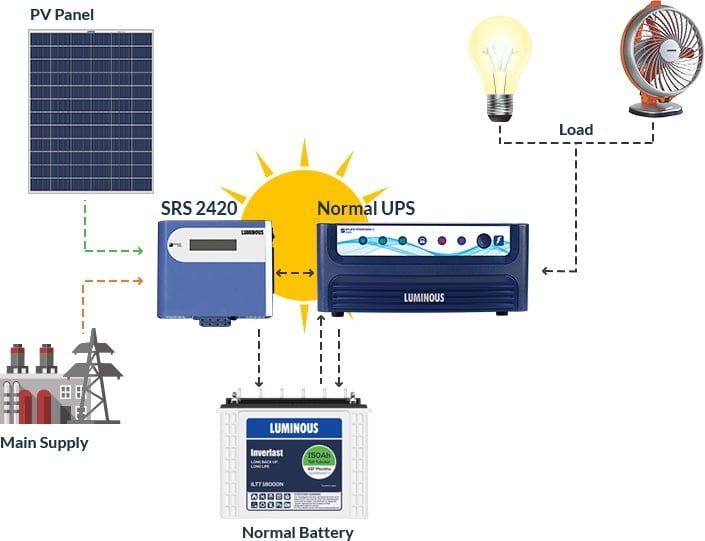
| Feature | “Normal”/Standard Inverter | Solar/Hybrid Inverter |
|---|---|---|
| Primary Function | DC to AC conversion from battery | DC (panels/battery) to AC; manages solar charging & battery; grid integration |
| Integrated Charge Controller | No (requires external for solar) | Yes (MPPT or PWM) |
| Battery Charging Source | Grid (AC-DC charger) or external DC source | Solar panels, grid, generator |
| Battery Management | Basic voltage cutout | Advanced algorithms for various chemistries (bulk, absorption, float), temperature compensation, equalization |
| Grid Integration | None (standalone backup) | Seamless grid-tie, net metering, automatic transfer switching |
| Cost | Lower upfront | Higher upfront (but more features & efficiency) |
So, Can You Actually Do It? The Mechanics and the Misconceptions
Given the differences, let’s explore how these components interact and why the “normal battery” approach is fundamentally flawed for solar.
Connecting a “Normal” Battery to a Solar Inverter (with Charge Controller)
If your solar inverter has an integrated charge controller, you could technically connect a “normal” battery (like a car battery) to it. The charge controller will regulate the charging voltage and current from the solar panels to the battery, preventing immediate overcharge damage. However, this doesn’t magically turn your car battery into a deep-cycle solar battery.
- It Can Work, But Inefficiently and with Reduced Battery Life: The charge controller will try its best, but it’s like putting premium fuel in a lawnmower; it doesn’t make it a race car. The car battery’s internal design means it’s not built for repeated deep discharges.
- Risks Remain: Even with a charge controller, repeatedly discharging the car battery deeply will rapidly destroy it. You’ll see premature sulfation (lead sulfate crystals building up on plates), plate shedding, and ultimately, a dead battery far sooner than you’d expect. This means frequent, expensive replacements.
Connecting a “Normal” Battery to a “Normal” Inverter (and then adding Solar)
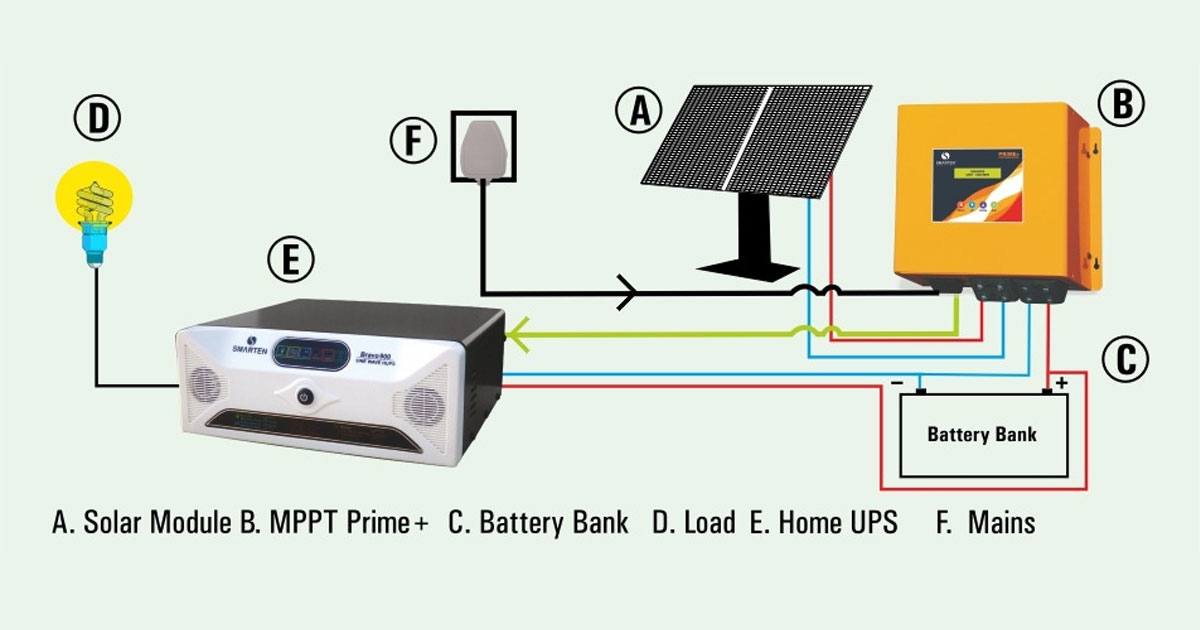
This scenario is where things get even more complicated and risky. A standard inverter doesn’t have a solar charge controller. So, if you connect solar panels directly to a battery without proper regulation, or try to integrate panels into a basic inverter setup, you’re in for trouble.
- Requires an External Solar Charge Controller: To even begin, you absolutely must insert a solar charge controller between your solar panels and your “normal” battery. Without it, the panels will unregulatedly pump power into the battery, leading to severe overcharging, gassing, electrolyte boiling, and potentially even an explosion (especially with flooded lead-acid batteries).
- This Setup is “Cobbled Together”: Even with an external charge controller, you’re still using a battery not designed for deep cycling. You’re simply adding a crucial component to make a fundamentally unsuitable combination less dangerous, not effective.
- Mismatched Components: Your overall system will be inefficient. The charge controller might be optimized for deep-cycle batteries, but it’s connected to one that isn’t. Your “normal” inverter won’t have the sophisticated battery monitoring or grid integration features of a dedicated solar inverter.
The Critical Role of the Charge Controller
Regardless of your battery or inverter type, if you’re connecting solar panels, a solar charge controller is non-negotiable. It’s the gatekeeper that manages the flow of electricity from your panels to your battery, preventing damage and optimizing charging.
- PWM (Pulse Width Modulation): A simpler, less expensive type of controller. It essentially switches the solar array on and off rapidly to maintain a constant voltage. Better for smaller systems and matching panel voltage to battery voltage.
- MPPT (Maximum Power Point Tracking): The more advanced and efficient option. It constantly monitors the voltage and current of the solar panels and adjusts them to find the “maximum power point,” effectively harvesting more energy, especially in varying weather conditions or when panel voltage differs significantly from battery voltage. For any serious solar setup, MPPT is the way to go.
Without a charge controller, connecting panels directly to a battery is like connecting a garden hose to a balloon without a faucet – it’s going to burst.
The Real-World Consequences of Using Incompatible Batteries
Let’s talk about why this isn’t just a recommendation but a necessity for anyone serious about solar power.
Drastically Reduced Battery Lifespan
This is the most common and immediate consequence. A car battery might cost less upfront, but it’s not designed for the daily deep discharge cycles of a solar system. What might be rated for 3-5 years of life in a car could last only 3-6 months (or even less) when used as a solar battery. You’ll be spending money on replacements far more frequently, negating any initial savings.
Poor System Efficiency
Solar energy is about maximizing power harvest and storage. “Normal” batteries are inherently less efficient in deep cycling applications. They might have higher internal resistance, leading to more energy loss as heat during charging and discharging. This means less usable power for your home, even when your panels are generating plenty of electricity.
Safety Hazards: From Leaks to Explosions
This is where it gets serious. Improperly used or overcharged lead-acid batteries (like car batteries) can:
- Off-gas Explosive Hydrogen: During charging, especially overcharging, lead-acid batteries produce hydrogen gas. If this gas accumulates in an unventilated area and encounters a spark, it can lead to a violent explosion.
- Acid Leaks and Corrosion: Overcharging can also cause the electrolyte (sulfuric acid) to boil and leak, leading to corrosion of surrounding components and surfaces, and posing chemical burn risks.
- Thermal Runaway: While more common with certain lithium chemistries, abused lead-acid batteries can also overheat, leading to catastrophic failure.
- Lack of BMS: Unlike many modern solar batteries (especially LiFePO4), car batteries lack a Battery Management System (BMS) to monitor cell health, balance charges, and prevent dangerous conditions.
Your safety, and the safety of your home, should never be compromised to save a few dollars on a battery.
Voided Warranties
Most reputable solar inverter manufacturers specify the types of batteries their equipment is designed to work with. Using an incompatible battery will almost certainly void your inverter’s warranty. Similarly, trying to use a car battery outside its intended application will void its warranty.
Underperformance and Frustration
You invest in solar to gain energy independence and reliability. Using the wrong battery will lead to constant frustration. Your lights might dim, your appliances might cut out, or you might find yourself without power much sooner than anticipated. The system simply won’t perform as advertised or as you expect.
When Might You Consider It? (Temporary/Emergency Scenarios Only)
Is there any scenario where using a “normal” battery with a solar charger might be acceptable? Only under very specific, short-term, and low-stakes emergency conditions, and even then, with extreme caution.
Short-Term Emergency Backup (Very Limited Use)
If you are in a genuine, dire emergency situation with no other power source, and you have a small solar panel and a compatible charge controller, you might use a car battery to power extremely low-draw critical items like a radio, a small LED light, or to charge a phone. This is a “survival mode” scenario, not a sustainable solution.
- Strict Monitoring Required: You’d need to constantly monitor the battery’s voltage to prevent deep discharge and disconnect it as soon as the critical need is met or if the battery voltage drops significantly.
- One-Off Event: Consider this a one-time emergency measure, knowing it will likely shorten the battery’s life significantly.
Small, Non-Critical Loads (e.g., phone charging, a light)
For truly tiny, non-critical loads, a small car battery or even a motorcycle battery could* provide a few hours of power if connected via a small charge controller and inverter. However, even for these applications, a small, inexpensive deep-cycle battery (like those used in fishing boats or RVs) would still be a much better, safer, and longer-lasting option.
Important Reminder: These are compromises, not solutions. If you find yourself in these situations regularly, it’s a clear sign you need to invest in a proper solar battery setup.
Choosing the Right Battery for Your Solar System (The Smart Move)
To avoid all the headaches, dangers, and inefficiencies, here’s what you should be looking for in a solar battery:
Lead-Acid Deep Cycle (Flooded, AGM, Gel)
- Flooded Lead-Acid (FLA): The most economical upfront. They require regular maintenance (checking and topping up electrolyte levels with distilled water) and proper ventilation due to off-gassing. They are robust but have a shorter cycle life than AGM/Gel.
- Absorbed Glass Mat (AGM): A sealed, maintenance-free option. The electrolyte is absorbed into glass mats, making them spill-proof and allowing for more flexibility in mounting. Better cold-weather performance and longer cycle life than FLAs.
- Gel Batteries: Also sealed and maintenance-free. They use a gelled electrolyte. They are less prone to sulfation and handle deep discharges well but are sensitive to overcharging and can have lower peak current output than AGM.
Lithium-ion (LiFePO4)
These are rapidly becoming the preferred choice for solar energy storage:
- High Efficiency: Up to 99% efficient for charging and discharging.
- Long Cycle Life: Can last 10+ years, often providing thousands of cycles (e.g., 3,000 to 10,000+ cycles at 80% Depth of Discharge).
- Deep Discharge Capability: Can be safely discharged to 80-100% of their capacity regularly without significant damage.
- Maintenance-Free: No watering or venting required.
- Lightweight and Compact: Significantly lighter and smaller than lead-acid equivalents.
- Integrated BMS: Most come with an intelligent Battery Management System that protects against overcharging, over-discharging, overheating, and short circuits, balancing cells for optimal performance and safety.
- Higher Upfront Cost: The main drawback is a higher initial investment, but their longevity and performance often result in a lower cost of ownership over their lifetime.
Sizing Your Battery Bank
Always size your battery bank based on your energy needs (how much power you consume daily) and your desired autonomy (how many days you want to run on battery power without solar input). Consult with a solar professional to ensure you get the right voltage (12V, 24V, 48V) and Amp-hour (Ah) capacity for your specific system.
Upgrading Your System: From “Normal” to Optimal Solar Power
If you’re currently trying to make a “normal” battery work, or if you’re planning a solar system, here’s the path to a reliable, safe, and efficient setup:
Investing in a Dedicated Solar Battery
This is the single most impactful upgrade. Whether it’s a quality deep-cycle lead-acid or a modern LiFePO4 battery, a battery designed for deep cycling will provide the longevity, efficiency, and safety your solar system deserves. Think of it as investing in the heart of your power system.
Considering a Hybrid Inverter
If you’re serious about solar with battery backup, a hybrid inverter is often the best choice. It integrates the solar charge controller, the inverter, and often grid-tie capabilities into one intelligent unit. This simplifies wiring, optimizes performance, and provides comprehensive battery management, ensuring your solar battery lasts its intended lifespan.
Professional Installation Benefits
While DIY solar is popular, connecting batteries and inverters can be complex and dangerous if done incorrectly. A professional solar installer can:
- Ensure proper sizing of your battery bank and inverter for your specific needs.
- Guarantee safe wiring and component compatibility.
- Comply with local electrical codes and safety standards.
- Optimize your system for maximum efficiency and longevity.
- Provide ongoing support and warranty validation.
Conclusion: Don’t Compromise on Your Power
Can you use a normal battery with a solar inverter? Technically, you might be able to physically connect it, especially if you have a separate solar charge controller. But the more important question is: Should you? And the resounding answer is no, not if you value efficiency, reliability, longevity, and especially safety.
The upfront savings of using a “normal” battery are quickly dwarfed by the costs of frequent replacements, inefficient power delivery, and potential safety hazards. Solar power is an investment in your energy independence. Protect that investment by pairing your solar panels with the right deep-cycle batteries and an inverter designed to work seamlessly with them. Your wallet, your peace of mind, and your home will thank you.
Frequently Asked Questions
Is a car battery a good solar battery?
No, a car battery is a ‘starting’ battery designed for high current bursts over short periods (like starting an engine), not for repeated deep discharges. Using it in a solar system will drastically shorten its lifespan, lead to poor efficiency, and poses safety risks.
What happens if you use a normal battery in a solar system?
Using a normal (shallow-cycle) battery in a solar system will typically result in a severely reduced lifespan for the battery (often months instead of years), poor system efficiency due to energy loss, potential safety hazards from gassing or overheating, and will likely void product warranties. It’s an inefficient and potentially dangerous compromise.
Can a normal inverter be converted to solar?
A ‘normal’ inverter (one without an integrated charge controller) cannot directly take power from solar panels. To add solar to such a setup, you would need to introduce an external solar charge controller between the panels and the battery. While this technically allows charging, the overall system still lacks the optimized battery management and efficiency of a dedicated solar or hybrid inverter.
Do solar inverters charge batteries differently?
Yes, solar inverters (or dedicated solar charge controllers) are designed to charge batteries using specific multi-stage algorithms (bulk, absorption, float, equalization) tailored to battery chemistry. This optimizes charging for solar input, extends battery lifespan, and prevents overcharging or undercharging, unlike basic chargers or unregulated direct connections.
What is the lifespan difference between normal and solar batteries?
The lifespan difference is vast. A normal car battery, if deeply discharged regularly in a solar application, might last only dozens of cycles (e.g., 3-6 months). A deep-cycle solar lead-acid battery typically offers hundreds of cycles (3-7 years), while a Lithium Iron Phosphate (LiFePO4) solar battery can provide thousands of cycles (10-20+ years) when properly managed.
Can I mix battery types in a solar system?
No, it is highly recommended *not* to mix different types, brands, or ages of batteries in a single solar system. Mixing can lead to inefficient charging, uneven discharge, reduced overall capacity, accelerated degradation of the weaker battery, and potential safety hazards. All batteries in a bank should be identical.
What type of inverter works best with solar batteries?
A dedicated solar inverter or a hybrid inverter works best with solar batteries. These inverters feature integrated MPPT (Maximum Power Point Tracking) charge controllers and advanced battery management systems that optimize energy harvest from solar panels and ensure efficient, safe charging and discharging of deep-cycle solar batteries, maximizing their lifespan and system performance.


Post Comment