Solar Panel Output Vs Angle Of Incidence
Unlocking Maximum Power: Your Guide to Solar Panel Output, Angle of Incidence, and Optimal Tilt
You’ve made the smart move to go solar. You’ve invested in clean energy, reduced your carbon footprint, and are enjoying lower electricity bills. But are you getting every single watt of power your panels are capable of producing? The truth is, many solar owners leave power on the table without even realizing it, and the biggest culprit often comes down to one critical factor: the angle of incidence.
Table of Contents
- Unlocking Maximum Power: Your Guide to Solar Panel Output, Angle of Incidence, and Optimal Tilt
- The Core Challenge: Understanding Angle of Incidence
- What Exactly is the Angle of Incidence?
- Why 90 Degrees is the Holy Grail (and Why You Rarely Get It)
- The Physics Behind the Power Drop: Why Angles Matter So Much
- Reflection: The Light You Lose
- Reduced Effective Surface Area: The Geometry of Power
- Beyond Direct Sunlight: Diffused Light and IAM (Incident Angle Modifier)
- Quantifying the Impact: How Much Power Do You Really Lose?
- The “Cosine Law” in Action: Illustrative Output Examples
- Real-World Scenarios: Factors Beyond Angle of Incidence
- Mastering Your Solar Panel’s Output: Practical Solutions for Homeowners
- Optimal Tilt Angle: Your First Line of Defense
- Optimal Tilt Angles by Latitude and Season (Illustrative Example for Northern Hemisphere)
- Azimuth Angle: Facing the Sun Head-On
- The Case for Solar Tracking Systems: Chasing the Sun
- Seasonal Adjustments: Maximizing Winter & Summer Harvest
- Professional Consultation: Getting It Right From the Start
- Beyond the Angle: Other Ways to Boost Your Solar Performance
- Regular Cleaning and Maintenance
- Shading Mitigation
- Investing in Quality Panels and Inverters
- The Future of Solar Efficiency: Innovations on the Horizon
- Advanced Coatings and Materials
- Bifacial Panels and Concentrated Solar Power (CSP)
- Smart Grids and Energy Storage
- Your Solar Investment: Knowledge is Power
Imagine trying to catch sunlight with a mirror. If the sun hits the mirror straight on, it reflects perfectly back. But if the sun hits it at an awkward angle, much of that light bounces off inefficiently. Your solar panels work similarly. The angle at which sunlight strikes your panels profoundly impacts how much electricity they generate. Get it right, and you maximize your savings and environmental impact. Get it wrong, and you’re simply not seeing the full return on your investment.
This guide isn’t just about defining terms; it’s about empowering you with the knowledge to optimize your solar system’s performance, ensuring you’re harnessing the sun’s energy with peak efficiency. Let’s dive into the science and practical strategies to make your solar panels work harder for you.
The Core Challenge: Understanding Angle of Incidence
At its heart, solar power is about capturing photons – tiny packets of light energy from the sun – and converting them into electricity. The more effectively your panels ‘catch’ these photons, the more power they generate. This is where the angle of incidence plays a starring role.
What Exactly is the Angle of Incidence?
Simply put, the angle of incidence is the angle formed between a ray of sunlight and a line perpendicular to your solar panel’s surface (we call this perpendicular line the ‘normal’). Think of it like this: if you could draw an imaginary line sticking straight out from the surface of your panel, the angle of incidence is the gap between that line and the incoming sunlight.
When sunlight hits your panel directly, meaning the sun’s rays are perfectly aligned with that perpendicular line, the angle of incidence is 0 degrees. This is the ideal scenario for maximum energy absorption. As the sun moves across the sky, or if your panel is tilted, that angle changes, and with it, your panel’s efficiency.
Why 90 Degrees is the Holy Grail (and Why You Rarely Get It)
You might have heard that for maximum sunlight absorption, the sun’s rays should hit the solar panel at an angle of 90 degrees. This is a common simplification, but it’s important to clarify what it actually means. When we talk about the sun hitting the panel at 90 degrees, we’re talking about the *physical impact of the light ray on the panel’s surface itself. In the context of the angle of incidence, this ideal scenario is when the angle of incidence is 0 degrees – meaning the sunlight is directly perpendicular to the panel’s surface.
When the angle of incidence is 0 degrees, the sunlight hits the panel head-on. This allows the maximum number of photons to penetrate the panel’s surface and be converted into electricity. As the angle of incidence increases (meaning the sunlight hits the panel at more of a glancing blow), two critical things happen that reduce power output:
- Increased Reflection: More sunlight bounces off the surface rather than being absorbed.
- Reduced Effective Surface Area: The actual amount of panel surface exposed to the direct sun’s rays becomes smaller.
The challenge, of course, is that the sun is constantly moving across the sky throughout the day and year. Achieving a perfect 0-degree angle of incidence continuously is nearly impossible for a fixed panel, but understanding this ideal helps us strive for the closest approximation.
The Physics Behind the Power Drop: Why Angles Matter So Much
Let’s peel back the layers and understand the scientific reasons behind the drop in solar panel output as the angle of incidence deviates from its optimal 0 degrees. It’s not just a minor tweak; it’s fundamental physics at play.
Reflection: The Light You Lose
When light hits any surface, a portion of it is absorbed, and a portion is reflected. For solar panels, we want maximum absorption. The amount of light reflected depends heavily on the angle of incidence. At a 0-degree angle of incidence, reflection is minimized. However, as the angle increases, the reflectivity of the panel’s surface also increases significantly. Think about looking at a calm lake: when you look straight down, you see into the water. But when you look across the lake at a shallow angle, you see a lot of reflection off the surface.
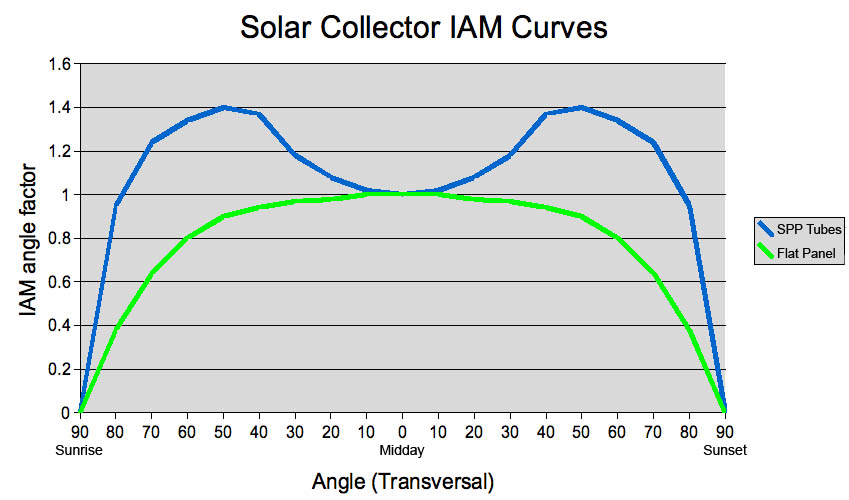
This phenomenon is described by Fresnel equations, which are complex formulas but boil down to a simple reality for solar panels: a significant portion of the sun’s energy can be lost due to reflection when the angle of incidence is steep. This is why many modern solar panels incorporate anti-reflective coatings, designed to minimize this loss, especially at wider angles, but they can only do so much.
Reduced Effective Surface Area: The Geometry of Power
Even if every photon that hit your panel were absorbed, an unfavorable angle of incidence would still reduce output because of how light spreads across a surface. This is often explained by the cosine law or the lambert cosine law, though for solar panels, it’s more simply understood as the ‘effective area’ phenomenon.
Imagine shining a flashlight directly onto a wall – you get a bright, concentrated circle of light. Now, shine that same flashlight onto the wall at a steep angle – the light spreads out into an ellipse, becoming less intense over any given square inch. The total amount of light leaving the flashlight hasn’t changed, but how it’s distributed over the surface has.
Similarly, when sunlight hits a solar panel at a non-perpendicular angle, the same amount of solar energy is effectively ‘spread out’ over a larger physical area of the panel. This means that per square inch of the panel, fewer photons are being received than if the sun were hitting it head-on. The effective area that the sunlight ‘sees’ becomes smaller, leading to a proportional decrease in power generation.
Beyond Direct Sunlight: Diffused Light and IAM (Incident Angle Modifier)
It’s important to remember that not all sunlight is direct. On cloudy days, or even partly cloudy days, a significant portion of the sunlight reaching your panels is diffused light – light that has scattered in the atmosphere. Diffused light comes from all directions, so the angle of incidence concept becomes less straightforward. However, direct sunlight is always the most potent source of power.
Manufacturers and engineers use something called the Incident Angle Modifier (IAM) to account for the performance of solar panels at various angles of incidence. The IAM is a factor that describes how much light transmission is reduced at different angles due to reflection and absorption losses. A panel with a good IAM will perform better at wider angles compared to one with a poor IAM, especially in real-world conditions where the angle of incidence is rarely perfect.
Quantifying the Impact: How Much Power Do You Really Lose?
Understanding the physics is one thing, but what does this mean for your actual electricity bill? The losses due to suboptimal angles of incidence can be significant, ranging from a few percentage points to over 50% in extreme cases. Let’s look at some illustrative numbers.
The “Cosine Law” in Action: Illustrative Output Examples
While real-world performance is influenced by many factors (temperature, shading, panel quality, etc.), the theoretical maximum output loss due to the cosine effect alone provides a good baseline. Here’s a simplified look at how power output theoretically decreases as the angle of incidence deviates from 0 degrees:
| Angle of Incidence (degrees) | Theoretical % of Max Output | Loss from Max Output |
|---|---|---|
| 0° | 100% | 0% |
| 15° | 96.6% | 3.4% |
| 30° | 86.6% | 13.4% |
| 45° | 70.7% | 29.3% |
| 60° | 50.0% | 50.0% |
| 75° | 25.9% | 74.1% |
| 90° | 0% | 100% |
As you can see, even a deviation of 30 degrees can lead to a substantial loss of over 13% of your potential power. At 45 degrees, you’re almost losing a third of your power. These numbers illustrate why optimizing your panel’s orientation is not just good practice, but absolutely critical for your system’s efficiency.
Real-World Scenarios: Factors Beyond Angle of Incidence
While the angle of incidence is paramount, it’s just one piece of the puzzle. In the real world, several other factors contribute to PV system losses:
- Shading: Even partial shading from trees, chimneys, or neighboring buildings can drastically reduce output, often disproportionately affecting the entire string of panels.
- Temperature Coefficients: Solar panels become less efficient as they get hotter. This is why good ventilation behind panels is important.
- Dirt and Debris: Dust, pollen, bird droppings, and leaves accumulate on panels, blocking sunlight.
- Panel Quality and Degradation: Over time, panels naturally degrade. The quality of the panels themselves also plays a role in their baseline efficiency.
- Inverter Losses: The process of converting DC power from panels to AC power for your home involves some efficiency loss.
- Wiring Losses: Resistance in the wiring can lead to minor power losses.
A professional solar installer will consider all these factors during their site assessment, but understanding the angle of incidence empowers you to ask informed questions and advocate for the best possible setup for your home.
Mastering Your Solar Panel’s Output: Practical Solutions for Homeowners
Now that you understand why* the angle of incidence matters, let’s explore the practical ways you can optimize your solar panel output. For most homeowners, this revolves around strategically choosing your tilt angle and azimuth.
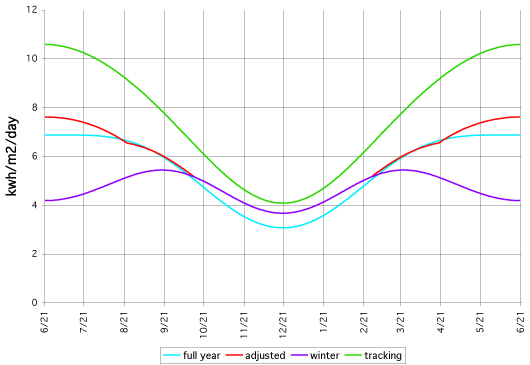
Optimal Tilt Angle: Your First Line of Defense
The tilt angle is the angle at which your solar panels are installed relative to the horizontal ground. This is distinct from the angle of incidence, which is dynamic based on the sun’s position. However, by setting an optimal tilt angle, you are strategically positioning your panels to minimize the average angle of incidence over the course of the year or a specific season.
General Rules of Thumb:
- Latitude as a Guide: A widely accepted rule for fixed panels aiming for year-round optimal performance is to set the tilt angle approximately equal to your geographical latitude. For example, if you live at 35 degrees North latitude, a 35-degree tilt would be a good starting point. This provides a balance between summer and winter sun.
- Seasonal Adjustments: To maximize output during specific seasons, you might adjust the tilt.
- Winter Optimization: In winter, the sun is lower in the sky. To catch more of its rays, you’d increase the tilt angle (make it steeper) by about 10-15 degrees relative to your latitude.
- Summer Optimization: In summer, the sun is higher. To be more perpendicular to the sun, you’d decrease the tilt angle (make it flatter) by about 10-15 degrees relative to your latitude.
Optimal Tilt Angles by Latitude and Season (Illustrative Example for Northern Hemisphere)
| Latitude Range (Northern Hemisphere) | Year-Round Optimal Tilt | Winter Optimal Tilt | Summer Optimal Tilt |
|---|---|---|---|
| 25-35° N (e.g., Florida, Southern California) | 25-30° | 40-45° | 10-15° |
| 35-45° N (e.g., Mid-Atlantic, Midwest, Northern California) | 35-40° | 50-55° | 20-25° |
| 45-55° N (e.g., Pacific Northwest, New England) | 45-50° | 60-65° | 30-35° |
Note: These are general guidelines. Local weather patterns, prevailing cloud cover, and specific energy needs (e.g., higher energy demand in winter for heating) might influence the optimal choice for your property.
Azimuth Angle: Facing the Sun Head-On
While tilt deals with the vertical angle, azimuth angle refers to the horizontal direction your panels face. In the Northern Hemisphere, south-facing panels (180 degrees azimuth) are generally considered ideal for maximizing year-round energy production because the sun spends most of its time in the southern sky.
- Pure South (180°): Provides the most consistent, balanced output throughout the year.
- East/West Split: If a perfect south orientation isn’t possible (e.g., due to roof orientation or shading), an East/West split can be a good alternative. East-facing panels capture morning sun, and west-facing panels capture afternoon sun. While the peak output might be lower than pure south, this configuration can spread energy production throughout the day, which can be advantageous if your electricity rates vary by time of day (time-of-use tariffs).
The Case for Solar Tracking Systems: Chasing the Sun
For ultimate optimization of the angle of incidence, nothing beats a solar tracking system. These sophisticated mounts automatically adjust the orientation of your panels throughout the day and year to ensure they are always facing the sun directly (or as close to 0-degree angle of incidence as possible).
- Single-Axis Trackers: Typically track the sun from east to west, adjusting the azimuth angle. They can increase output by 20-30% compared to fixed systems.
- Dual-Axis Trackers: Track both the east-west movement (azimuth) and the seasonal north-south movement (tilt). These offer the highest possible energy yield, often boosting output by 30-45% compared to fixed panels.
Pros and Cons of Tracking Systems:
- Pros: Significantly higher energy production, better morning/evening output.
- Cons: Higher upfront cost, more complex installation, moving parts require maintenance, larger footprint, not always aesthetically pleasing for residential use.
Tracking systems are more commonly used in large-scale commercial or utility solar farms where maximizing every watt justifies the added expense and complexity. For most homeowners, a well-positioned fixed-tilt system offers an excellent balance of cost and performance.
Seasonal Adjustments: Maximizing Winter & Summer Harvest
If you have ground-mounted panels or a racking system that allows for manual adjustment, changing your tilt angle seasonally can yield significant benefits. Adjusting panels 2-4 times a year (e.g., spring, summer, fall, winter) can boost annual output by 5-10% compared to a fixed year-round optimal angle.
- When to Adjust: Consider adjusting around the solstices (June 20/21 for summer, December 21/22 for winter) and equinoxes (March 20/21 for spring, September 22/23 for fall).
- How to Adjust: Consult your panel installation manual or a solar professional for safe adjustment procedures.
While not for everyone, especially those with roof-mounted systems, this hands-on approach can truly optimize your energy harvest.
Professional Consultation: Getting It Right From the Start
The best way to ensure your solar panels are optimally positioned is to work with experienced solar professionals. They conduct thorough site assessments, considering:
- Your specific latitude and local climate data.
- Roof pitch and orientation.
- Potential shading throughout the day and year.
- Your household’s energy consumption patterns and any time-of-use electricity rates.
- Available space for ground mounts or trackers.
Their expertise ensures your system is designed not just for maximum power, but for the most cost-effective and practical installation for your unique situation.
Beyond the Angle: Other Ways to Boost Your Solar Performance
While mastering the angle of incidence and tilt is crucial, there are other straightforward steps you can take to ensure your solar investment continues to deliver peak performance.

Regular Cleaning and Maintenance
It sounds simple, but keeping your panels clean is incredibly important. Dust, dirt, pollen, bird droppings, and even leaves can accumulate on the surface, blocking sunlight and reducing efficiency. A study by the National Renewable Energy Laboratory (NREL) found that dirty solar panels can lose up to 25% of their efficiency. While rain helps, it’s not always enough, especially for stubborn grime.
- Frequency: Depending on your environment (e.g., dusty rural areas, urban pollution, heavy pollen seasons), clean your panels 1-4 times a year.
- Method: Use a soft brush or squeegee with mild soap and water. Always clean when panels are cool (early morning or late evening) to prevent thermal shock and spotting. For roof-mounted systems, consider hiring a professional cleaner for safety.
Shading Mitigation
Even a small amount of shade on just one part of a panel, or one panel in a string, can disproportionately reduce the output of the entire system. This is due to how panels are wired (in series circuits). Modern systems often use microinverters or power optimizers to mitigate this problem, allowing individual panels to perform independently.
- Tree Trimming: Prune any overhanging branches that cast shadows on your panels, especially during peak sun hours.
- Monitor New Obstructions: Be aware of new construction or vegetation growth that could create future shading issues.
Investing in Quality Panels and Inverters
The upfront cost of a solar system is significant, and choosing high-quality components pays dividends in long-term performance and reliability. Better panels often have superior temperature coefficients (less efficiency loss in heat) and more robust anti-reflective coatings, which can help mitigate losses from less-than-ideal angles of incidence.
- Panel Efficiency: Higher efficiency panels convert more sunlight into electricity per square foot.
- Inverter Type: String inverters, microinverters, and power optimizers each have their pros and cons. Microinverters and optimizers generally offer better performance in shaded conditions or complex roof layouts.
- Warranties: Look for strong performance and product warranties from reputable manufacturers.
The Future of Solar Efficiency: Innovations on the Horizon
The solar industry is constantly evolving, with researchers and engineers striving to push the boundaries of efficiency and affordability. These advancements will further enhance our ability to capture and utilize solar energy, making the precise angle of incidence even less of a constraint.
Advanced Coatings and Materials
New anti-reflective and self-cleaning coatings are continually being developed. These innovations aim to further reduce light reflection across a wider range of incident angles and minimize maintenance needs, ensuring panels stay cleaner and perform better for longer.
Bifacial Panels and Concentrated Solar Power (CSP)
- Bifacial Panels: These panels can capture sunlight from both their front and back sides. When mounted correctly (e.g., on a light-colored roof or elevated ground mount), they can absorb light reflected off the surface below, significantly increasing overall energy yield. This effectively broadens the ‘catchment’ area for photons, making the direct angle of incidence less critical for overall output.
- Concentrated Solar Power (CSP): While typically for large-scale utility projects, CSP systems use mirrors or lenses to concentrate a large area of sunlight onto a small area of solar cells, or to heat a fluid to generate electricity. These systems often employ precise tracking to maintain an optimal angle to the sun.
Smart Grids and Energy Storage
As solar technology advances, so does the way we manage and store the energy it produces. Integration with smart grids allows for more efficient distribution of solar power, while advancements in battery storage mean you can capture excess energy during peak sunlight hours (when your angle of incidence is most favorable) and use it when the sun isn’t shining. This ultimately maximizes the value of every watt your panels generate.
Your Solar Investment: Knowledge is Power
Understanding the intricate relationship between solar panel output and the angle of incidence isn’t just academic; it’s a powerful tool for maximizing your solar investment. From choosing the optimal fixed tilt and azimuth during installation to considering dynamic tracking systems or even making seasonal adjustments, every decision influences your system’s overall efficiency and the financial returns you’ll see.
By focusing on proper orientation, maintaining clean panels, mitigating shade, and staying informed about new technologies, you ensure your solar setup is always performing at its peak. Don’t let valuable sunlight go to waste; empower yourself with this knowledge and harvest every ray the sun offers.
Frequently Asked Questions
What is the angle of incidence for solar panels?
The angle of incidence is the angle formed between a ray of sunlight and a line perpendicular to your solar panel’s surface (its ‘normal’). When sunlight hits the panel directly head-on, the angle of incidence is 0 degrees, which is ideal for maximum energy absorption.
Why does the angle of incidence affect solar panel output?
A non-optimal angle of incidence reduces output primarily due to two factors: 1) Increased reflection of sunlight off the panel’s surface, meaning less light is absorbed. 2) A reduced ‘effective surface area’ where the sunlight is spread over a larger physical area of the panel, diminishing the intensity of photons per square inch.
What is the ideal angle for sunlight to hit a solar panel?
The ideal angle for sunlight to hit a solar panel is when the angle of incidence is 0 degrees, meaning the sun’s rays are perfectly perpendicular to the panel’s surface. This maximizes the absorption of light and minimizes reflection.
How does tilt angle relate to the angle of incidence?
The tilt angle is the fixed angle at which your solar panel is mounted relative to the ground. By choosing an optimal tilt angle, you’re trying to set your panel in a position that minimizes the average angle of incidence over a specific period (e.g., year-round, or a particular season) as the sun moves across the sky.
Should I adjust my solar panel tilt angle seasonally?
If you have ground-mounted panels or an adjustable racking system, making seasonal adjustments can significantly boost your annual energy output (by 5-10%). In winter, you’d typically increase the tilt angle to catch the lower sun, and in summer, you’d decrease it for the higher sun.
Are solar tracking systems worth it for homeowners?
Solar tracking systems offer the highest energy yield by continuously adjusting panel orientation to follow the sun. While they can increase output by 20-45% compared to fixed systems, their higher upfront cost, complexity, maintenance needs, and larger footprint often make them more suitable for large commercial or utility projects than typical residential installations.


Post Comment