Solar Panel Installation For Home In India
Unlock Solar Freedom: Your Definitive Guide to Home Solar Panel Installation in India
Imagine a life where your electricity bills are dramatically lower, or even non-existent. A life where you’re not constantly worrying about power cuts or rising utility costs. For homeowners in India, this isn’t a futuristic dream – it’s a tangible reality made possible by solar panel installation. Moving to solar isn’t just an eco-conscious choice; it’s a smart financial investment that promises long-term savings and energy independence.
Table of Contents
- Unlock Solar Freedom: Your Definitive Guide to Home Solar Panel Installation in India
- Why Solar Power is a Game-Changer for Indian Homes
- Demystifying Solar Panel Costs in India: What to Expect
- Factors Influencing Cost:
- Average Solar Panel Installation Cost in India (2025/2026 Projections):
- Cost Breakdown:
- Navigating Government Subsidies & Financing Options in India
- PM Surya Ghar Muft Bijli Yojana: A Deep Dive:
- State-Specific Incentives:
- Financing Solutions:
- Your Step-by-Step Roadmap to Going Solar in India
- Step 1: Assess Your Energy Needs & Solar Potential
- Step 2: Choose the Right Solar System Type
- Step 3: Select Your Components & Installer Wisely
- Step 4: Application for Net Metering & Subsidies
- Step 5: Professional Installation & Commissioning
- Step 6: Monitoring & Maintenance
- Essential Considerations Before You Install Solar Panels
- Is Investing in Home Solar in India Truly Worth It? (The ROI)
- Ready to Embrace Solar Energy?
Perhaps you’re living abroad, looking to invest in your ancestral home, or you’re right there in India, navigating the complexities of modern energy solutions. Whatever your situation, understanding the ins and outs of solar panel installation for your home in India can feel overwhelming. That’s where I come in. This guide will cut through the noise, offering you a clear, human-first roadmap to harnessing the sun’s abundant power for your Indian home.
Why Solar Power is a Game-Changer for Indian Homes
India is blessed with an abundance of sunshine, making it an ideal location for solar energy adoption. But beyond the obvious, here’s why going solar is a profoundly impactful decision for homeowners:
- Substantial Savings: This is often the primary driver. By generating your own electricity, you significantly reduce your reliance on the grid, leading to massive savings on your monthly electricity bills. Over the 25+ year lifespan of a solar system, these savings compound into a significant sum.
- Energy Independence & Reliability: Power cuts and unreliable grid supply are realities in many parts of India. An appropriately designed solar system, especially hybrid or off-grid, can provide consistent power, ensuring your home runs smoothly, day and night. You become less vulnerable to grid failures and price fluctuations.
- Environmental Impact: Every unit of solar energy you generate reduces your carbon footprint. You’re directly contributing to a cleaner, greener India and helping combat climate change by reducing dependence on fossil fuels.
- Property Value Boost: Homes equipped with solar panels are increasingly attractive to buyers. A solar installation can significantly increase your property’s market value, making it a sound long-term asset.
Demystifying Solar Panel Costs in India: What to Expect
Let’s talk numbers. One of the first questions on every homeowner’s mind is, “How much does solar panel installation actually cost?” While prices vary, understanding the factors involved and having a realistic expectation is key. India’s solar market is competitive, and government incentives make it even more accessible.
Factors Influencing Cost:
The total cost isn’t just about the panels themselves. Several elements contribute:
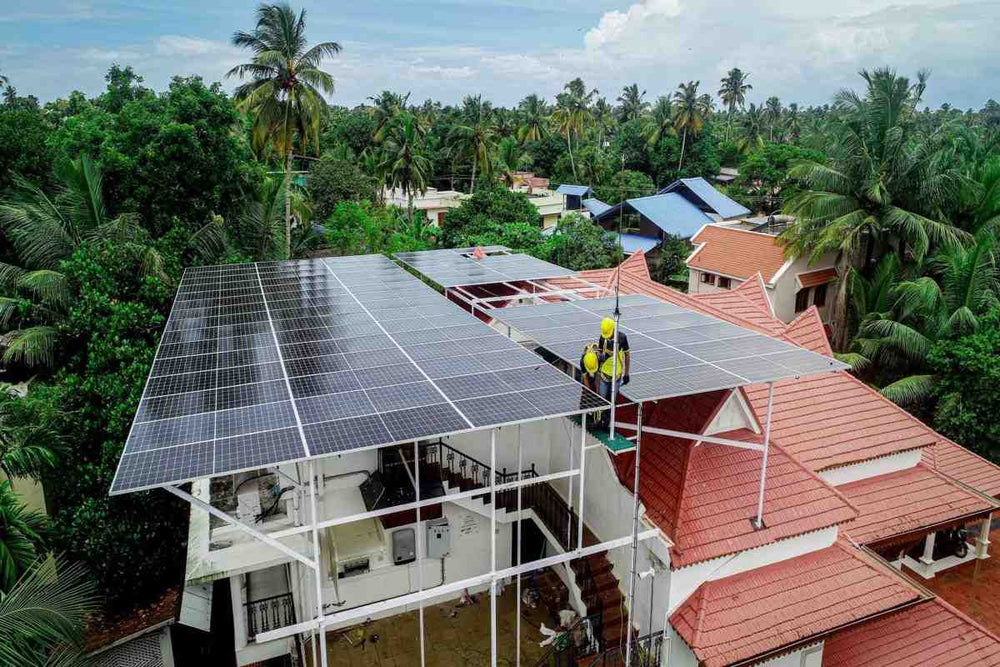
- System Size (kW): This is the biggest factor. A 1kW system will cost far less than a 10kW system. Your energy consumption dictates the size you need.
- Panel Type: Monocrystalline, Polycrystalline, and newer technologies like Bi-facial panels have different efficiencies and price points. Monocrystalline is generally more efficient but pricier.
- Inverter Type: String inverters are common, but micro-inverters (for individual panel optimization) or hybrid inverters (for battery integration) can add to the cost.
- Battery Storage (if Off-Grid/Hybrid): Batteries are a significant expense but crucial for storing excess energy in off-grid or hybrid systems. Lithium-ion batteries are more expensive upfront but offer longer life and better performance than lead-acid.
- Installation Complexity: Roof type, accessibility, wiring runs, and structural reinforcements can influence labor costs.
- Government Subsidies: These can drastically reduce your net cost (more on this below!).
- Location: While less impactful than other factors, regional differences in labor costs and material availability can play a small role.
Average Solar Panel Installation Cost in India (2025/2026 Projections):
To give you a clearer picture, here’s an estimated cost breakdown for common residential solar system sizes. Remember, these are averages and can fluctuate based on the factors above, especially after considering subsidies.
| System Size (kW) | Approx. Cost (INR, Pre-Subsidy) | Approx. Space Required (sq. ft.) | Avg. Monthly Savings (INR) | Estimated ROI Period (Years) | Suitable For |
|---|---|---|---|---|---|
| 1 kW | ₹60,000 – ₹80,000 | 100 | ₹800 – ₹1,200 | 4 – 6 | Very small homes, basic lighting & fans |
| 3 kW | ₹1,50,000 – ₹2,20,000 | 300 | ₹2,500 – ₹3,500 | 3 – 5 | Small to medium homes, lights, fans, fridge, 1 AC |
| 5 kW | ₹2,50,000 – ₹3,50,000 | 500 | ₹4,000 – ₹6,000 | 3 – 4 | Medium to large homes, multiple ACs, appliances |
| 10 kW | ₹5,00,000 – ₹7,00,000 | 1000 | ₹8,000 – ₹12,000+ | 3 – 4 | Large homes, commercial establishments, high energy use |
Cost Breakdown:
Typically, the cost is distributed as follows:
- Solar Panels: 40-50%
- Inverter: 10-15%
- Mounting Structure: 10-12%
- Balance of System (Cables, Connectors, etc.): 5-8%
- Labor & Installation: 10-15%
- Batteries (if applicable): Can add 20-40% to the total system cost.
Navigating Government Subsidies & Financing Options in India
This is where solar becomes even more appealing. The Indian government is aggressively pushing for solar adoption through significant subsidies and supportive policies, making it more affordable than ever for homeowners.
PM Surya Ghar Muft Bijli Yojana: A Deep Dive:
Recently launched, the PM Surya Ghar Muft Bijli Yojana is a game-changer. It aims to provide free electricity to 1 crore households by providing a substantial subsidy for rooftop solar installations. Here’s what you need to know:
- Eligibility Criteria: Primarily for residential households. Specific income criteria or other requirements might apply, so it’s crucial to check the latest guidelines on the official portal (pmsuryaghar.gov.in).
- Subsidy Structure: The scheme offers a central financial assistance (CFA) or subsidy directly to the homeowner. For example, as of current announcements, households can receive subsidies like:
- Up to 2 kW system: ₹30,000 per kW.
- For systems between 2-3 kW: ₹30,000 per kW for the first 2 kW, and ₹18,000 per kW for the additional capacity.
- For systems above 3 kW: A maximum of ₹78,000 (calculated as ₹30,000 for the first 2 kW + ₹18,000 for the 3rd kW).
This means a 3kW system could fetch a subsidy of ₹78,000, significantly reducing your upfront cost.
 Image Source: rmi.com
 - Application Process (Simplified): The process is designed to be user-friendly:
- Register on the official PM Surya Ghar portal.
- Apply for a rooftop solar connection and choose your preferred vendor from the empanelled list.
- Get the system installed by the chosen vendor.
- Apply for net metering.
- Once inspected and approved, the subsidy amount is directly credited to your bank account.
- Expected Benefits: Beyond the subsidy, the scheme aims to provide up to 300 units of free electricity per month, translating into substantial savings over a year.
State-Specific Incentives:
Beyond the national scheme, many Indian states offer their own additional incentives, tax breaks, or relaxed regulations for solar installations. Always check with your local state electricity board or renewable energy development agency for specific schemes applicable in your region.
Financing Solutions:
Even with subsidies, the initial investment can be considerable. Fortunately, numerous banks and financial institutions in India now offer specialized solar loans or EMI (Equated Monthly Installment) options. These often come with attractive interest rates and flexible repayment tenures, making solar accessible to a broader range of homeowners. Many solar integrators also partner with banks to offer seamless financing solutions.
Your Step-by-Step Roadmap to Going Solar in India
Ready to make the switch? Here’s a clear, actionable guide to installing solar panels on your Indian home:
Step 1: Assess Your Energy Needs & Solar Potential
- Analyze Electricity Bills: Gather your last 6-12 months of electricity bills. This will show your average monthly consumption (in kWh) and help determine the right system size.
- Evaluate Roof Space & Sun Exposure: Is your roof strong enough? Does it get direct sunlight for most of the day? Are there significant shading issues (trees, taller buildings)? The orientation (ideally south-facing) and tilt are also important.
Step 2: Choose the Right Solar System Type
- On-Grid (Grid-Tied): This is the most common for urban homes. Your solar system is connected to the public electricity grid. When you produce more electricity than you consume, the excess is fed back into the grid, and you get credits via net metering. When your solar isn’t producing enough, you draw from the grid. Pros: No batteries needed (lower cost), eligible for net metering. Cons: Doesn’t work during power cuts (for safety reasons, it shuts down with the grid).
- Off-Grid: Ideal for remote areas with unreliable grid access. Your home relies solely on solar power, with batteries storing excess energy. Pros: Complete energy independence, works during power cuts. Cons: Higher initial cost due to batteries, larger space required for batteries, regular battery maintenance.
- Hybrid: The best of both worlds. Connects to the grid and includes battery storage. You can use solar, store excess in batteries, or feed it to the grid. During power cuts, you run on battery backup. Pros: Grid reliability, battery backup, energy independence. Cons: Higher cost than on-grid, more complex system.
Step 3: Select Your Components & Installer Wisely
- Panel Types: Choose between highly efficient (but pricier) monocrystalline panels or more cost-effective polycrystalline panels. Consider newer technologies like PERC or half-cut cells for better performance in varying light conditions.
- Inverters: Ensure your inverter is of good quality, has appropriate capacity, and comes with a solid warranty. Hybrid inverters are essential for systems with battery storage.
- Batteries (if applicable): Lithium-ion batteries offer superior performance, longer life cycles, and less maintenance compared to traditional lead-acid batteries, though at a higher upfront cost.
- Choosing a Reliable Installer: This is perhaps the most critical step. Look for companies with:
- Proper certifications and accreditations (e.g., MNRE-approved).
- A strong track record and positive customer reviews.
- Transparent pricing and detailed quotations.
- Comprehensive warranties on panels, inverters, and installation.
- Excellent after-sales service and maintenance support.
- Assistance with subsidy applications and net metering.
Step 4: Application for Net Metering & Subsidies
- Once you’ve chosen your installer and system design, they will typically assist you with these bureaucratic steps.
- Net Metering: For on-grid systems, this is crucial. Your installer will help you apply to your local electricity distribution company (DISCOM) for a net meter, which tracks the electricity you draw from and feed into the grid.
- Subsidy Application: If you’re opting for the PM Surya Ghar scheme or any state subsidy, your installer should guide you through the online application process and ensure all necessary documents are submitted correctly.
Step 5: Professional Installation & Commissioning
- The selected installer will handle the physical installation. This involves mounting the structure, installing panels, wiring, inverter installation, and connecting to your home’s electrical system and the grid.
- Ensure that all safety standards are met, and the installation adheres to relevant regulations.
- Once installed, the system will be commissioned, meaning it’s tested and activated. Your installer should provide a handover document and explain how to monitor your system’s performance.
Step 6: Monitoring & Maintenance
- Most modern solar inverters come with monitoring apps or web portals, allowing you to track your system’s energy generation in real-time.
- Regular Cleaning: Keep your panels free of dust, dirt, and bird droppings. Cleaning them every few weeks (or after heavy dust storms) will ensure optimal performance.
- Periodic Inspections: While solar systems require minimal maintenance, an annual professional inspection is recommended to check wiring, connections, and overall system health.
Essential Considerations Before You Install Solar Panels
Before you commit, here are a few more points to ponder:
- Roof Suitability: Beyond just space, consider the age and structural integrity of your roof. Solar panels add weight. Ensure your roof can support it, especially during monsoons or high winds.
- Electricity Load: Accurately assessing your current and future electricity needs is paramount. Don’t undersize your system, or you won’t maximize savings. Don’t oversize it excessively either, as this might not be cost-efficient (though net metering helps with excess).
- Warranty & After-Sales Support: Panels typically come with a 25-year performance warranty, and inverters with 5-10 years. Understand what’s covered and for how long. Good after-sales support ensures peace of mind.
- Regulatory Compliance: Ensure your chosen installer adheres to all local municipal and state regulations regarding permits, safety, and interconnection standards.
Is Investing in Home Solar in India Truly Worth It? (The ROI)
Absolutely. The return on investment (ROI) for solar panel installation in India is compelling, especially with current subsidies.

- Long-Term Savings: As seen in the cost table, the payback period (ROI) is often 3-6 years. Given that panels have a lifespan of 25 years or more, you’re essentially getting 20+ years of heavily subsidized or free electricity.
- Increased Property Value: Studies in various markets consistently show that homes with solar installations sell faster and at a higher price.
- Hedging Against Rising Electricity Tariffs: Electricity prices have historically only gone up. By fixing your energy cost today with solar, you’re insulating yourself from future tariff hikes.
- Contributing to a Greener India: Beyond personal gain, your investment contributes to national energy security and environmental sustainability, making a tangible difference for the planet and future generations.
Ready to Embrace Solar Energy?
The transition to solar for your home in India is a journey that pays dividends for decades. It’s an investment in your financial future, your comfort, and the environment. With robust government support, accessible financing, and increasingly efficient technology, there has never been a better time to switch to solar.
Take the first step: gather your electricity bills, assess your roof, and start reaching out to reputable solar installers. Empower your home with the sun, and enjoy the radiant benefits that follow.
Frequently Asked Questions
What is the average cost of installing solar panels for a home in India?
The average cost for home solar panel installation in India varies significantly based on system size and type. For instance, a 1 kW system might cost ₹60,000 – ₹80,000, while a 5 kW system could range from ₹2,50,000 – ₹3,50,000 before government subsidies. These costs include panels, inverters, mounting, and installation, with batteries adding substantially for off-grid systems.
How do government subsidies like the PM Surya Ghar Muft Bijli Yojana work?
The PM Surya Ghar Muft Bijli Yojana provides significant central financial assistance (CFA) to residential homeowners for rooftop solar. For example, systems up to 2 kW can receive ₹30,000 per kW, and for systems between 2-3 kW, a total of ₹78,000. The subsidy is directly credited to the homeowner’s bank account after successful installation and commissioning, making solar more affordable and aiming to provide up to 300 units of free electricity monthly.
What are the different types of solar systems available for homes in India?
There are three main types: On-Grid (Grid-Tied), which connects to the public electricity grid and uses net metering; Off-Grid, which operates independently with battery storage, ideal for areas with frequent power cuts; and Hybrid, a combination of both, offering grid connection with battery backup for enhanced reliability.
How much space is required for solar panel installation on an Indian home?
Generally, a 1 kW solar system requires approximately 100 square feet of shadow-free rooftop space. Therefore, a 3 kW system would need around 300 sq. ft., and a 5 kW system about 500 sq. ft. This space should ideally be south-facing and free from significant shading throughout the day for optimal energy generation.
What is net metering, and how does it benefit solar homeowners in India?
Net metering is a billing mechanism that credits solar energy system owners for the electricity they add to the grid. When your solar panels produce more electricity than your home consumes, the excess is sent back to the grid, and your electricity meter runs backward or gives you credits. When your panels aren’t producing enough, you draw from the grid, offsetting costs with your banked credits, effectively reducing or eliminating your electricity bill.
What is the typical Return on Investment (ROI) for home solar in India?
With government subsidies and increasing electricity tariffs, the typical return on investment (payback period) for home solar systems in India is often between 3 to 6 years. Considering that solar panels have a performance lifespan of 25 years or more, this means homeowners can enjoy 20+ years of significantly reduced or free electricity after the initial investment is recovered.


Post Comment