How Many Solar Panels Do I Need For My House
How Many Solar Panels Do I Need For My House? Your Definitive Guide to Home Solar Sizing
You’re probably here because you’re tired of energy bills and you’ve heard about the incredible savings solar panels can offer. Fantastic! Your first question, like most homeowners, is likely, “How many solar panels do I actually need for my house?”
Table of Contents
- How Many Solar Panels Do I Need For My House? Your Definitive Guide to Home Solar Sizing
- The Core Truth: It’s Not a One-Size-Fits-All Answer
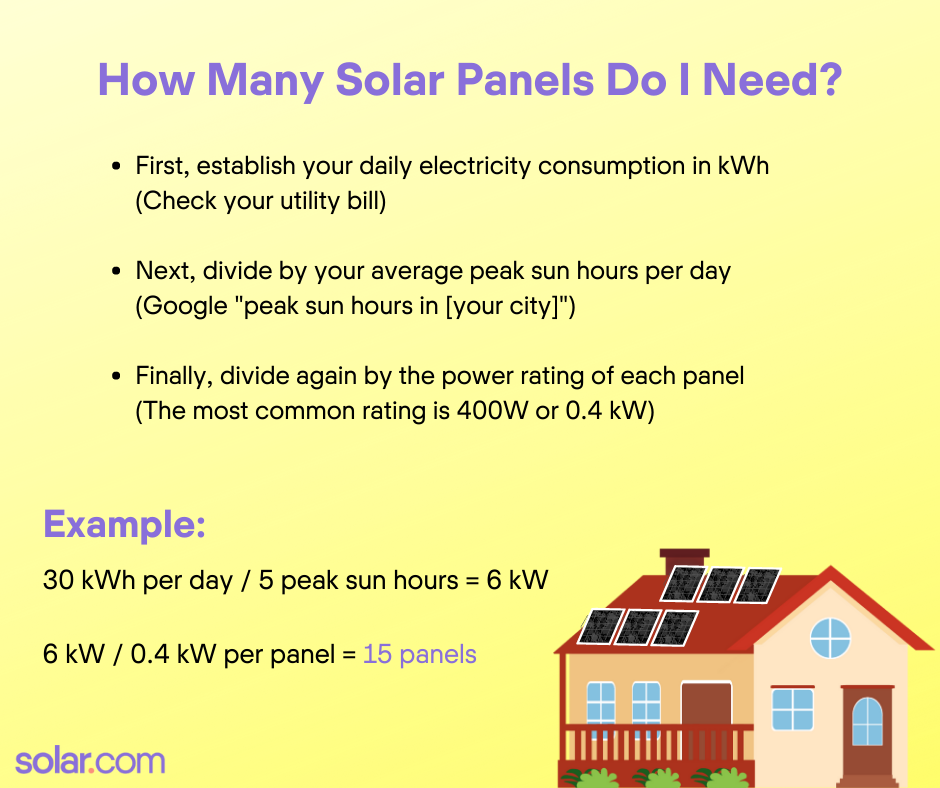
- Your 4-Step Action Plan: Calculating Your Home’s Solar Needs
- Step 1: Uncover Your Energy Consumption (The Most Important Number)
- Step 2: Understand Your Available Sunlight (Solar Irradiance Matters)
- Step 3: Choose Your Solar Panel Wattage and Efficiency
- Step 4: Account for Real-World Factors (And Your Roof’s Personality)
- Putting It All Together: Real-World Examples
- Example 1: The Average American Home (1,800 sq ft, Moderate Usage)
- Example 2: The Larger, Energy-Intensive Home (3,000 sq ft, High Usage + EV)
- Beyond the Numbers: Important Considerations for Your Solar Journey
- Grid-Tied vs. Off-Grid: What’s the Difference?
- The Impact of Battery Storage
- Maximizing Your Solar Investment: Don’t Forget Incentives
- Why Professional Installation is Crucial
- The Bottom Line: Your Path to Solar Clarity
Let’s cut to the chase: The quick, average answer you’ll often hear is that most U.S. homes need anywhere between 15 and 25 solar panels to cover 100% of their electricity usage. That’s a good starting point, but here’s the critical truth: your home isn’t “average,” and a generic estimate could cost you money or leave you short on power.
Getting this number right is the difference between maximizing your savings, achieving true energy independence, and potentially under or oversizing your system. Overlooked details can mean less sunshine converted into usable power, or an investment that doesn’t quite meet your expectations. This guide is designed to empower you with the exact knowledge and steps you need to move beyond averages and pinpoint precisely how many solar panels your unique home requires.
The Core Truth: It’s Not a One-Size-Fits-All Answer
Think of it like buying shoes. You wouldn’t just pick an “average” size and hope for the best, would you? Solar panels are the same. Your home’s energy consumption, its location, your roof’s characteristics, and even the type of panels you choose all play a significant role. Simply grabbing an average number might mean:
- Too Few Panels: You’re still buying a lot of electricity from the grid, diminishing your savings.
- Too Many Panels: You’ve paid for more equipment than you actually need, leading to a longer payback period. While some states offer net metering benefits for excess production, there’s a point of diminishing returns.
So, let’s roll up our sleeves and dive into the factors that truly matter.
Your 4-Step Action Plan: Calculating Your Home’s Solar Needs
Forget the guesswork. Here’s a practical, step-by-step approach to figure out your home’s optimal solar panel count.
Step 1: Uncover Your Energy Consumption (The Most Important Number)
This is the bedrock of your solar calculation. You can’t power your home if you don’t know how much power it uses! The unit we’re interested in is kilowatt-hours (kWh). Your monthly electricity bill is your best friend here.
Look for a section that details your kWh usage over the last 12 months. Why 12 months? Because your energy consumption fluctuates seasonally. You’ll use more AC in the summer and more heating in the winter. An annual average gives you the most accurate picture.
Pro Tip: If you’re planning significant changes – like buying an electric vehicle, adding a hot tub, or upgrading to more efficient appliances – factor those into your future consumption estimates. A solar system lasts for decades, so plan ahead!
The average U.S. household consumes approximately 850-900 kWh per month, or around 10,000-11,000 kWh per year. But remember, averages can be deceiving. Your home could be significantly higher or lower.
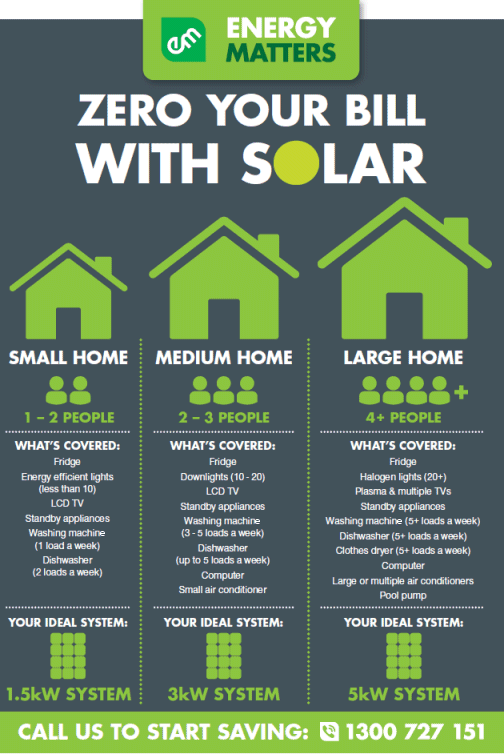
Here’s a general idea of how your energy usage translates to potential panel needs (we’ll refine this significantly in later steps):
| Annual Energy Consumption (kWh) | Description | Approximate Panels Needed (Initial Estimate, 400W panels) |
|---|---|---|
| 5,000 – 8,000 kWh | Low Usage / Smaller Home | 10 – 16 panels |
| 8,001 – 12,000 kWh | Average Usage / Medium Home | 16 – 24 panels |
| 12,001 – 18,000+ kWh | High Usage / Larger Home or EV | 24 – 36+ panels |
Step 2: Understand Your Available Sunlight (Solar Irradiance Matters)
This factor determines how much power each panel can *actually* generate in your specific location. We call this “peak sun hours” or “solar irradiance.” It’s not just about how many hours the sun is out, but how many hours it’s strong enough to generate significant solar electricity (equivalent to 1,000 watts per square meter).
Factors influencing your peak sun hours include:
- Geographic Location: A home in Arizona will receive more intense, consistent sunlight than one in Washington State.
- Roof Orientation: A south-facing roof in the Northern Hemisphere is generally ideal for maximum sun exposure throughout the day. East and west-facing roofs are also viable, but may require more panels. North-facing roofs are typically not suitable.
- Roof Angle (Pitch): The optimal angle varies by latitude, but typically a 30-45 degree pitch is excellent for year-round production.
- Shading: Trees, chimneys, neighboring buildings, or even utility poles can cast shadows, significantly reducing your panels’ output. Even partial shading on one panel can impact the entire string of panels in an older system.
To estimate, you can find average peak sun hours for your specific location. For example, many parts of the U.S. average 4-5 peak sun hours per day.
| U.S. Region (Example) | Average Daily Peak Sun Hours (Approx.) | Impact on Panel Count |
|---|---|---|
| Southwest (AZ, NV) | 5.5 – 6.5+ hours | Fewer panels needed for same output |
| Southeast (FL, GA) | 4.5 – 5.5 hours | Moderate panel count |
| Midwest (IL, OH) | 4.0 – 5.0 hours | Moderate to higher panel count |
| Northeast (NY, MA) | 3.5 – 4.5 hours | More panels likely needed |
Step 3: Choose Your Solar Panel Wattage and Efficiency
Not all solar panels are created equal. They come in various wattages, which indicates their maximum power output under ideal conditions (Standard Test Conditions – STC). Common residential panels today range from 300 watts to over 450 watts per panel.
- Higher Wattage Panels: These generate more electricity per panel, meaning you’ll need fewer panels to reach your desired system size. This is great if you have limited roof space.
- Panel Efficiency: This is the percentage of sunlight hitting the panel that gets converted into electricity. Modern panels are typically 17-23% efficient. More efficient panels often have higher wattages and cost more, but they produce more power in a smaller footprint.
Let’s say you need a 7,000-watt (7 kW) solar system to cover your annual consumption. Here’s how panel wattage affects the number of panels:
| Panel Wattage (W) | Number of Panels Needed for 7 kW System | Total Wattage (kW) |
|---|---|---|
| 300W | 24 panels | 7.2 kW |
| 350W | 20 panels | 7.0 kW |
| 400W | 18 panels | 7.2 kW |
| 450W | 16 panels | 7.2 kW |
Step 4: Account for Real-World Factors (And Your Roof’s Personality)
Even after calculating your theoretical needs, the real world throws a few curveballs. These factors refine your panel count:
- Roof Space Limitations: Do you have enough unobstructed roof area? Vents, skylights, chimneys, and even complex roof designs (multiple gables, dormers) can limit where panels can be placed. Each standard panel is roughly 65 inches by 39 inches (about 17.6 sq ft). Factor in setbacks from edges for safety and code compliance.
- System Losses: No solar system operates at 100% efficiency all the time. Factors like wiring resistance, temperature (panels produce less in extreme heat), dust/dirt, inverter losses, and minor shading all contribute to a reduction in actual output. Solar installers typically apply a “system loss factor” (e.g., 15-25%) to their calculations to account for this.
- Future Energy Goals: Are you aiming for 100% energy offset, or are you happy with, say, 70% to lower the initial cost? Your goal directly impacts the system size and panel count.
- Budget Considerations: While solar is an investment, your upfront budget might influence how large of a system you can install initially. Remember, incentives like the federal solar tax credit can significantly reduce costs.
- Net Metering Policies: Some utility companies have policies on how much excess energy you can send back to the grid and how you are credited for it. This can influence whether it makes sense to oversize your system.
Putting It All Together: Real-World Examples
Let’s walk through a couple of common scenarios to bring these steps to life.
General Calculation Formula:
n(Annual Energy Usage in kWh) / (Average Daily Peak Sun Hours * 365) = Daily System Size Needed (kW)
Then, (Daily System Size Needed in kW * 1000) / (Panel Wattage * (1 – System Loss Factor)) = Number of Panels
Let’s use a system loss factor of 20% for these examples, which is fairly typical.
Example 1: The Average American Home (1,800 sq ft, Moderate Usage)
- Energy Consumption: 10,000 kWh per year
- Location: Midwest (e.g., Ohio), averaging 4.5 peak sun hours/day
- Desired Panel Wattage: 400W panels
Step 1: Calculate Daily Energy Need:
n10,000 kWh / 365 days = 27.4 kWh per day
Step 2: Calculate System Size Needed (before losses):
n27.4 kWh per day / 4.5 peak sun hours = 6.09 kW system (or 6,090 watts)

Step 3: Account for System Losses:
n6,090 watts / (1 – 0.20 system loss) = 6,090 / 0.80 = 7,612.5 watts (or 7.6 kW)
Step 4: Calculate Number of Panels:
n7,612.5 watts / 400 watts per panel = ~19 panels
So, an average 1,800 sq ft home in Ohio, with moderate usage, would likely need around 19 x 400W solar panels.
Example 2: The Larger, Energy-Intensive Home (3,000 sq ft, High Usage + EV)
- Energy Consumption: 18,000 kWh per year (includes EV charging)
- Location: Southwest (e.g., Arizona), averaging 6.0 peak sun hours/day
- Desired Panel Wattage: 400W panels
Step 1: Calculate Daily Energy Need:
n18,000 kWh / 365 days = 49.3 kWh per day
Step 2: Calculate System Size Needed (before losses):
n49.3 kWh per day / 6.0 peak sun hours = 8.22 kW system (or 8,220 watts)
Step 3: Account for System Losses:
n8,220 watts / (1 – 0.20 system loss) = 8,220 / 0.80 = 10,275 watts (or 10.3 kW)
Step 4: Calculate Number of Panels:
n10,275 watts / 400 watts per panel = ~26 panels
For a larger, energy-intensive home in a sunny climate, you’d be looking at approximately 26 x 400W solar panels.
Here’s a general table summarizing estimated panel needs based on home size and energy usage, assuming 400W panels and an average of 4.5 peak sun hours/day with a 20% system loss factor:
| Home Size (Approx. Sq Ft) | Annual Energy Usage (kWh) | Estimated Panels Needed (400W) | Estimated System Size (kW) |
|---|---|---|---|
| 1,000 – 1,500 | 6,000 – 9,000 | 13 – 19 panels | 5.2 – 7.6 kW |
| 1,500 – 2,500 | 9,000 – 14,000 | 19 – 29 panels | 7.6 – 11.6 kW |
| 2,500 – 3,500+ | 14,000 – 20,000+ | 29 – 42+ panels | 11.6 – 16.8+ kW |
Beyond the Numbers: Important Considerations for Your Solar Journey
Calculating the number of panels is a huge step, but a few other factors will shape your overall solar experience and system design.
Grid-Tied vs. Off-Grid: What’s the Difference?
The vast majority of residential solar systems in the U.S. are grid-tied. This means your home remains connected to the utility grid. When your panels produce more electricity than you’re using, the excess goes back to the grid (and you get credits through net metering). When your panels aren’t producing (like at night), you draw power from the grid.
An off-grid system means your home is completely independent of the utility grid. This requires not only solar panels but also a robust battery bank to store energy for nighttime and cloudy days, and often a backup generator. Off-grid systems are typically more complex and expensive, requiring a significantly larger solar array and storage capacity to ensure reliable power.
The Impact of Battery Storage
While battery storage doesn’t directly change how many panels you need to *generate a certain amount of electricity, it fundamentally changes how you use* that electricity. Batteries store excess solar energy for later use, reducing your reliance on the grid, especially during peak utility rates or power outages.
If you’re aiming for energy resilience or time-of-use savings, integrating batteries is a smart move. A solar professional can help you size both your panel array and your battery storage to meet these specific goals.
Maximizing Your Solar Investment: Don’t Forget Incentives
The initial cost of solar can be significant, but various incentives can make it much more affordable:
- Federal Solar Tax Credit (ITC): This is currently a 30% tax credit for the cost of your solar system. It’s a direct reduction of the amount of income tax you owe, not just a deduction.
- State and Local Incentives: Many states and even local municipalities offer additional rebates, tax credits, or property tax exemptions for solar installations.
- Net Metering: As mentioned, this allows you to sell excess electricity back to the grid, further reducing your bills.
These incentives can dramatically reduce your payback period and increase your overall return on investment. Make sure to research what’s available in your area!
Why Professional Installation is Crucial
While DIY solar might seem tempting, especially for small projects, for a whole-home system, professional installation is almost always the best path. Here’s why:
- Safety: Working on roofs with high-voltage electricity is dangerous. Professionals have the training and equipment.
- Efficiency & Performance: Experts optimize panel placement, angle, and wiring for maximum energy production.
- Permitting & Code Compliance: Solar installations require specific permits and must adhere to local building and electrical codes. Professionals handle all this complex paperwork.
- Warranties: Most equipment and workmanship warranties are voided if not installed by a certified professional.
- Incentive Eligibility: Many incentives require professional installation.
The Bottom Line: Your Path to Solar Clarity
Determining how many solar panels you need for your house isn’t about pulling a number out of thin air. It’s a calculated, personalized process that takes into account your energy habits, your home’s unique characteristics, and your financial goals.
By understanding your energy consumption, assessing your sun exposure, considering panel wattage, and factoring in real-world limitations, you can arrive at a highly accurate estimate. This knowledge empowers you to have informed conversations with solar providers and ensure you get a system that truly meets your needs.
Ready to get started? Your next best step is to gather your last 12 months of electricity bills and reach out to reputable local solar professionals. They can perform a detailed site assessment, provide precise calculations, and offer system designs tailored specifically for your home. The sun is waiting!
Frequently Asked Questions
What is the average number of solar panels needed for a house?
Most U.S. homes typically need between 15 and 25 solar panels to cover 100% of their electricity usage. However, this is an average, and your specific needs will depend on factors like your energy consumption, location, and panel wattage.
How do I calculate my home’s energy consumption?
The easiest way is to review your electricity bills from the past 12 months. Look for the ‘kWh’ (kilowatt-hour) usage. Calculating an annual average gives the most accurate picture, as consumption varies seasonally.
Does my location affect how many solar panels I need?
Absolutely. Locations with more ‘peak sun hours’ (more intense, direct sunlight) will require fewer panels to generate the same amount of electricity compared to areas with fewer peak sun hours. Roof orientation and shading also play a big role.
How does solar panel wattage influence the number of panels?
Higher wattage panels (e.g., 400W vs. 300W) produce more electricity individually, meaning you’ll need fewer panels to achieve your desired total system size. This is particularly beneficial if you have limited roof space.
What are ‘system losses’ in solar calculations?
System losses account for factors that reduce a solar panel’s actual output compared to its ideal rating. These include temperature effects, wiring resistance, inverter efficiency, dust/dirt buildup, and minor shading. Installers typically factor in a 15-25% loss.
Is it better to undersize or oversize my solar panel system?
Ideally, you want to ‘right-size’ your system. Undersizing means you’ll still rely heavily on grid electricity, limiting savings. Oversizing means paying for more panels than you truly need, increasing upfront costs and potentially extending the payback period, though some states allow selling excess power back to the grid.


Post Comment