Pros And Cons Of Solar Panel Leasing
Solar Panel Leasing: Unpacking the Real Pros, Cons, and Hidden Truths for Your Home’s Energy Future
Dreaming of harnessing the sun’s power for your home, reducing your carbon footprint, and slashing those ever-increasing electricity bills? For many homeowners, the upfront cost of buying a solar panel system outright feels like an insurmountable barrier. That’s where solar panel leasing often steps in, presenting itself as a tempting, no-money-down solution.
Table of Contents
- Solar Panel Leasing: Unpacking the Real Pros, Cons, and Hidden Truths for Your Home’s Energy Future
- What Exactly is Solar Panel Leasing? A Primer on How It Works
- The Core Concept: Using Solar Without Owning It
- Lease vs. PPA: Understanding the Subtle but Significant Differences
- The Alluring Upsides: Why Solar Leasing Can Be So Appealing
- Zero Upfront Costs: Immediate Access to Clean Energy
- No Maintenance Headaches: The Provider Handles Everything
- Predictable Monthly Payments: Budgeting Made Easier (Often with Electricity Savings)
- Hassle-Free Installation and (Potentially) Removal
- Performance Guarantees: Your System Should Work as Advertised
- The Hidden Downsides: Unpacking the Less Obvious Truths of Solar Leasing
- Forfeiting Major Incentives: No Federal Solar Tax Credit or Local Rebates
- Lower Long-Term Savings: The True Financial Opportunity Cost
- The Home Sale Headache: Why Leased Systems Scare Buyers
- Escalator Clauses: Watch Out for Rising Payments
- No Increase in Home Value: You’re Leasing, Not Investing
- Lease Transfer Complications: What Happens If You Move?
- Limited System Control: Upgrades and Modifications
- Lease vs. Buy vs. PPA: A Head-to-Head Financial and Ownership Showdown
- Critical Red Flags & Contractual Caveats to Watch For
- The Dreaded Escalator Clause: Is Your Rate Fair?
- End-of-Lease Options: Renewal, Purchase, or Removal – What’s the Catch?
- Performance Guarantees and Penalties: What if Your System Underperforms?
- Understanding Liens and Property Rights
- The Lease Transfer Process: Clarity is King
- Is Solar Panel Leasing Right for You? Identifying Your Ideal Path
- When Leasing Shines: Ideal Candidates and Scenarios
- When to Avoid Leasing: Situations Where Buying or a PPA is Better
- Making an Informed Decision: Your Action Plan Before You Sign
- Get Multiple Quotes (Including Purchase Options!)
- Read Every Single Line of the Lease Agreement
- Project Your Financials: Long-Term Costs and Savings
- Consider Your Future Plans (Moving, Home Upgrades)
- Consult Independent Financial and Legal Advice
- The Bottom Line: Solar Leasing Isn’t Always the Sunny Deal It Seems
It sounds perfect, right? Get solar without the massive investment. But here’s the truth: like anything that seems too good to be true, solar leasing comes with its own set of complexities, trade-offs, and crucial details you absolutely need to understand before you sign on the dotted line. It’s not a simple ‘yes’ or ‘no’ answer; it’s about finding the right fit for your financial situation, your home, and your long-term goals.
I’m here to cut through the marketing fluff and give you the definitive, no-holds-barred look at solar panel leasing. We’ll peel back the layers to reveal if it’s a sunny deal for your energy future or a cloudy commitment that could cause headaches down the road. Let’s get into it.
What Exactly is Solar Panel Leasing? A Primer on How It Works
At its core, a solar panel lease is a contract where a solar provider installs and maintains a solar energy system on your roof, and in return, you pay them a fixed monthly fee for the electricity the system produces, or simply a lease payment for the equipment itself. Think of it like leasing a car: you get to use it, but you don’t own it.
The Core Concept: Using Solar Without Owning It
When you lease solar panels, you become a tenant of the solar system, not the owner. The solar company remains the legal owner of the equipment, and they are responsible for its performance, maintenance, and repairs throughout the lease term, which typically ranges from 15 to 25 years. Your primary responsibility is to make your regular lease payments.
This model is particularly attractive because it eliminates the need for a large initial capital outlay. Instead of buying the panels, inverter, and mounting hardware, you effectively rent them, allowing you to benefit from solar energy’s savings from day one.
Lease vs. PPA: Understanding the Subtle but Significant Differences
While often grouped together, solar leases and Power Purchase Agreements (PPAs) have a key distinction:
- Solar Lease: You pay a fixed monthly payment for the equipment itself, regardless of how much electricity it generates. Your electricity bill is separate, but often lower thanks to the solar production.
- Solar PPA (Power Purchase Agreement): You agree to buy the electricity generated by the solar panels at a fixed per-kilowatt-hour (kWh) rate, which is typically lower than your utility company’s rate. You only pay for the power the system produces. The solar company still owns and maintains the system.
For the purpose of this guide, many of the pros and cons discussed for leases also apply to PPAs, as neither involves system ownership by the homeowner.
The Alluring Upsides: Why Solar Leasing Can Be So Appealing
It’s easy to see why solar leasing has gained popularity. For many, it represents the most accessible way to embrace renewable energy. Here are the main advantages that draw homeowners in:
Zero Upfront Costs: Immediate Access to Clean Energy
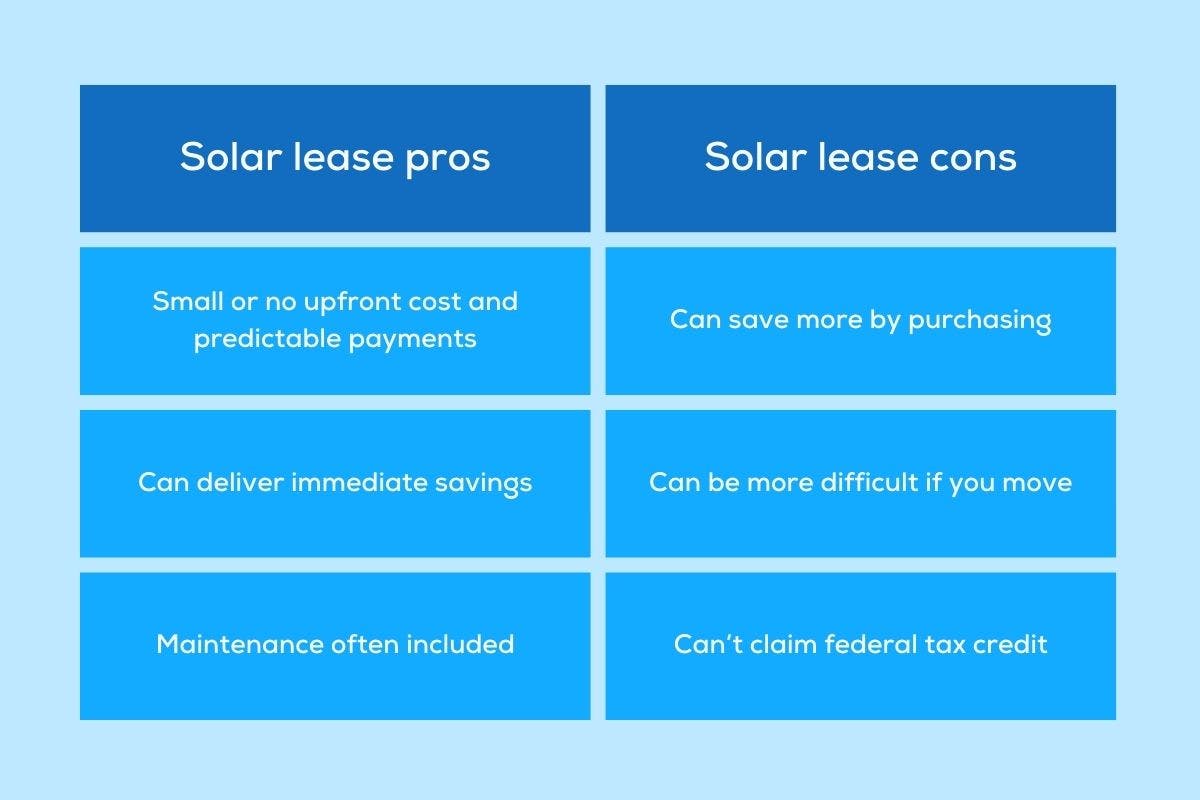
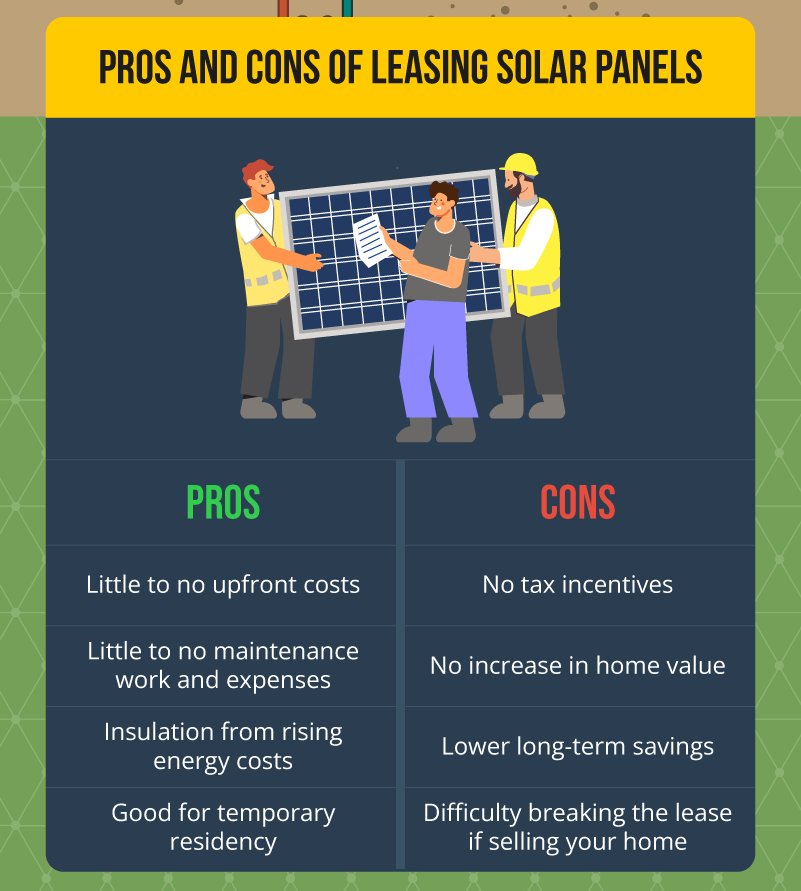
This is arguably the biggest draw. With a solar lease, you typically pay nothing upfront for the installation of the solar panel system. The solar provider covers the entire cost of equipment, design, and installation. This means you can start generating your own clean energy and potentially lowering your utility bills without having to drain your savings or take out a loan for the initial investment. For homeowners who want to go solar but lack the immediate funds for a purchase, this is a game-changer.
No Maintenance Headaches: The Provider Handles Everything
Since the solar company owns the system, they are entirely responsible for its performance and upkeep. This includes monitoring the system, repairing or replacing faulty equipment (like an inverter), and even cleaning the panels if required by your contract. If a panel breaks or stops producing energy, it’s their problem, not yours. This peace of mind can be incredibly valuable, especially for those who aren’t keen on learning the intricacies of solar system maintenance.

Predictable Monthly Payments: Budgeting Made Easier (Often with Electricity Savings)
Your lease agreement will stipulate a clear, predictable monthly payment for the solar system. This allows for easier budgeting, as you know exactly what your solar expense will be each month. Often, this monthly lease payment combined with your (reduced) utility bill for any supplemental electricity is still less than what you were paying the utility company pre-solar. This immediate savings can be very attractive.
Hassle-Free Installation and (Potentially) Removal
The solar leasing company manages the entire installation process, from permits and design to final setup. When the lease term expires (typically 20-25 years), the provider is generally responsible for removing the panels and restoring your roof, although you should always verify the specifics in your contract. This ensures you don’t have to worry about the logistics of decommissioning the system.
Performance Guarantees: Your System Should Work as Advertised
Most lease agreements come with performance guarantees. This means the solar provider promises that the system will produce a certain amount of electricity annually. If it falls short due to equipment issues, the leasing company may be obligated to compensate you or fix the problem. This offers a layer of protection, ensuring you get the energy production you’re paying for.
The Hidden Downsides: Unpacking the Less Obvious Truths of Solar Leasing
While the benefits of solar leasing are clear, it’s crucial to understand the significant drawbacks that often go unmentioned in initial sales pitches. These are the aspects that can lead to long-term regrets if not fully considered.
Forfeiting Major Incentives: No Federal Solar Tax Credit or Local Rebates
This is perhaps the biggest financial drawback. The lucrative federal solar Investment Tax Credit (ITC), currently 30% of the system’s cost, is only available to the system owner. Since the leasing company owns the panels, they reap the benefits of this massive tax credit and any other state or local incentives (like SRECs or rebates). This means you miss out on a significant portion of the potential savings that come with going solar, effectively subsidizing the leasing company’s investment.
Lower Long-Term Savings: The True Financial Opportunity Cost
While you might see immediate monthly savings on your electricity bill, your total long-term savings with a lease are typically much lower compared to buying a system outright. When you buy, you eventually pay off the system (or loan) and then enjoy free electricity for the remainder of its lifespan (25+ years). With a lease, you continue making payments for the entire term, and then at the end, you’ll either renew at a new rate, buy the depreciated system, or have it removed. You never truly achieve ‘free’ solar energy.
The Home Sale Headache: Why Leased Systems Scare Buyers
This is a major issue that homeowners often discover only when they decide to sell their property. A solar lease is a legally binding contract tied to the property, not just to you. When you sell your home, the lease must either be transferred to the new buyer or bought out.
Here’s why this is a problem:
- Buyer Reluctance: Many buyers are hesitant to take on someone else’s 15-20 year contract, especially one that might include an escalator clause (which we’ll discuss next). They often perceive it as a liability rather than an asset.
- Qualification Process: The new buyer will need to qualify for the lease, undergoing a credit check by the solar company. If they don’t qualify, the sale can fall through.
- Financing Complications: Some mortgage lenders are wary of homes with leased solar panels, as the lease can be considered a lien against the property. This can complicate or even derail financing for potential buyers.
- Price Impact: Anecdotal evidence and surveys suggest that homes with leased solar panels can sit on the market longer or even sell for less than comparable homes without leases, or homes with owned solar systems. You might have to offer concessions or even buy out the lease yourself to facilitate the sale.
Escalator Clauses: Watch Out for Rising Payments
Many solar leases include an “escalator clause,” which means your monthly payment will increase by a fixed percentage each year (commonly 2.9% to 3.9%). While this might seem small annually, over a 20-year lease, it can significantly increase your total cost. For example, a 3% annual escalator will make your monthly payment nearly double by the end of a 20-year term. You need to carefully compare this projected increase against your expected utility rate increases to ensure you’re truly saving money long-term.
No Increase in Home Value: You’re Leasing, Not Investing
While owned solar panels can significantly boost your home’s resale value, leased panels generally do not. Because you don’t own the system, it’s not considered an asset of your property. In fact, as discussed, it can even complicate a sale. You’re paying for the use of the equipment, not contributing to your home’s equity.
Lease Transfer Complications: What Happens If You Move?
If you move before your lease term ends, you’ll either have to find a buyer willing to assume the lease, or you might be forced to buy out the remainder of the contract. The process of transferring a lease can be lengthy and complex, potentially delaying your home sale. If you have to buy out the lease, that’s a significant unexpected expense.
Limited System Control: Upgrades and Modifications
Since the solar company owns the system, you have limited control over it. Want to add a battery storage system? Looking to upgrade panels as technology improves? You’ll likely need the leasing company’s permission, and they may charge you for any modifications or upgrades, if they even allow them.
Lease vs. Buy vs. PPA: A Head-to-Head Financial and Ownership Showdown
To truly understand the implications of solar leasing, it’s essential to compare it directly with the other primary methods of going solar: outright purchase and a Power Purchase Agreement (PPA). This table provides a clear overview of the key differences.
| Feature | Solar Lease | Solar Purchase (Cash/Loan) | Solar PPA (Power Purchase Agreement) |
|---|---|---|---|
| System Ownership | Solar company | Homeowner | Solar company |
| Upfront Cost | Often $0 | Significant (can be financed) | Often $0 |
| Monthly Payment | Fixed lease payment (often with escalator) | Loan payment (if financed), then $0 | Variable (based on energy consumed) |
| Federal Solar Tax Credit (ITC) Eligibility | No (credit goes to leasing company) | Yes (homeowner claims 30%) | No (credit goes to PPA provider) |
| Other Incentives (State/Local) | No (go to leasing company) | Yes (homeowner claims) | No (go to PPA provider) |
| Maintenance & Repairs | Solar company’s responsibility | Homeowner’s responsibility | Solar company’s responsibility |
| Impact on Home Value | Neutral to negative (complicates sale) | Positive (increases value) | Neutral to negative (complicates sale) |
| Long-Term Savings | Moderate, but less than ownership | Highest over system lifespan | Moderate, but less than ownership |
| System Flexibility/Upgrades | Limited, requires provider permission | Full control | Limited, requires provider permission |
Critical Red Flags & Contractual Caveats to Watch For
The devil is always in the details, especially when it comes to long-term contracts like solar leases. Before you sign anything, you need to meticulously review the lease agreement for these common red flags:
The Dreaded Escalator Clause: Is Your Rate Fair?
As mentioned, most leases include an escalator, meaning your monthly payments increase each year. While a small annual increase (e.g., 1-2%) might be manageable, anything above 3% should give you serious pause. Compare the projected cumulative cost over the entire lease term against reasonable projections for utility rate increases in your area. If the escalator significantly outpaces historical utility inflation, you might end up paying more than if you had just stuck with your utility company in the long run.
End-of-Lease Options: Renewal, Purchase, or Removal – What’s the Catch?
What happens when your 20-25 year lease term expires? Your contract should clearly outline your options:
- Renew the Lease: What will the new terms and rates be? Will they be competitive?
- Purchase the System: What is the fair market value or predetermined purchase price at the end of the term? Some contracts include an option to buy the system at a depreciated value, but this can still be substantial.
- Have the System Removed: Who bears the cost and responsibility of removal? Is roof repair included after removal? Ensure this is clearly stated and included in your initial agreement, or you could face unexpected costs.
Performance Guarantees and Penalties: What if Your System Underperforms?
While performance guarantees are a pro, examine the details. How is performance measured? What exactly triggers a compensation payout? What is the compensation amount? Is it adequate to cover your increased utility bills if the system underperforms? A weak guarantee or a difficult claims process can render this ‘pro’ almost useless.
Understanding Liens and Property Rights
Some lease agreements may include clauses that allow the solar company to place a lien on your property if you default on payments. This can significantly impact your ability to refinance your home or sell it. Understand the implications of such clauses and seek legal advice if you’re concerned. Ensure the lease doesn’t restrict future roof work or property modifications without excessive fees or permission from the solar company.
The Lease Transfer Process: Clarity is King
If you plan to sell your home during the lease term, the contract needs to clearly spell out the lease transfer process. What steps are involved for the new buyer? What are the qualification requirements? Are there any transfer fees? A vague or overly complex transfer clause is a major red flag that could lead to significant stress and financial burden when you move.
Is Solar Panel Leasing Right for You? Identifying Your Ideal Path
Given the complexities, it’s fair to ask: who truly benefits from a solar lease? And for whom is it a definite no-go?
When Leasing Shines: Ideal Candidates and Scenarios
Solar leasing can be a viable option for certain homeowners who:
- Want Zero Upfront Costs: If you simply cannot afford the initial investment for a purchased system (even with financing), leasing offers a path to going solar.
- Prefer No Maintenance: You want the benefits of solar without any responsibility for upkeep, repairs, or performance monitoring.
- Have Limited Tax Appetite: If you don’t earn enough to take full advantage of the federal solar tax credit (or other significant tax incentives), then forfeiting it to a leasing company might feel less impactful.
- Plan to Move in the Short-to-Mid Term (but with caution): If your plans involve moving within 5-10 years, a lease might seem appealing to avoid a large purchase. However, be acutely aware of the home sale complications discussed earlier and ensure the lease transfer clause is clear and manageable.
- Are Comfortable with Lower Long-Term Savings: You prioritize immediate savings and ease of entry over maximizing financial returns over the system’s lifetime.
When to Avoid Leasing: Situations Where Buying or a PPA is Better
Leasing is generally *not* the best option if you:
- Can Afford to Buy (Cash or Loan): If you have the capital or can secure a favorable solar loan, purchasing will almost always provide greater long-term financial benefits due to tax credits, higher savings, and increased home value.
- Want to Maximize Savings and ROI: You’re looking for the best possible financial return on your solar investment, including the federal tax credit and potential energy independence.
- Plan to Stay in Your Home Long-Term: If you expect to live in your home for 15+ years, owning the system will eventually lead to free electricity and significant cumulative savings.
- Are Concerned About Home Resale Value: You want your solar system to add value to your home and simplify any future sale.
- Have a Strong Tax Liability: You can fully utilize the federal solar tax credit and other available tax-based incentives.
- Prefer Control Over Your Assets: You want to own your energy system, make your own decisions about upgrades, and not be bound by a long-term contract.
Making an Informed Decision: Your Action Plan Before You Sign
Deciding on solar is a big step, and understanding your financing options is paramount. Here’s how to ensure you make the best choice for your situation:
Get Multiple Quotes (Including Purchase Options!)
Don’t just get one lease offer. Obtain at least three quotes, and crucially, ask for both leasing and outright purchase (cash and loan) options from each provider. This allows for a direct, apples-to-apples comparison of the financial implications across different models.
Read Every Single Line of the Lease Agreement
I cannot stress this enough. This is a 15-25 year contract. Go through it with a fine-tooth comb. Don’t skim. If you don’t understand a clause, ask for clarification in writing. Pay particular attention to:
- The exact monthly payment and any annual escalators.
- The total cost over the entire lease term.
- Performance guarantees and the process for claims.
- End-of-lease options and associated costs.
- Lease transfer procedures and fees.
- Any clauses related to liens on your property or roof access.
Project Your Financials: Long-Term Costs and Savings
Work with an independent financial calculator (or even a spreadsheet) to project the total cost of the lease over its full term, factoring in escalator clauses. Compare this to the projected cost of buying (including loan payments, incentives, and net savings) and your current utility bills. Look at the 5-year, 10-year, and 20-year marks to get a comprehensive view.
Consider Your Future Plans (Moving, Home Upgrades)
Be honest about your likelihood of moving within the next 10-15 years. If it’s high, deeply consider the implications of a lease transfer or buyout. Also, think about any major home renovations you might undertake that could affect the roof or need access to the solar panels. How does the lease handle this?
Consult Independent Financial and Legal Advice
For such a significant long-term commitment, it’s wise to have an independent financial advisor review the numbers and a legal professional review the contract before you sign. Their insights can save you from costly mistakes down the line.
The Bottom Line: Solar Leasing Isn’t Always the Sunny Deal It Seems
Solar panel leasing can make clean energy accessible to homeowners who lack upfront capital or prefer a hands-off approach to maintenance. However, it’s crucial to enter into such an agreement with your eyes wide open, understanding that the convenience often comes at the cost of long-term financial benefits, potential complexities during a home sale, and less control over your energy system.
Don’t let the promise of ‘no money down’ blind you to the finer print. Do your homework, get multiple quotes, crunch the numbers for the long haul, and ask every question imaginable. Your energy future, and potentially your home’s future marketability, depend on it. Make an informed decision, and choose the path that truly aligns with your financial well-being and lifestyle.
Frequently Asked Questions
What is the main difference between a solar lease and a solar PPA?
With a solar lease, you pay a fixed monthly fee for the use of the solar equipment on your property. With a Power Purchase Agreement (PPA), you pay a fixed rate per kilowatt-hour (kWh) for the electricity the solar system produces. In both cases, the solar company owns and maintains the system.
Do I get the federal solar tax credit if I lease solar panels?
No, if you lease solar panels, you do not receive the federal solar Investment Tax Credit (ITC). The tax credit goes to the solar leasing company, as they are the legal owner of the solar energy system.
How does a solar lease affect my home’s value?
Unlike owned solar panels which typically increase home value, leased solar panels generally do not. In fact, they can complicate or even negatively impact the sale of your home, as the buyer must assume the lease or you may need to buy it out.
What happens at the end of a solar lease term?
At the end of a solar lease (typically 15-25 years), you usually have three options: renew the lease at new terms, purchase the depreciated solar system from the provider, or have the solar company remove the panels from your roof.
Is it hard to sell a home with a solar lease?
Yes, it can be challenging to sell a home with a solar lease. Many potential buyers are hesitant to assume a long-term contract, and mortgage lenders can sometimes view leased systems as a lien, complicating financing for the buyer. This can lead to longer time on the market or require you to buy out the lease.
What is an
An escalator clause is a provision in a solar lease agreement that dictates your monthly payments will increase by a fixed percentage each year (e.g., 2.9% or 3.9%). This means your payments will rise over the lease term, potentially doubling over 20 years, so it’s crucial to understand its long-term financial impact.
Who is responsible for solar panel maintenance with a lease?
With a solar lease, the solar provider (the company you lease from) is responsible for all maintenance, repairs, and performance monitoring of the solar panel system throughout the lease term. This is one of the key benefits of leasing.


Post Comment