Are Solar Panels Ac Or Dc
Are Solar Panels AC or DC? Unraveling the Current Truth for Your Home
Let’s cut to the chase: You’re wondering about solar panels and the kind of electricity they produce. Is it the same power that lights up your home and charges your phone? The straightforward answer is this: solar panels inherently produce Direct Current (DC) electricity, but the vast majority of your home appliances and the electrical grid run on Alternating Current (AC). This crucial difference means there’s a vital component in every solar energy system: the inverter, a sort of electrical translator.
Table of Contents
- Are Solar Panels AC or DC? Unraveling the Current Truth for Your Home
- The Basics: AC vs. DC Current – What’s the Difference?
- Understanding Direct Current (DC)
- Understanding Alternating Current (AC)
- The Core Truth: Solar Panels Generate DC Power
- How Sunlight Becomes Electricity (The Photovoltaic Effect)
- Why DC is the Natural Output of Solar Cells
- The Bridge: Why Your Home Needs an Inverter (DC to AC Conversion)
- The Inverter’s Crucial Role
- Types of Solar Inverters: A Homeowner’s Guide
- String Inverters (Central Inverters)
- Micro-Inverters
- Power Optimizers (Hybrid Approach)
- Demystifying “AC Solar Panels”: A Panel with a Twist
- What are AC Solar Panels?
- Advantages and Disadvantages of AC Solar Panels
- AC vs. DC Coupled Systems: What It Means for Storage & Efficiency
- Understanding System Coupling
- DC-Coupled Systems (Often for Off-Grid or Integrated Storage)
- AC-Coupled Systems (Common for Grid-Tied Homes with Added Storage)
- Practical Implications for Homeowners: Making the Right Choice
- Efficiency and Energy Loss
- Cost Considerations
- Maintenance and Monitoring
- Future-Proofing Your Solar Investment
- The Future of AC and DC in Solar Energy
- Evolving Technologies and Standards
- The Push for DC Appliances and Microgrids
- Conclusion: Your Power, Your Choice
Why does this matter to you as a homeowner considering solar? Understanding the journey of electricity from sunlight to your outlets helps you make informed decisions about system design, efficiency, cost, and future-proofing your investment. Let’s peel back the layers and illuminate the path your solar power takes.
The Basics: AC vs. DC Current – What’s the Difference?
Before we dive deep into solar mechanics, let’s get clear on the two fundamental types of electrical current. It’s not just jargon; it’s fundamental to how all electricity works.
Understanding Direct Current (DC)
Imagine a river flowing in one continuous direction. That’s essentially Direct Current (DC). Electrons in a DC circuit flow constantly in a single direction, from the positive terminal to the negative terminal. Its voltage remains steady.
- Source: Batteries, fuel cells, and of course, solar panels.
- Usage: Most small electronic devices you use daily run on DC, often converted from AC by their power adapter (think laptops, cell phones, LED lights).
- Transmission: Efficient over short distances, but suffers significant energy loss when transmitted over long distances at low voltages.
Understanding Alternating Current (AC)
Now, imagine that river changing direction, flowing one way, then reversing, then flowing the other way, many times per second. That’s Alternating Current (AC). The voltage and current periodically reverse direction, creating a waveform. In the USA, this happens at 60 cycles per second (60 Hertz or Hz).
- Source: Power plants (like coal, nuclear, hydroelectric), generators.
- Usage: Your entire home, the national power grid, large appliances, most industrial machinery.
- Transmission: Extremely efficient for long-distance transmission at high voltages, thanks to transformers that can easily step voltage up or down. This is why AC became the standard for grid power distribution.
Here’s a quick glance at the core differences:
| Feature | Direct Current (DC) | Alternating Current (AC) |
|---|---|---|
| Direction of Flow | Constant, one-directional | Periodically reverses direction |
| Voltage Level | Constant over time | Varies sinusoidally over time |
| Transmission | Inefficient over long distances at low voltage | Highly efficient over long distances via transformers |
| Common Sources | Batteries, solar panels, fuel cells | Power plants, generators, wall outlets |
| Typical Uses | Electronics (phones, laptops), LEDs, battery charging | Homes, businesses, grid power, large appliances |
The Core Truth: Solar Panels Generate DC Power
So, we’ve established that solar panels produce DC. But how? It’s all down to a fascinating physical phenomenon.
How Sunlight Becomes Electricity (The Photovoltaic Effect)
At the heart of every solar panel are photovoltaic (PV) cells, usually made from silicon. When sunlight (composed of tiny energy packets called photons) hits these silicon cells, it energizes the electrons within the silicon. This energy is enough to knock the electrons loose from their atoms, creating a flow of charge.
Think of it like pushing a ball down a hill. Once it starts rolling, it continues in one direction. The structure of the PV cell, with its positive and negative layers, creates an electric field that directs these excited electrons to flow in a consistent, one-way path. This steady, unidirectional flow is precisely what defines Direct Current.
Why DC is the Natural Output of Solar Cells
The photovoltaic effect, by its very nature, generates DC. There’s no inherent mechanism within the silicon cell to make the electrons periodically reverse direction. It’s a direct conversion of light energy into electrical energy, resulting in a constant flow of electrons. So, any solar panel you buy, whether it’s called an “AC panel” or not, starts its life producing DC power.
The Bridge: Why Your Home Needs an Inverter (DC to AC Conversion)
Since your solar panels are generating DC and your home demands AC, there needs to be a crucial intermediary. Enter the inverter.
The Inverter’s Crucial Role
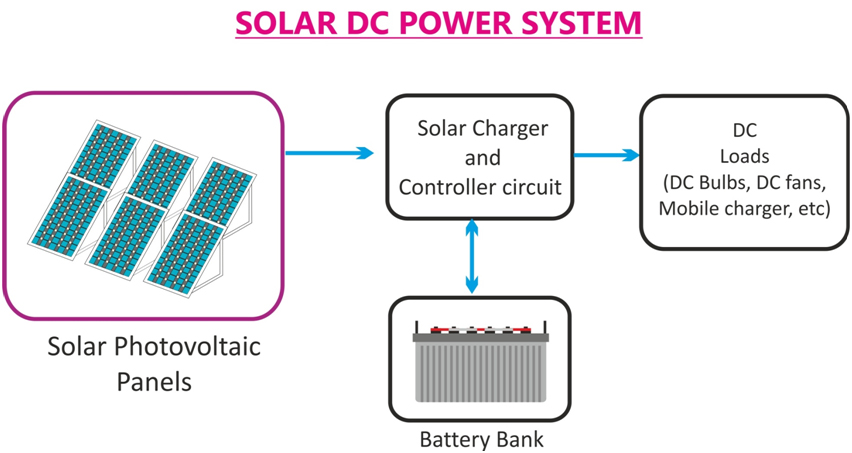
An inverter is essentially the “brain” of your solar energy system. Its primary job is to take the DC electricity produced by your solar panels and convert it into usable AC electricity for your home or the grid. Without an inverter, your solar panels would be generating power that your household appliances couldn’t use, and that couldn’t be fed back into the utility grid.
Beyond simple conversion, modern inverters also play critical roles in:
- Synchronization: Matching the frequency and voltage of the grid.
- Safety: Shutting down during grid outages (anti-islanding) to protect utility workers.
- Optimization: Maximizing power harvest from panels.
- Monitoring: Providing data on system performance.
Types of Solar Inverters: A Homeowner’s Guide
The world of inverters isn’t one-size-fits-all. Your choice of inverter type significantly impacts your system’s performance, cost, and how it handles challenges like shading. Let’s look at the main players:
String Inverters (Central Inverters)
These are the traditional workhorses. In a string inverter system, multiple solar panels are wired together in a “string,” and the entire string feeds DC power to a single, central inverter, usually mounted on a wall near your utility meter. The inverter then converts all that DC power into AC.
- Pros: Generally the most cost-effective for installations without shading issues, simpler design, fewer components.
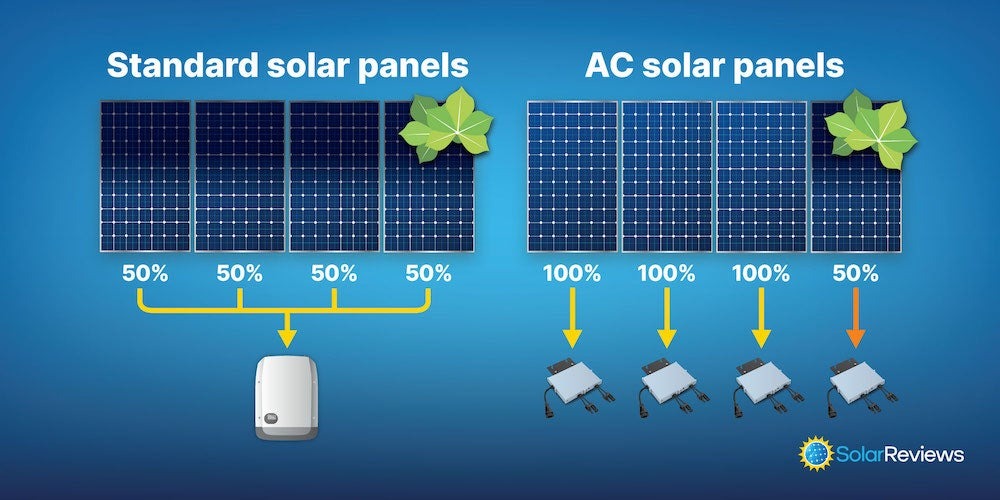
- Cons: A single point of failure (if the inverter goes down, your whole system stops). Performance is limited by the weakest panel in the string (e.g., if one panel is shaded, it pulls down the output of all panels in that string). Limited panel-level monitoring.
Micro-Inverters
Imagine an inverter attached to *each individual solar panel. That’s a micro-inverter system. Each panel’s DC output is converted to AC right there on the roof, under the panel itself. These individual AC outputs are then combined and sent to your home’s electrical panel.
- Pros: Panel-level optimization (shading on one panel won’t affect others), individual panel monitoring, increased redundancy (if one micro-inverter fails, the rest of the system keeps producing), easier system expansion.
- Cons: Higher upfront cost per watt due to more components, slightly more complex installation, components are on the roof and potentially harder to access for maintenance.
Power Optimizers (Hybrid Approach)
Power optimizers offer a middle ground between string and micro-inverters. Like micro-inverters, an optimizer is installed on each solar panel. However, instead of converting DC to AC at the panel, the optimizers “condition” the DC power, ensuring each panel operates at its maximum power point (MPPT) and then sends that optimized DC to a central string inverter.
- Pros: Panel-level optimization (like micro-inverters), less expensive than full micro-inverter systems, central inverter for easier ground-level maintenance, robust safety features.
- Cons: Still involves components on the roof, requires a central inverter in addition to optimizers.
Here’s a comparison to help you weigh your options:
| Feature | String Inverter | Micro-Inverter | Power Optimizer |
|---|---|---|---|
| DC-AC Conversion | One central unit for all panels | Each panel has its own inverter | Optimizers manage DC per panel, central inverter converts |
| Shading Impact | Significant loss for entire string | Minimal, only affects shaded panel | Minimal, only affects optimized panel |
| Cost (Upfront) | Lowest | Highest | Mid-range |
| Monitoring | System-level only | Panel-level | Panel-level |
| Redundancy | Low (single point of failure) | High (individual panel operation) | Medium (optimizers are robust, central inverter is single point of failure) |
| Maintenance | Easier (ground-level inverter) | Harder (components on roof) | Mixed (optimizers on roof, inverter on ground) |
Demystifying “AC Solar Panels”: A Panel with a Twist
You might have seen the term “AC solar panels” and wondered if they contradict everything we just discussed. They don’t! It’s a matter of integration.
What are AC Solar Panels?
An AC solar panel isn’t a magical panel that produces AC directly from sunlight. Rather, it’s a standard DC solar panel that has a micro-inverter factory-integrated into its frame or directly mounted to its backside. So, while the panel itself still generates DC power, that power is immediately converted to AC by the attached micro-inverter before it even leaves the panel’s vicinity.
This design simplifies installation, as the modules arrive as a single unit, and installers primarily deal with AC wiring once they’re on the roof.
Advantages and Disadvantages of AC Solar Panels
The pros and cons of AC solar panels are largely the same as those for micro-inverter systems, but with added convenience for installation:
- Advantages:
- Plug-and-play installation: Simplifies wiring and reduces installation time.
- Maximized energy harvest: Each panel operates independently, mitigating the impact of shade or dirt.
- Enhanced safety: DC wiring is limited to the panel, reducing high-voltage DC risks on the roof.
- Easy expansion: Add more panels later without affecting the existing system.
- Detailed monitoring: Track the performance of individual panels.
- Disadvantages:
- Higher upfront cost: Typically more expensive than string inverter setups.
- Components on the roof: While reliable, if a micro-inverter needs servicing, it requires accessing the roof.
- Increased complexity (more components): More individual parts that could theoretically fail, although modern micro-inverters are extremely durable.
AC vs. DC Coupled Systems: What It Means for Storage & Efficiency
If you’re considering adding battery storage to your solar setup (and many homeowners are!), the discussion of AC vs. DC takes on another layer of importance: how your solar array and battery are connected, or “coupled.”
Understanding System Coupling
“Coupling” refers to the point in the electrical system where the solar array and the battery storage system meet. It dictates the flow of power and the number of DC-AC conversions that occur.
DC-Coupled Systems (Often for Off-Grid or Integrated Storage)
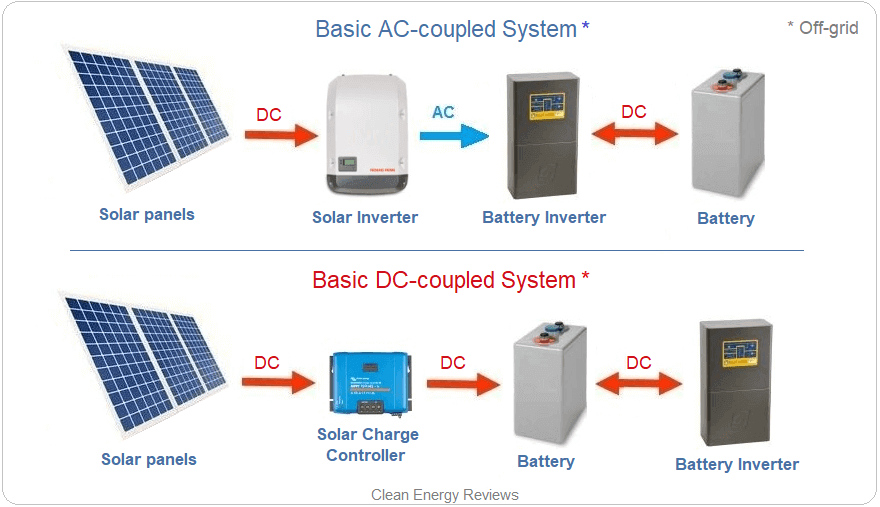
In a DC-coupled system, the DC power from your solar panels is sent directly to a charge controller, which then feeds the DC power into your battery bank. An inverter then converts the DC stored in the battery (or directly from the panels if needed) into AC for your home. This setup is common in off-grid systems and increasingly popular for new grid-tied systems with integrated battery storage.
- How it works: Solar Panels (DC) → Charge Controller (DC) → Battery (DC) → Inverter (DC to AC) → Home (AC).
- Advantages:
- Higher efficiency for battery charging: Fewer DC-AC conversions mean less energy loss when storing solar power.
- Simpler for off-grid: A natural fit for systems where batteries are the primary power source.
- Potentially lower cost: Can sometimes be more cost-effective for new, fully integrated systems.
- Disadvantages:
- Less flexible for retrofit: Can be more complex to add to an existing grid-tied AC-only solar system.
- Limited AC output during grid outage (unless specific inverters are used): Power to home relies on battery inverter.
AC-Coupled Systems (Common for Grid-Tied Homes with Added Storage)
In an AC-coupled system, your solar panels generate DC, which is immediately converted to AC by your main solar inverter. This AC power then flows to your home or the grid. If you have a battery, that AC power is then converted back to DC by a separate battery inverter/charger to store it in the battery. When the battery discharges, its inverter converts the power back to AC for your home.
- How it works: Solar Panels (DC) → Solar Inverter (DC to AC) → Home/Grid (AC); For Storage: AC → Battery Inverter (AC to DC for charging) → Battery (DC) → Battery Inverter (DC to AC for discharge) → Home (AC).
- Advantages:
- Easy retrofit: Ideal for adding battery storage to an existing grid-tied solar system with a string inverter.
- Standardized components: Uses conventional solar inverters and separate battery inverters.
- Flexibility: Can often provide power to the home directly from solar panels even if batteries are full.
- Disadvantages:
- More conversion losses: Power might go from DC to AC, then back to DC, then back to AC again, incurring minor losses at each step.
- Potentially more equipment: Two inverters (solar and battery) are typically involved.
Choosing between AC-coupled and DC-coupled systems depends on your existing setup, budget, and priorities for efficiency, especially concerning battery storage:
| Feature | DC-Coupled System | AC-Coupled System |
|---|---|---|
| Energy Flow for Storage | DC direct from panels to battery | Solar DC to AC, then AC to DC for battery storage |
| Efficiency (Battery Charging) | Higher (fewer conversions) | Lower (more conversions) |
| Cost (New Integrated System) | Potentially lower due to component integration | Potentially higher due to multiple inverters |
| Retrofit Existing Solar | More complex, sometimes requires system overhaul | Simpler, can integrate with existing AC solar setup |
| Best Use Case | New installations, off-grid, max battery efficiency | Adding storage to existing grid-tied solar, backup power |
Practical Implications for Homeowners: Making the Right Choice
Understanding the technical aspects of AC and DC in solar is great, but how does it impact your* decision-making process?
Efficiency and Energy Loss
Every time electricity is converted (DC to AC, AC to DC, or even just conditioned), there’s a tiny bit of energy lost, usually as heat. While modern inverters are incredibly efficient (often 95-99% efficient), these small losses can accumulate over a 25-year system lifespan. Choosing a system that minimizes unnecessary conversions, especially for battery storage, can eke out a bit more usable energy.
For instance, a DC-coupled battery system might be marginally more efficient for storing solar power than an AC-coupled one, because it avoids the DC → AC → DC conversion cycle. However, these differences are often small enough that other factors (cost, system flexibility, shading issues) become more dominant in your decision.
Cost Considerations
- String Inverters: Generally offer the lowest upfront cost for the inverter component, making them attractive for budget-conscious homeowners with unshaded roofs.
- Micro-Inverters / AC Panels: Higher initial investment, but they can provide better long-term performance in complex roof layouts or shaded conditions, potentially offering a quicker return on investment due to higher energy production over time.
- Power Optimizers: A balanced cost option, providing panel-level benefits without the full cost of micro-inverters.
- Battery Coupling: DC-coupled battery systems can sometimes be less expensive for new, fully integrated solar + storage installations, while AC-coupled systems are often more cost-effective for retrofitting storage to an existing solar array.
Maintenance and Monitoring
The location and type of your inverter impact maintenance. A central string inverter is typically mounted on a wall in your garage or utility room, making it easy to access for checks or servicing. Micro-inverters and power optimizers are on the roof, meaning a technician needs to get up there if an individual unit requires attention. However, panel-level monitoring offered by micro-inverters and optimizers often allows for much quicker diagnosis of issues, sometimes even before you notice a dip in production.
Future-Proofing Your Solar Investment
Consider your long-term goals. Do you plan to add a battery in a few years? Do you want the flexibility to expand your system easily? Do you envision incorporating smart home energy management? Certain inverter technologies and coupling strategies lend themselves better to future upgrades.
- Micro-inverter and power optimizer systems are generally more adaptable for future expansion, as each panel operates independently.
- AC-coupled battery systems are easier to add to an existing solar setup.
- The ability to monitor individual panels can be invaluable for ensuring your system performs optimally for decades.
The Future of AC and DC in Solar Energy
While the fundamental principle of solar panels producing DC remains constant, the broader energy landscape is always evolving.
Evolving Technologies and Standards
Inverter technology continues to improve, becoming more efficient, smaller, and smarter. New standards for grid interaction are constantly being developed, ensuring solar systems integrate seamlessly and contribute to grid stability. Innovations like smart inverters can even provide grid services, further enhancing their value.
The Push for DC Appliances and Microgrids
There’s a growing interest in developing and integrating more DC appliances directly into homes, potentially reducing the need for multiple AC-DC conversions. This is particularly relevant for off-grid or microgrid applications where minimizing energy loss is paramount. Imagine refrigerators or lighting systems that run directly on DC from your solar panels and batteries – it could be a game-changer for overall system efficiency, though widespread adoption in standard grid-tied homes is still some way off.
Conclusion: Your Power, Your Choice
So, to finally answer the core question: Solar panels produce DC electricity. However, because your home and the electrical grid rely on AC, a crucial component – the inverter – converts that DC power into usable AC. This conversion process is the bridge that makes solar energy practical for modern living.
Your choice of inverter technology (string, micro, or power optimizer) and how your system is coupled with storage (AC or DC) will shape your solar experience. It will influence your system’s efficiency, cost, resilience against shading, and how easily you can monitor and expand it in the future.
Don’t just chase the cheapest option; consider the unique characteristics of your home, your energy needs, and your long-term goals. Engage with reputable solar professionals who can help you navigate these choices and design a system that maximizes your energy production and savings for decades to come. Armed with this knowledge, you’re ready to make a truly informed decision about harnessing the sun‘s power for your home.
Frequently Asked Questions
Can I use DC appliances directly with my solar panels?
Yes, you technically can use DC appliances directly with DC power from your solar panels, often routed through a charge controller. However, most modern homes are wired for AC, and finding a wide range of DC-compatible appliances can be challenging. This setup is more common in off-grid systems or specialized applications to maximize efficiency by avoiding DC-AC conversion losses.
Do solar batteries store AC or DC power?
Solar batteries inherently store Direct Current (DC) electricity. Regardless of whether your overall solar system is AC-coupled or DC-coupled, the energy stored within the battery cells themselves is always DC. An inverter or battery charger converts AC power to DC for storage and converts DC power back to AC for household use.
What’s the most efficient solar setup, AC or DC?
There’s no single ‘most efficient’ setup, as it depends on your specific needs. DC-coupled systems tend to be slightly more efficient for direct battery charging, as they avoid an extra DC-AC conversion step. However, modern AC-coupled systems are also highly efficient, and other factors like panel-level optimization (from micro-inverters or power optimizers) often have a greater impact on overall system efficiency, especially in shaded conditions.
How often do solar inverters need to be replaced?
The lifespan of a solar inverter varies by type. Central string inverters typically last 10-15 years, while micro-inverters and power optimizers often come with longer warranties, usually 20-25 years, aligning more closely with the lifespan of the solar panels themselves. Inverter replacement is a normal part of long-term solar system maintenance.
Is it safe to have high voltage DC current on my roof?
Traditional string inverter systems do involve high voltage DC wiring running from the panels to a central inverter, which carries some inherent risk. However, modern safety protocols and equipment are in place to mitigate these. Systems with micro-inverters or power optimizers convert DC to AC at the panel level, meaning high-voltage DC is confined to individual panels and not run across your roof or through your walls, generally considered a safer design.
What’s the difference between a solar inverter and a charge controller?
A solar inverter converts the DC electricity from solar panels into AC electricity for household use or the grid. A charge controller, on the other hand, regulates the DC voltage and current coming from solar panels to efficiently and safely charge a battery bank, preventing overcharging and extending battery life. In systems with batteries, both components are often present, sometimes integrated into a single hybrid inverter.
Can I run my house on DC power only?
While theoretically possible, it’s highly impractical for most standard homes. The vast majority of household appliances and building wiring are designed for AC power. Converting a home entirely to DC would require replacing almost all appliances and re-wiring, which is cost-prohibitive and unnecessary given the efficiency of modern inverters. DC-only systems are typically limited to specialized applications or very small, isolated setups.


Post Comment