Can I Get A Grant For Solar Panels Uk
Can You Get a Grant for Solar Panels in the UK? Your Definitive Guide to Funding & Schemes
Staring at ever-increasing energy bills, wondering if there’s a greener, more affordable way to power your home? You’re not alone. Many UK homeowners are turning their gaze skyward, dreaming of solar panels. But then the practical questions hit: “Can I actually get a grant for solar panels in the UK?” and “How do I even begin to navigate the maze of funding options?”
Table of Contents
- Can You Get a Grant for Solar Panels in the UK? Your Definitive Guide to Funding & Schemes
- The Short Answer: Yes, But It’s All About Eligibility (UK Focus)
- Key UK Solar Panel Grants and Schemes Explained
- 1. The Energy Company Obligation (ECO4) Scheme
- 2. Smart Export Guarantee (SEG)
- 3. Warm Homes: Local Grant (Various Local Authority Schemes)
- 4. 0% VAT on Solar Panels and Batteries
- 5. Regional & Devolved Nation Schemes (Scotland, Wales, Northern Ireland)
- Scotland: Home Energy Scotland Grant and Loan Scheme
- Wales: Nest Scheme / Warm Homes Programme
- Northern Ireland: Affordable Warmth Scheme / Boiler Replacement Scheme
- (Mention Green Deal as mostly historical/loan-based, less of a grant)
- Navigating Eligibility: Are You Qualified for “Free” Solar Panels?
- Comparing UK Solar Funding Options: A Quick Reference
- What If You Don’t Qualify for a Grant? Alternative Ways to Fund Your UK Solar System
- 1. Green Loans & Mortgages
- 2. Personal Loans / Re-mortgaging
- 3. Lease or Power Purchase Agreements (PPAs)
- 4. Upfront Payment & Savings
- 5. Group-Buying Schemes (e.g., Solar Together)
- The Application Process: Getting Started with Your UK Solar Grant
- Beyond Grants: Long-Term Benefits of Solar in the UK
- Staying Updated: Where to Find the Latest UK Solar Grant Information
- Conclusion: Powering Your UK Home with Solar, Grant or No Grant
The good news is, yes, you absolutely can get financial help for solar panels in the UK. However, it’s not a universal handout. The support available is typically targeted, designed to assist specific households, encourage energy efficiency, or reward those contributing to the grid. This isn’t about vague promises; it’s about understanding the specific schemes that apply to your situation, right now, in the UK.
This guide cuts through the confusion. We’ll break down the major UK grants, schemes, and funding options, explaining who’s eligible, what they cover, and how you can tap into them. Let’s get your journey to solar power on track.
The Short Answer: Yes, But It’s All About Eligibility (UK Focus)
You’re probably looking for a simple ‘yes’ or ‘no’. While the answer is technically ‘yes’, the nuance lies in your personal circumstances and where you live in the UK. Government-backed initiatives, local authority programmes, and even tax incentives are all designed to make solar more accessible. The catch? Most direct grants are aimed at households on lower incomes, those in fuel poverty, or properties needing significant energy efficiency upgrades.
Don’t despair if you don’t fit those narrow criteria, though! There are broader schemes and financing options that can still make solar an incredibly smart financial move for almost any UK homeowner. The key is knowing where to look and what questions to ask.
Key UK Solar Panel Grants and Schemes Explained
Let’s dive into the core programmes that are currently helping UK residents go solar. We’ll cover everything from direct grants to smart ways of earning money from your panels.
1. The Energy Company Obligation (ECO4) Scheme
The ECO4 scheme is one of the most significant government-backed initiatives, running until March 2026. It places an obligation on large energy suppliers to deliver energy efficiency measures, including solar PV, to fuel-poor and vulnerable households.
- What it is: A UK government energy efficiency scheme administered by Ofgem. Energy companies fund the installation of various energy-saving measures, including solar panels, in eligible homes.
- Who it’s for: Primarily low-income households and those receiving certain benefits. The goal is to tackle fuel poverty and reduce carbon emissions.
- Eligibility: Eligibility is complex but generally requires you to be receiving means-tested benefits (e.g., Universal Credit, Pension Credit, Child Benefit (with income cap), Income Support, Housing Benefit, etc.). Your property also typically needs to have a low Energy Performance Certificate (EPC) rating (usually D-G).
- What it covers: ECO4 can fund a range of measures, including insulation, boiler upgrades, and critically, solar PV panels. In some cases, it can cover the full cost, effectively offering “free” solar panels.
- How to apply: You typically won’t apply directly to the government. Instead, you’ll need to contact an energy supplier participating in the ECO4 scheme or a trusted installer who can access the funding. Your local authority might also have an ‘ECO4 Flex’ scheme, which allows them to identify additional households not on benefits but still in fuel poverty.
2. Smart Export Guarantee (SEG)
Unlike ECO4, the Smart Export Guarantee (SEG) isn’t a grant for installation, but rather a mechanism to help you earn money from your solar panels once they’re installed.
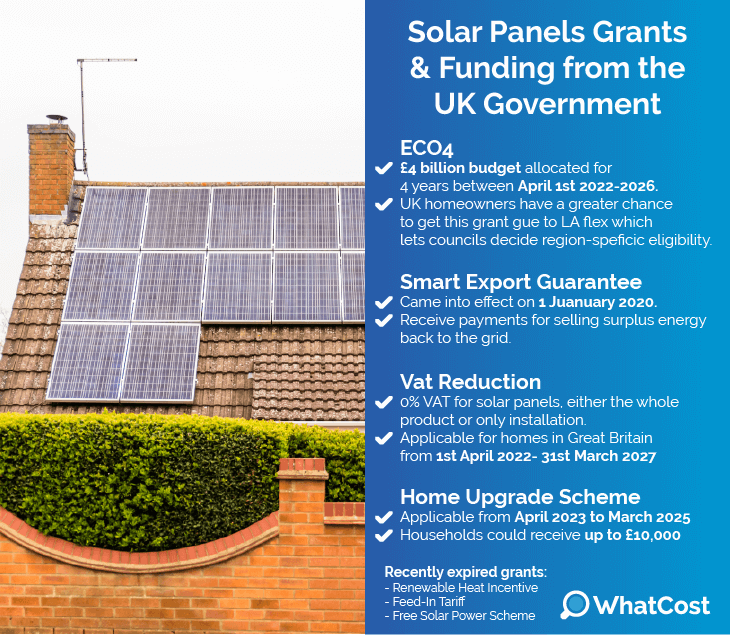
- What it is: A government-backed initiative that requires licensed electricity suppliers (with 150,000+ customers) to offer tariffs to small-scale low-carbon generators (like solar PV owners) for the electricity they export back to the grid.
- Who benefits: Any UK household with solar panels (or other eligible renewable technology) that generates more electricity than they use and exports the surplus to the national grid.
- How it works: You choose an SEG licensee (your current energy supplier or another provider) and agree to a tariff. They then pay you for every kilowatt-hour (kWh) of electricity you export.
- Why it matters: The SEG significantly improves the financial viability of solar panels by providing an ongoing income stream. It reduces your payback period and adds to your overall savings. Tariffs vary, so it’s worth shopping around for the best deal.
3. Warm Homes: Local Grant (Various Local Authority Schemes)
Beyond national schemes, many local authorities across the UK run their own “Warm Homes” or similar energy efficiency grants, often in partnership with ECO4 or funded by specific government allocations.
- What it is: These are grants and support programmes administered by individual city, county, or borough councils. They are designed to address fuel poverty and improve the energy efficiency of homes within their jurisdiction.
- Who it’s for: Typically, low-income households, those with specific health conditions, or properties in designated fuel poverty areas. Eligibility can vary significantly from one council to another.
- Eligibility: Criteria are set by each local authority. This might include income thresholds, receipt of certain benefits, or living in a property with a low EPC rating within a specific postcode.
- How to find & apply: The best way to learn about these schemes is to visit your local council’s website and search for “energy efficiency grants,” “warm homes scheme,” or “solar panel funding.” You can also contact their housing or environmental departments.
4. 0% VAT on Solar Panels and Batteries
This isn’t a grant in the traditional sense, but it’s a massive saving that applies to virtually everyone installing solar PV.
- What it is: The UK government introduced a temporary zero-rate of Value Added Tax (VAT) on the installation of energy-saving materials, including solar panels and standalone battery storage, for residential properties.
- Who benefits: Every homeowner in the UK purchasing and having solar PV panels and/or battery storage systems installed by a professional.
- How it works: Instead of paying the standard 20% VAT on the cost of your solar system and its installation, you pay 0%. This is applied directly by your installer.
- When it applies: This reduction is currently in effect until 31 March 2027. It’s a significant saving that makes solar immediately more affordable for everyone.
5. Regional & Devolved Nation Schemes (Scotland, Wales, Northern Ireland)
The devolved governments in Scotland, Wales, and Northern Ireland often run their own specific schemes to support homeowners in improving energy efficiency and installing renewables.
Scotland: Home Energy Scotland Grant and Loan Scheme
- What it offers: This popular scheme offers financial support for a wide range of energy efficiency improvements, including solar panels. It can provide a grant component (which doesn’t need to be repaid) and an interest-free loan.
- Eligibility: Available to homeowners and private sector tenants in Scotland. Eligibility criteria vary based on the specific measure and whether you opt for a grant or loan. Some grants are targeted at lower-income households.
- How to apply: Contact Home Energy Scotland, who provide free, impartial advice and can guide you through the application process.
Wales: Nest Scheme / Warm Homes Programme
- What it offers: The Welsh Government’s Nest scheme offers free home energy efficiency improvements, including solar panels, to eligible households across Wales. It aims to make homes warmer and reduce energy bills.
- Eligibility: Generally for people who own or privately rent their home in Wales, receive a means-tested benefit, or have a chronic respiratory, circulatory, or mental health condition, and live in a property that is expensive to heat.
- How to apply: Apply directly through the Nest scheme website or by phone.
Northern Ireland: Affordable Warmth Scheme / Boiler Replacement Scheme
- What it offers: While not always directly funding solar panels, these schemes often support broader energy efficiency improvements. The Affordable Warmth Scheme helps households with energy-saving measures, and the Boiler Replacement Scheme can cover the costs of replacing inefficient boilers, sometimes including related upgrades that make solar more viable.
- Eligibility: The Affordable Warmth Scheme is for homeowners and private tenants in Northern Ireland with a gross annual household income below a certain threshold and meeting other criteria. The Boiler Replacement Scheme has specific criteria related to boiler age and household income.
- How to apply: Contact your local council or the Northern Ireland Housing Executive for details and application forms.
(Mention Green Deal as mostly historical/loan-based, less of a grant)
The Green Deal was a UK government initiative designed to help people make energy-saving improvements to their homes. While it allowed homeowners to pay for improvements like solar panels through savings on their energy bills, it was primarily a loan mechanism, not a grant. The scheme itself closed to new applications some years ago, though existing Green Deal loans remain in place. It’s generally not a current option for new solar panel funding.
Navigating Eligibility: Are You Qualified for “Free” Solar Panels?
The term “free solar panels” is often used, but it’s important to understand what it truly means. In the UK, if you qualify for “free” solar panels, it typically means the entire installation cost is covered by a grant, most commonly through the ECO4 scheme or specific local authority Warm Homes programmes.
This level of funding is usually reserved for the most vulnerable households who are struggling with energy bills and living in properties that are highly inefficient. It’s a targeted intervention to alleviate fuel poverty.
Crucial eligibility factors often include:
- Income Level: Many grants have strict household income thresholds.
- Receipt of Benefits: Being in receipt of certain means-tested benefits (e.g., Universal Credit, Pension Credit, Housing Benefit) is a common gateway to eligibility.
- Property Type and EPC Rating: Older, less energy-efficient homes (often with an EPC rating of D, E, F, or G) are frequently prioritised.
- Location: Some grants are geographically specific, either by local authority or devolved nation.
- Health Conditions: In some cases, having a long-term health condition exacerbated by a cold home can factor into eligibility.
Key takeaway: Don’t assume you don’t qualify without checking. Eligibility criteria can be nuanced, and schemes often have multiple pathways. Always check the most current criteria from official sources or reputable advisors.
Comparing UK Solar Funding Options: A Quick Reference
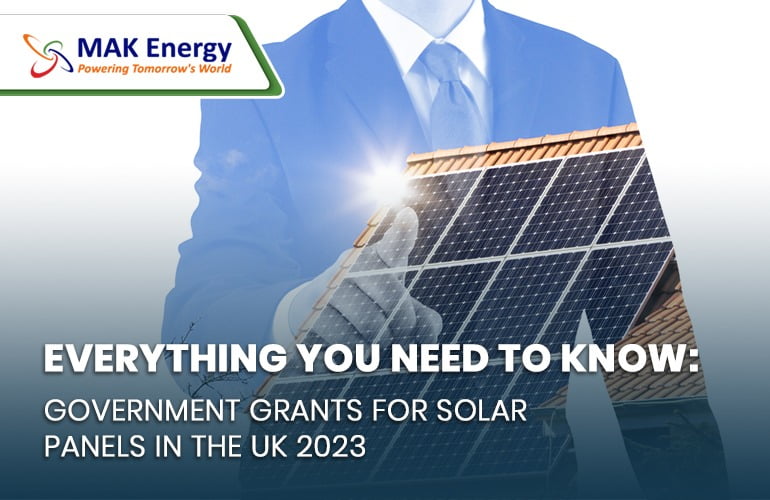
To help you get a clear overview, here’s a table comparing the main funding avenues for solar panels in the UK:
| Scheme/Option | Type of Support | Primary Beneficiary | Key Eligibility | How to Access |
|---|---|---|---|---|
| ECO4 Scheme | Grant (often full cost) | Low-income, vulnerable households | Means-tested benefits, low EPC rating (D-G) | Energy suppliers, local authorities (ECO4 Flex), certified installers |
| Smart Export Guarantee (SEG) | Payment for exported electricity | Any solar PV owner exporting surplus energy | Installed solar PV system (up to 5MW capacity) | SEG Licensee (energy suppliers) |
| Warm Homes: Local Grant | Grant (varying coverage) | Low-income, fuel-poor households in specific areas | Varies by council; income, benefits, postcode, property EPC | Local council website, energy advice services |
| 0% VAT Rate | Cost reduction (20% saving) | All homeowners installing solar PV & batteries | Purchasing solar PV and/or battery installation from a registered installer (until March 2027) | Applied automatically by installer |
| Home Energy Scotland (Scotland) | Grant & Interest-free loan | Scottish homeowners & private tenants | Varies; some grants income-tested | Home Energy Scotland advice service |
| Nest Scheme (Wales) | Free home improvements (including solar) | Low-income, energy-inefficient homes in Wales | Means-tested benefits or health conditions, property type | Nest scheme website or phone |
What If You Don’t Qualify for a Grant? Alternative Ways to Fund Your UK Solar System
It’s important to be realistic: not everyone will qualify for a direct grant. But that doesn’t mean solar is out of reach! There are several excellent alternative funding routes that can make the investment manageable and highly worthwhile in the long run.
1. Green Loans & Mortgages
Many banks and building societies in the UK now offer specialized financial products designed to encourage eco-friendly home improvements. These often come with more favourable terms than standard loans.
- Green Loans: These are personal loans specifically for energy efficiency upgrades. They might offer slightly lower interest rates or longer repayment periods compared to standard personal loans.
- Green Mortgages: Some lenders offer mortgages with better interest rates for properties that are already energy efficient (high EPC rating) or for borrowers who commit to making energy efficiency improvements within a certain timeframe (like installing solar). You might even be able to add the cost of solar panels to your existing mortgage.
2. Personal Loans / Re-mortgaging
A standard personal loan can cover the cost of solar panel installation. While not specific to green tech, they offer a straightforward way to borrow a fixed sum and repay it over time. Alternatively, if you have sufficient equity in your home, you could consider re-mortgaging to release funds for the investment. This often comes with lower interest rates than personal loans but extends the repayment period over your mortgage term.
3. Lease or Power Purchase Agreements (PPAs)
These options remove the upfront cost entirely, making solar accessible without an initial investment:
- Solar Panel Lease: A company installs, owns, and maintains the solar panels on your roof. You pay them a monthly fee to lease the system.
- Power Purchase Agreement (PPA): Similar to a lease, a third-party company installs and owns the panels. You then purchase the electricity generated by those panels from them at a fixed, typically lower, rate than your grid supplier.
While these options mean you don’t own the system and might not benefit from the full capital appreciation or SEG payments, they offer immediate savings on your electricity bills without any upfront outlay.
4. Upfront Payment & Savings
If you have savings available, paying for your solar system upfront typically offers the best long-term return on investment. You avoid interest payments, benefit immediately from reduced bills, and earn 100% of the SEG payments. The 0% VAT rate currently makes this option even more attractive.
5. Group-Buying Schemes (e.g., Solar Together)
Programmes like “Solar Together” (often run by local councils in partnership with installers) leverage collective buying power to secure discounts on solar panel installations. By grouping together a large number of homeowners interested in solar, these schemes can negotiate better prices from installers. It’s a great way to reduce costs without compromising on quality.
The Application Process: Getting Started with Your UK Solar Grant
Ready to take the plunge? Here’s a general roadmap for applying for solar panel grants or financing in the UK:
- Initial Research: Use this guide and further research to identify which UK schemes you might be eligible for. Check local council websites and specific scheme criteria.
- Gathering Documents: Prepare necessary documentation. This might include proof of income, benefit statements, recent energy bills, council tax statements, and your property’s EPC certificate (if available).
- Contacting Providers/Councils:
- For ECO4: Contact your current energy supplier or other participating suppliers to inquire about their ECO4 offerings. They’ll assess your eligibility.
- For Local Grants: Visit your local council’s website or contact their energy efficiency department.
- For Regional Schemes (Scotland, Wales): Contact Home Energy Scotland or the Nest scheme directly.
- Professional Assessment & Quotes: A qualified and MCS-certified solar installer will need to survey your home. They will assess your roof’s suitability, calculate potential energy generation, and provide a detailed quote. Ensure your installer is familiar with any grant processes you’re pursuing.
- Grant Application Submission: Follow the specific instructions for your chosen grant. This might involve the installer submitting paperwork on your behalf or you completing forms directly.
- Patience and Follow-up: Grant applications can take time. Be prepared to follow up if you don’t hear back within a reasonable period.
Remember, always use MCS-certified installers to ensure quality, safety, and eligibility for schemes like SEG. The Microgeneration Certification Scheme (MCS) is an industry standard that demonstrates compliance with quality standards.
Beyond Grants: Long-Term Benefits of Solar in the UK
Even without a direct grant, the long-term benefits of installing solar panels in your UK home are compelling:
- Reduced Energy Bills: Generate your own electricity, significantly cutting your reliance on the grid and lowering your monthly energy outgoings.
- Increased Home Value: Homes with solar panels are often more attractive to buyers and can command a higher price.
- Carbon Footprint Reduction: Contribute directly to combating climate change by using clean, renewable energy.
- Energy Independence: Gain greater control over your energy supply, insulating yourself from volatile energy price hikes.
- Smart Export Guarantee (SEG) Earnings: Get paid for any surplus electricity you send back to the grid, adding another income stream.
Staying Updated: Where to Find the Latest UK Solar Grant Information
Government policies and grants can change. To ensure you always have the most current information, refer to these trusted sources:
- Government Websites: The official gov.uk website is the ultimate source for national schemes.
- Energy Saving Trust: An independent organization offering free, impartial advice on energy efficiency, including grants and funding.
- Local Councils: Your local authority’s website will have details on any region-specific or local grants.
- Reputable Solar Installers: MCS-certified installers are often knowledgeable about current grants and can guide you.
- Citizens Advice: Offers free, independent advice on a wide range of issues, including energy and benefits.
Conclusion: Powering Your UK Home with Solar, Grant or No Grant
So, can you get a grant for solar panels in the UK? The answer is a resounding YES, with caveats. While direct, full-cost grants are typically reserved for those in greatest need through schemes like ECO4 and local Warm Homes initiatives, the broader landscape of support is much wider. The 0% VAT rate offers immediate savings to everyone, the Smart Export Guarantee pays you for your surplus energy, and there’s a growing array of green financing and group-buying options.
Don’t let the complexity deter you. By understanding the specific UK schemes, checking your eligibility, and exploring all available avenues, you can significantly reduce the upfront cost of solar panels and unlock a future of lower energy bills and a greener home. The sun is shining on UK solar – it’s time to harness its power.
Frequently Asked Questions
Are there any grants for solar panels in the UK that make them completely free?
Yes, schemes like the Energy Company Obligation (ECO4) and some local authority Warm Homes grants can fully fund solar panel installations for eligible low-income and vulnerable households in the UK, effectively making them ‘free’ for the homeowner.
Who is eligible for the ECO4 scheme for solar panels?
Eligibility for ECO4 typically requires you to be a low-income household, often receiving means-tested benefits (e.g., Universal Credit, Pension Credit), and living in a home with a low Energy Performance Certificate (EPC) rating (usually D-G).
What is the Smart Export Guarantee (SEG) and how does it work?
The Smart Export Guarantee (SEG) is not an installation grant but a scheme that pays you for any surplus electricity your solar panels generate and export back to the national grid. Licensed energy suppliers offer different tariffs, and you choose one to receive payments.
Is the 0% VAT rate on solar panels a permanent scheme in the UK?
No, the 0% VAT rate on solar panel and battery installations in the UK is a temporary measure. It is currently set to be in effect until 31 March 2027. This means you save 20% on the cost of your system and installation during this period.
What options do I have if I don’t qualify for any solar panel grants in the UK?
If you don’t qualify for direct grants, you can explore options like green loans or mortgages, personal loans, solar panel lease or Power Purchase Agreements (PPAs) to avoid upfront costs, paying upfront with savings, or joining group-buying schemes like Solar Together for discounts.
How do I find out about local solar panel grants in my area of the UK?
The best way to find out about local grants is to visit your local council’s website and search for ‘energy efficiency grants,’ ‘warm homes scheme,’ or ‘solar panel funding.’ You can also contact their housing or environmental departments, or Citizens Advice.
Do regional governments in the UK (Scotland, Wales, NI) offer their own solar panel grants?
Yes, the devolved nations often have their own specific schemes. For example, Scotland has the Home Energy Scotland Grant and Loan Scheme, Wales offers the Nest scheme, and Northern Ireland has schemes like the Affordable Warmth Scheme which can support energy efficiency improvements.


Post Comment