Mono Vs Poly Solar Panels
Monocrystalline vs. Polycrystalline Solar Panels: Your Definitive Guide to Choosing the Right Home Solar
So, you’re thinking about going solar for your home? Awesome! You’re on the path to cleaner energy and potentially lower utility bills. But as you dive in, you quickly hit a fork in the road: monocrystalline vs. polycrystalline solar panels. It feels like a big decision, and honestly, for your home’s energy future, it is. Don’t worry, you don’t need to become a solar engineer to understand this. My goal is to cut through the jargon, bust some myths, and give you the straightforward facts you need to make the best choice for *your specific home and budget.
Table of Contents
- Monocrystalline vs. Polycrystalline Solar Panels: Your Definitive Guide to Choosing the Right Home Solar
- The Core Difference: How Mono and Poly Solar Panels Are Made
- Understanding Monocrystalline Solar Panels: The Pure Powerhouses
- Understanding Polycrystalline Solar Panels: The Cost-Effective Workhorses
- Head-to-Head: A Detailed Comparison of Monocrystalline vs. Polycrystalline
- Efficiency: Getting More Power from Less Space
- Cost: Balancing Upfront Investment with Long-Term Savings
- Aesthetics: How Your Panels Look on Your Roof
- Performance in Varied Conditions: Heat, Low Light, and Degradation
- Lifespan and Durability: A Long-Term Investment
- Environmental Impact & Manufacturing: A Quick Look
- Busting Common Myths About Mono and Poly Panels
- Myth 1: Polycrystalline Panels Are Obsolete
- Myth 2: Monocrystalline Panels Are Always “The Best”
- Myth 3: Mixing Panel Types is Always a Bad Idea
- Choosing Your Champion: When to Pick Monocrystalline, When to Pick Polycrystalline
- Go Monocrystalline If…
- Opt for Polycrystalline If…
- Beyond Mono and Poly: What Else Should You Consider?
- Installer Reputation & Warranty
- System Components (Inverters, Batteries)
- Future Technology & Upgradability
- The Right Choice for Your Home
This isn’t just about picking the “best” panel; it’s about picking the best panel for you. Let’s figure out which one is your home’s ideal match.
The Core Difference: How Mono and Poly Solar Panels Are Made
At their heart, both monocrystalline and polycrystalline panels convert sunlight into electricity using silicon. The fundamental difference lies in how that silicon is processed and formed into solar cells. This manufacturing process impacts everything from efficiency and appearance to cost and performance.
Understanding Monocrystalline Solar Panels: The Pure Powerhouses
Imagine a single, perfect crystal. That’s essentially the starting point for monocrystalline solar cells. Manufacturers create a large, single-crystal ingot of silicon (often using the Czochralski method), slice it into thin wafers, and then process these wafers into cells. Because each cell is made from a single, unbroken silicon crystal, electrons have more room to move, resulting in higher efficiency.
Key characteristics of monocrystalline panels:
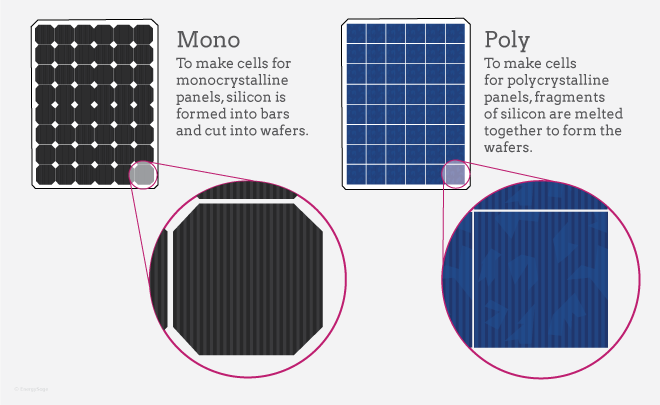
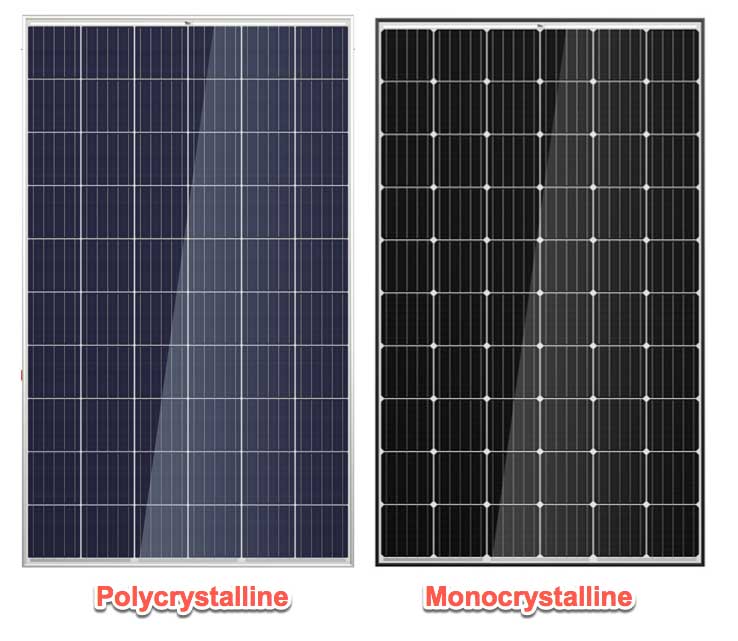
- Appearance: Typically dark black, with rounded edges on the individual cells due to the way they are sliced from the cylindrical ingot.
- Efficiency: Generally the most efficient type of solar panel available for residential use, often ranging from 18% to over 22%.
- Space: Requires less roof space to generate the same amount of power compared to polycrystalline panels.
- Cost: Historically more expensive, though the price gap has narrowed significantly.
Understanding Polycrystalline Solar Panels: The Cost-Effective Workhorses
Now, picture melting silicon fragments together and pouring them into a mold. That’s closer to how polycrystalline cells are made. Instead of a single crystal, manufacturers melt raw silicon, cool it, and form it into a block made of multiple silicon crystals. This block is then sliced into wafers. The presence of multiple crystal boundaries within each cell means electrons have less free movement, leading to slightly lower efficiency.
Key characteristics of polycrystalline panels:
- Appearance: Often have a characteristic blue hue with a mottled, shimmering pattern due to the various silicon crystals. Cells are typically square.
- Efficiency: Generally less efficient than monocrystalline panels, with typical efficiencies ranging from 15% to 17%.
- Space: Requires more roof space to generate the same amount of power compared to monocrystalline panels.
- Cost: Usually more affordable upfront due to a simpler manufacturing process and less silicon waste.
Head-to-Head: A Detailed Comparison of Monocrystalline vs. Polycrystalline
Let’s get into the nitty-gritty. When you’re making an investment like solar, you need to weigh various factors. Here’s how Mono and Poly stack up on the most important metrics.
Efficiency: Getting More Power from Less Space
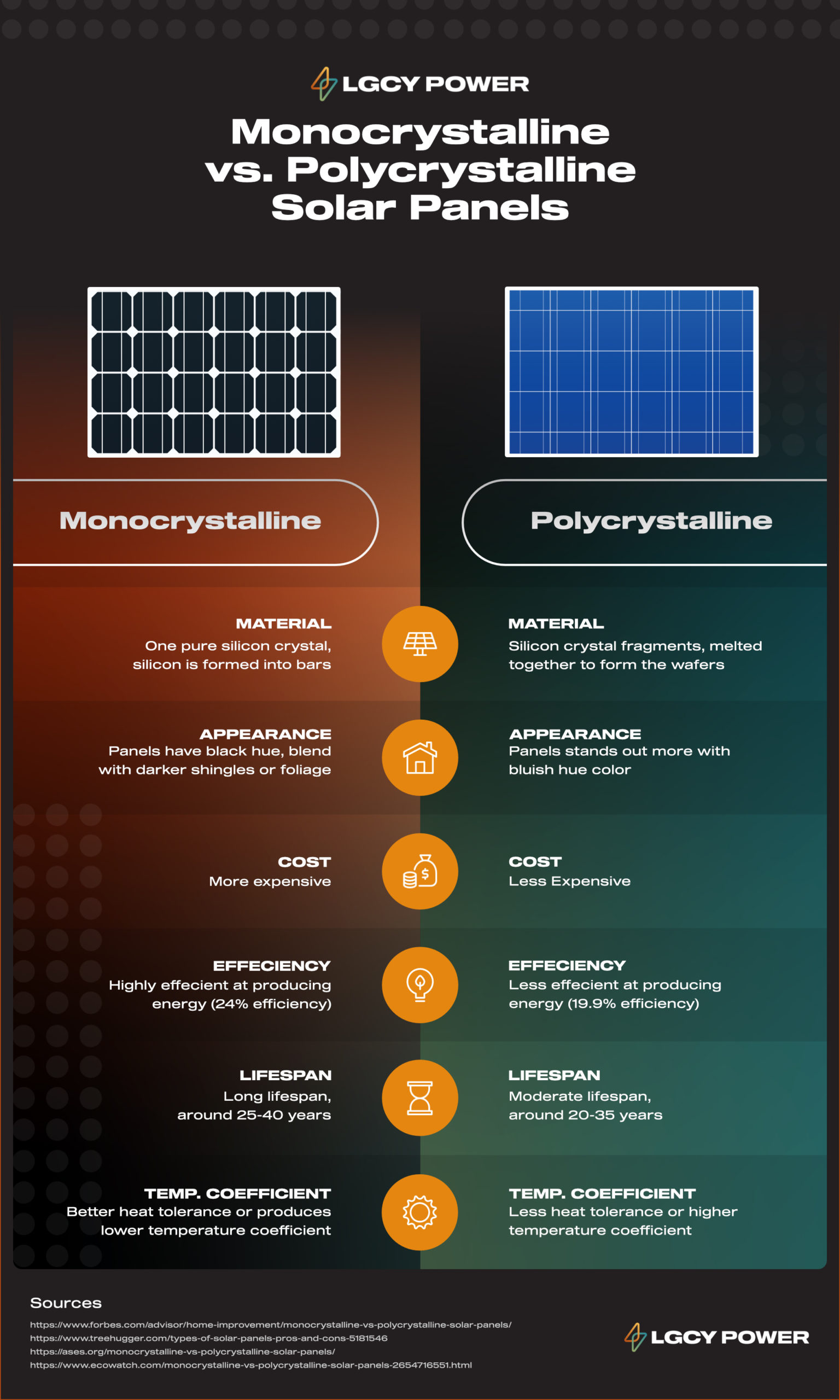
Monocrystalline panels are the champions of efficiency. Their uniform silicon structure allows them to convert a higher percentage of sunlight into electricity. This means a 20% efficient mono panel will produce more power in the same footprint than a 16% efficient poly panel. This is critical if you have a smaller roof, or if you want to maximize your energy output without adding more panels.
Polycrystalline panels, while less efficient, are still highly effective at generating power. If you have ample roof space, the lower efficiency might not be a deal-breaker, as you can simply install more panels to achieve your desired total output.
Cost: Balancing Upfront Investment with Long-Term Savings
Historically, monocrystalline panels were significantly more expensive. However, manufacturing advancements and economies of scale have drastically narrowed this gap. They still tend to have a slightly higher upfront cost per watt, but their higher efficiency can sometimes offset this by requiring fewer panels, thus potentially reducing installation costs for racking and wiring.
Polycrystalline panels remain the more budget-friendly option upfront. If your primary concern is minimizing initial investment and you have enough roof space to accommodate the slightly larger array, poly panels can offer excellent value.
Aesthetics: How Your Panels Look on Your Roof
This might seem minor, but for many homeowners, the visual impact of solar panels is important. Monocrystalline panels, with their uniform dark black appearance and sleek design, often blend more seamlessly into modern roofs. The rounded corners of individual cells sometimes create a subtle grid pattern.
Polycrystalline panels typically have a distinctive blue color and a more mottled look due to the silicon crystals. Their square cells create a solid grid appearance. Some homeowners prefer this look, while others find the black monocrystalline panels more discreet.
Performance in Varied Conditions: Heat, Low Light, and Degradation
Solar panels perform best in cooler temperatures. Both types experience a slight drop in efficiency as temperatures rise, but monocrystalline panels generally have a slightly better temperature coefficient. This means they lose a bit less efficiency in hot conditions compared to polycrystalline panels. For homes in very hot climates, this marginal difference can add up over time.
Regarding low light conditions (cloudy days, dawn/dusk), the difference is often exaggerated. While some manufacturers claim one performs better, modern panels of both types are quite good in less-than-ideal light. The perceived difference is often negligible in real-world scenarios, with module quality and inverter technology playing a more significant role.
Degradation rate refers to how much a panel’s output decreases each year. Both mono and poly panels are designed for long lifespans, typically guaranteeing 80-85% of their original output after 25 years. The degradation rates are very similar between high-quality mono and poly panels.
Lifespan and Durability: A Long-Term Investment
Both monocrystalline and polycrystalline solar panels are built to last. Most reputable manufacturers offer performance warranties of 25 years or more, guaranteeing a certain percentage of power output (typically 80-85%) after that period. The physical durability is also very similar, with both types designed to withstand harsh weather conditions.
The choice between mono and poly rarely comes down to lifespan, as both are engineered for decades of reliable service.
Environmental Impact & Manufacturing: A Quick Look
From an environmental perspective, both panel types contribute significantly to reducing carbon emissions by generating clean energy. The manufacturing process for monocrystalline panels involves slightly more energy due to the complex single-crystal growth, but it also produces less silicon waste. Polycrystalline panels have a simpler, less energy-intensive manufacturing process and can utilize more recycled silicon, though they produce more silicon waste during the initial block formation.
Ultimately, the environmental benefit of generating clean electricity far outweighs the small differences in manufacturing impact between these two technologies.
| Feature | Monocrystalline Solar Panels | Polycrystalline Solar Panels |
|---|---|---|
| Silicon Type | Single, pure silicon crystal | Multiple silicon crystal fragments fused together |
| Typical Efficiency | 18% – >22% (Higher) | 15% – 17% (Moderate) |
| Cost (Per Watt) | Slightly higher upfront | More affordable upfront |
| Appearance | Dark black, uniform look, rounded cell corners | Blue, mottled, square cell corners |
| Space Requirement | Less space for same output (Ideal for small roofs) | More space for same output (Good for large roofs) |
| Temperature Performance (Coefficient) | Better (Loses less efficiency in high heat) | Slightly lower (Loses slightly more efficiency in high heat) |
| Low Light Performance | Excellent (Often slightly better, but minor real-world difference) | Excellent (Generally very good, minor real-world difference) |
| Lifespan & Durability | 25+ years, excellent durability | 25+ years, excellent durability |
| Manufacturing Complexity | More complex, less silicon waste | Simpler, more silicon use (but can use recycled) |
Busting Common Myths About Mono and Poly Panels
The solar industry, like any evolving tech sector, has its share of myths. Let’s clear up some common misconceptions about monocrystalline and polycrystalline panels.
Myth 1: Polycrystalline Panels Are Obsolete
False. While monocrystalline panels have seen rapid advancements in efficiency and a narrowing cost gap, polycrystalline panels are far from obsolete. They continue to be a viable and cost-effective option, particularly for homeowners with ample roof space and a focus on upfront cost savings. Many large-scale solar farms still utilize polycrystalline technology due to its lower cost per watt and good performance.
Myth 2: Monocrystalline Panels Are Always “The Best”
False. While monocrystalline panels often boast higher efficiency numbers and a sleeker look, “best” is subjective. If you have a large, unobstructed roof and are working with a tight budget, polycrystalline panels might be the “best” choice for you. The highest efficiency isn’t always the most economical or practical solution for every homeowner’s unique situation.
Myth 3: Mixing Panel Types is Always a Bad Idea
It depends, but generally, not recommended for new systems. For a brand new solar installation, it’s always best practice to use panels of the same type and power rating to ensure optimal system performance and compatibility with your inverter. However, in scenarios like system expansions or panel replacements, it might* be technically possible to mix panel types with careful system design, especially if using microinverters or optimizers. But it adds complexity and potential for slight inefficiencies. Consult a solar professional before considering this.
Choosing Your Champion: When to Pick Monocrystalline, When to Pick Polycrystalline
Okay, with the facts laid out, how do you decide? It boils down to your specific needs, priorities, and home characteristics.
Go Monocrystalline If…
- You have limited roof space: If your roof is small, has complex angles, or is partially shaded, the higher efficiency of monocrystalline panels allows you to generate more power from a smaller footprint, maximizing your energy production.
- High efficiency is your top priority: You want the absolute most power output possible per square foot, regardless of a slight cost premium.
- Aesthetics matter most to you: The sleek, uniform dark black appearance of monocrystalline panels appeals more to your sense of style and home value.
- You live in a relatively cooler climate with high sun exposure: While mono panels have a slightly better temperature coefficient, their primary advantage isn’t specifically for extreme heat, but rather for maximizing output where space is a premium.
- You’re looking for the absolute latest technology: Mono panels often incorporate cutting-edge advancements like PERC (Passivated Emitter Rear Cell) technology, pushing efficiency even higher.
Opt for Polycrystalline If…
- Budget is your absolute top priority: You’re looking for the most cost-effective entry into solar and have a firm budget. Polycrystalline panels typically offer a lower upfront cost.
- You have ample roof space: If your roof is large and unobstructed, you can easily accommodate more panels to achieve your desired energy output without worrying about the slightly lower efficiency per panel.
- Aesthetics are less of a concern: You don’t mind the distinctive blue hue and mottled appearance of polycrystalline panels, or they simply aren’t visible from the ground.
- You live in a very hot climate: While monocrystalline panels have a slightly better temperature coefficient, the difference is often marginal. In very hot climates, the lower upfront cost of poly panels can make them an attractive option, especially if shading or space isn’t an issue.
Beyond Mono and Poly: What Else Should You Consider?
Choosing between monocrystalline and polycrystalline panels is a significant step, but it’s just one piece of the solar puzzle. To ensure you build a robust and efficient solar system, here are other crucial factors to consider:
Installer Reputation & Warranty
The quality of your installer and the warranties they offer can be just as important as the panels themselves. Look for installers with a strong track record, positive customer reviews, and comprehensive warranties that cover not just the panels, but also installation workmanship and inverter performance. A great installation can make even slightly less efficient panels perform admirably, while a poor installation can cripple the best panels.
System Components (Inverters, Batteries)
Your solar panels are just one part of your system. The inverter, which converts DC power from your panels into AC power your home can use, is critical. Options include string inverters, microinverters (one per panel, great for shading issues), and power optimizers. If you’re considering energy storage, battery integration will also influence your overall system design and cost. Discuss these options with your installer to ensure they align with your energy goals.
Future Technology & Upgradability
Solar technology is constantly evolving. While your panels will last for decades, it’s worth considering the long-term view. Ask your installer about the upgradability of your system. Will you be able to easily add more panels or integrate new technologies like electric vehicle charging or advanced home energy management systems down the line?
The Right Choice for Your Home
There’s no single “winner” in the monocrystalline vs. polycrystalline debate. Both are fantastic technologies that have powered millions of homes to energy independence. The best panel for you hinges on a careful evaluation of your roof space, your budget, your aesthetic preferences, and your long-term energy goals.
My advice? Get quotes for both types from reputable local installers. Discuss your priorities openly with them. They can model different scenarios for your specific home, helping you see the real-world impact of each choice. By doing your homework and partnering with the right professionals, you’ll not only choose the right solar panels but also embark on a successful and rewarding solar journey.
n
Frequently Asked Questions
What is the main difference between monocrystalline and polycrystalline solar panels?
The primary difference lies in their manufacturing process and silicon structure. Monocrystalline panels are made from a single, pure silicon crystal, giving them a uniform dark black appearance and higher efficiency. Polycrystalline panels are made from multiple fused silicon crystals, resulting in a blue, mottled appearance and slightly lower efficiency.
Which type of solar panel is more efficient?
Monocrystalline solar panels are generally more efficient, typically ranging from 18% to over 22%. Polycrystalline panels usually fall in the 15% to 17% efficiency range. This means monocrystalline panels generate more power from a smaller footprint.
Are monocrystalline panels always more expensive?
Historically, yes. However, the price gap has significantly narrowed. While monocrystalline panels still tend to have a slightly higher upfront cost per watt, their higher efficiency might mean you need fewer panels, potentially reducing overall system costs for racking and installation.
Which solar panel type looks better on a roof?
This is subjective. Monocrystalline panels are typically dark black and have a uniform appearance, often preferred for their sleek, modern aesthetic that blends well with most roofs. Polycrystalline panels have a distinctive blue hue with a mottled pattern.
Do monocrystalline or polycrystalline panels perform better in hot weather or low light?
Monocrystalline panels generally have a slightly better temperature coefficient, meaning they lose a bit less efficiency in high heat. For low-light conditions, the real-world performance difference between modern mono and poly panels is often negligible, with overall module quality and inverter technology playing a more significant role.
How long do both types of solar panels last?
Both monocrystalline and polycrystalline solar panels are highly durable and designed for long lifespans. Most reputable manufacturers offer performance warranties of 25 years or more, guaranteeing a high percentage of their original output (typically 80-85%) after that period.


Post Comment