Perovskite Solar Cells Advantages And Disadvantages
Perovskite Solar Cells: Unpacking the Advantages and Disadvantages of Solar’s Next Big Thing
Imagine a future where solar panels aren’t just rigid rectangles on a rooftop. Picture them as transparent coatings on windows, flexible films on your backpack, or even integrated into the fabric of buildings. This isn’t science fiction; it’s the promise of perovskite solar cells, a revolutionary technology shaking up the renewable energy world.
Table of Contents
- Perovskite Solar Cells: Unpacking the Advantages and Disadvantages of Solar’s Next Big Thing
- What Exactly Are Perovskite Solar Cells? (A Quick Dive)
- The Material Magic: Why Perovskites are Different
- How Perovskite Solar Cells Work: A Simplified Explanation
- The Game-Changing Advantages of Perovskite Solar Cells
- Unprecedented Efficiency: Catching More Sun
- Low Manufacturing Costs & Simplified Production: A Budget-Friendly Future
- Flexibility and Versatility: Solar Beyond Rooftops
- Tunable Bandgap: Optimized for Specific Needs
- High Power-to-Weight Ratio: Ideal for Niche Applications
- The Inherent Disadvantages and Hurdles Facing Perovskite Solar Cells
- Stability and Durability: The Longevity Challenge
- Lead Toxicity: An Environmental and Health Concern
- Scaling and Commercialization: From Lab to Market
- Regulatory and Public Acceptance: Overcoming Hurdles
- Hysteresis: A Performance Anomaly
- Perovskite vs. Silicon: A Head-to-Head Showdown
- Addressing the Challenges: Innovations Pushing Perovskites Forward
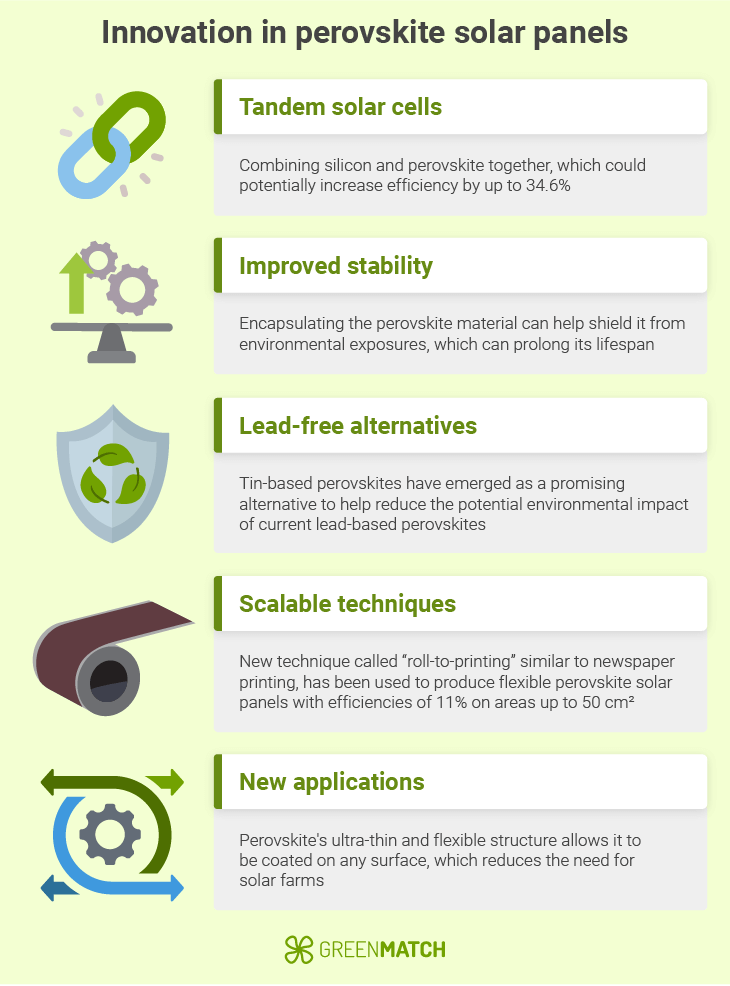
- Enhancing Stability: New Encapsulation and Material Formulations
- Taming Toxicity: Exploring Lead-Free Perovskites
- Scaling Production: Advanced Manufacturing Techniques
- The Future of Perovskite Solar Cells: What to Expect
- Hybrid Solutions: Perovskite-Silicon Tandem Cells
- Niche Markets and Everyday Applications
- When Will Perovskites Be in Your Home? (Realistic Timeline)
- Is it Time to Wait for Perovskite? Making an Informed Decision
- Conclusion: A Bright, But Challenging, Future
For years, silicon has been the undisputed king of solar, a reliable workhorse generating clean electricity. But perovskites, a class of materials named after Russian mineralogist L.A. Perovski, are the new kids on the block, boasting incredible potential. They offer the tantalizing possibility of cheaper, more efficient, and incredibly versatile solar power. However, like any emerging technology, they come with their own set of significant hurdles.
If you’re tracking the future of solar, understanding perovskite solar cells is crucial. This isn’t just about laboratory breakthroughs; it’s about what could redefine how we harness the sun‘s energy, impacting everything from large-scale power generation to the devices in your pocket. But are they truly ready to dethrone silicon? Let’s dive deep into their pros and cons, separating the hype from the reality.
What Exactly Are Perovskite Solar Cells? (A Quick Dive)
Before we weigh the good against the bad, let’s get a basic understanding of what we’re talking about. A perovskite solar cell is a type of solar cell that includes a perovskite-structured compound as the light-harvesting active layer. The material itself isn’t new; the mineral was discovered in 1837. What is new is its application in photovoltaics, which only truly began making waves in the early 2010s.
The Material Magic: Why Perovskites are Different
The magic lies in the unique crystal structure of perovskite materials. They typically have a hybrid organic-inorganic lead or tin halide-based material. This specific atomic arrangement allows them to absorb light and generate electricity with remarkable efficiency. Think of it like a perfectly tuned antenna, exceptionally good at capturing solar energy across a broad spectrum.
How Perovskite Solar Cells Work: A Simplified Explanation
In essence, a perovskite solar cell functions similarly to traditional solar cells. Photons (light particles) strike the perovskite layer, exciting electrons within the material. These excited electrons then flow out to an external circuit, creating an electric current – your usable electricity. The key difference is how efficiently the perovskite material converts these photons into electrical current, and how easily and cheaply this material can be processed.
The Game-Changing Advantages of Perovskite Solar Cells
The excitement around perovskites isn’t unfounded. They bring a suite of compelling advantages that could revolutionize the solar industry.
Unprecedented Efficiency: Catching More Sun
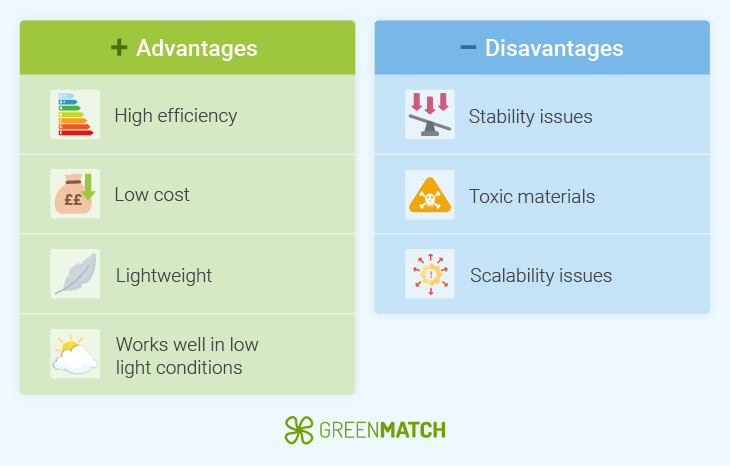
This is perhaps the biggest headliner. Perovskite solar cells have shown a staggering increase in power conversion efficiency in a very short time. Starting from around 3.8% in 2009, laboratory efficiencies have now soared past 26% for single-junction cells, rapidly approaching and even exceeding the theoretical limits of traditional silicon. When combined with silicon in a tandem cell, efficiencies have reached over 30%! This means more electricity from a smaller surface area, or the same amount of electricity using less material.
Low Manufacturing Costs & Simplified Production: A Budget-Friendly Future
Silicon solar panels require energy-intensive, high-temperature manufacturing processes in cleanroom environments. Perovskites, on the other hand, can be manufactured using relatively simple, solution-based processes – think printing, coating, or spraying, similar to how newspapers are printed or paint is applied. These methods require lower temperatures and less energy, which translates directly into significantly lower manufacturing costs. The raw materials themselves are also more abundant and less expensive than high-purity silicon.
Flexibility and Versatility: Solar Beyond Rooftops
Because perovskites can be processed into thin films, they offer incredible flexibility. They can be deposited onto various substrates like plastic, glass, or even fabrics. This opens up entirely new applications:
- Flexible solar cells for wearable electronics or curved surfaces.
- Transparent solar cells integrated into windows, generating power without blocking light.
- Lightweight cells for drones, electric vehicles, or temporary structures.
Silicon simply can’t compete with this level of adaptability.
Tunable Bandgap: Optimized for Specific Needs
The bandgap of a material determines which wavelengths of light it absorbs best. One of perovskites’ coolest tricks is that their bandgap can be chemically tuned. This means scientists can tweak the material’s composition to optimize it for specific light conditions or to absorb parts of the solar spectrum that silicon misses. This tunability is why they’re so promising in tandem cells – they can capture the high-energy blue light while silicon captures the lower-energy red light, maximizing overall energy harvest.
High Power-to-Weight Ratio: Ideal for Niche Applications
Due to their thin-film nature, perovskite solar cells are incredibly lightweight compared to silicon. This high power-to-weight ratio makes them ideal for applications where weight is a critical factor, such as aerospace, portable electronics, or even potentially lighter electric vehicles that gain range from integrated solar charging.
The Inherent Disadvantages and Hurdles Facing Perovskite Solar Cells
While the advantages are compelling, perovskites are not without their significant drawbacks. These are the challenges researchers are racing to overcome before widespread adoption can occur.
Stability and Durability: The Longevity Challenge
This is arguably the most significant hurdle. Current perovskite solar cells tend to degrade rapidly when exposed to environmental stressors like moisture, heat, and ultraviolet (UV) light. While silicon panels are known for their 25+ year warranties, perovskite cells often show performance drops within months or even weeks in harsh outdoor conditions. For them to be viable, their operational lifespan needs to drastically improve to match or at least approach silicon’s proven durability. This instability is a complex issue, often related to the chemical composition and encapsulation of the materials.
Lead Toxicity: An Environmental and Health Concern
Many of the most efficient perovskite formulations contain lead, a toxic heavy metal. This raises serious environmental and health concerns, especially regarding potential leakage during manufacturing, disposal, or if panels are damaged. While the amount of lead in a single cell is small, scaling up to millions of panels necessitates stringent safety protocols and, ideally, the development of lead-free alternatives. Research into tin-based perovskites or other novel compositions is ongoing, but they currently lag in efficiency and stability compared to their lead-containing counterparts.
Scaling and Commercialization: From Lab to Market
Taking a technology from a small, controlled lab setting to large-scale, consistent, and cost-effective manufacturing is a monumental task. Ensuring uniform quality, minimizing defects, and achieving high yields across vast production lines for perovskite solar cells is a significant engineering challenge. The precise control over film deposition needed for optimal performance can be difficult to maintain at industrial scales, impacting both efficiency and long-term reliability.
Regulatory and Public Acceptance: Overcoming Hurdles
Given the lead content and the novelty of the technology, perovskites face potential regulatory hurdles and public skepticism. Governments may impose restrictions or require extensive safety testing, and consumers might be wary of installing panels containing a toxic material on their homes. Building trust and demonstrating safety will be crucial for market penetration.
Hysteresis: A Performance Anomaly
Some perovskite solar cells exhibit hysteresis, meaning their measured power output can depend on the direction and speed of voltage scanning. This makes accurate and consistent performance measurement difficult and can indicate charge trapping or recombination issues within the device. It complicates both characterization and real-world performance prediction, making them less reliable for integration into existing power grids.

Perovskite vs. Silicon: A Head-to-Head Showdown
To truly appreciate where perovskites stand, let’s compare them directly to the established solar technology: traditional crystalline silicon.
| Feature | Perovskite Solar Cells | Crystalline Silicon Solar Cells |
|---|---|---|
| Max Lab Efficiency (Single Junction) | ~26% (rapidly increasing) | ~26.7% (nearing theoretical limits) |
| Tandem Cell Efficiency (with Silicon) | Over 30% demonstrated | Not applicable as a standalone tandem cell partner |
| Manufacturing Cost Potential | Very low (solution processing, low temperature) | Moderate (energy-intensive, high temperature) |
| Flexibility & Transparency | High (thin-film, adaptable substrates) | Low (rigid, opaque, heavier) |
| Long-Term Stability | Currently low (prone to degradation from moisture, heat, UV) | Excellent (25+ year warranties common) |
| Environmental Concerns | Lead toxicity (in most high-efficiency variants) | Minimal (non-toxic, material recycling improving) |
| Market Maturity | Emerging (commercial products are just starting to appear) | Mature (dominant global market share) |
Addressing the Challenges: Innovations Pushing Perovskites Forward
It’s not all doom and gloom for perovskites’ disadvantages. Researchers globally are intensely focused on mitigating these issues. Breakthroughs are happening constantly.
Enhancing Stability: New Encapsulation and Material Formulations
Scientists are developing novel strategies to protect perovskite layers from environmental degradation. This includes:
- Advanced encapsulation techniques: Using better barrier materials and sealing methods to prevent moisture and oxygen ingress.
- Chemical engineering of the perovskite material: Modifying the composition at the atomic level to make it inherently more robust against heat and UV light.
- Incorporation of additives: Blending in small amounts of other chemicals that act as stabilizers or passivate defects.
These efforts are leading to perovskite cells that can now last thousands of hours under stress tests, a significant improvement from early versions.
Taming Toxicity: Exploring Lead-Free Perovskites
The quest for safe, efficient, and stable lead-free perovskites is a major research frontier. While tin-based perovskites have shown promise, their efficiencies and stabilities are still lower than lead-based ones. However, continuous innovation in material science is identifying new compositions and strategies to boost their performance, with some lead-free options now exceeding 15% efficiency in labs. The goal is to make perovskites truly environmentally benign.
Scaling Production: Advanced Manufacturing Techniques
Moving beyond small lab cells, researchers are refining industrial-scale deposition methods. Techniques like slot-die coating, blade coating, and inkjet printing are being optimized to ensure uniform, high-quality perovskite films over large areas. Automation and process control are key to bridging the gap between laboratory success and commercial viability.
The Future of Perovskite Solar Cells: What to Expect
So, what does this all mean for the future of solar energy? Perovskites are unlikely to completely replace silicon overnight, but their role will be significant and diverse.
Hybrid Solutions: Perovskite-Silicon Tandem Cells
Perhaps the most immediate and impactful application will be in perovskite-silicon tandem cells. By stacking a perovskite layer on top of a traditional silicon cell, the perovskite captures the high-energy blue light that silicon doesn’t absorb as efficiently, while silicon handles the lower-energy red and infrared light. This synergistic approach allows for significantly higher overall efficiencies (already over 30% in labs), pushing past the theoretical limits of either material alone. Several companies are already close to commercializing these tandem modules.
Niche Markets and Everyday Applications
Beyond tandem cells, perovskites’ unique properties will open up entirely new markets:
- Building-Integrated Photovoltaics (BIPV): Transparent or colored perovskite films could be seamlessly integrated into building facades and windows, turning structures into power generators.
- Portable Electronics: Lightweight, flexible solar chargers for phones, sensors, and IoT devices.
- Indoor Solar: Perovskites are remarkably efficient under low-light conditions, making them ideal for powering smart devices inside buildings where ambient light is the only source.
- Off-Grid Solutions: Their low cost and ease of deployment could make them crucial for providing affordable electricity in remote areas.
When Will Perovskites Be in Your Home? (Realistic Timeline)
Don’t expect to see pure perovskite solar panels on your roof next year. However, perovskite-silicon tandem cells are a much closer reality, with some manufacturers aiming for commercial rollout in the next 2-5 years. These will likely be premium products, offering higher efficiency for those with limited roof space or seeking maximum power output. Standalone, flexible, or transparent perovskite products for niche applications (like smart windows or specific electronics) may follow soon after, within 5-10 years. Widespread, direct competition with silicon for residential rooftop solar will depend heavily on solving the long-term stability and lead toxicity issues, which could take another 5-15 years or more to fully mature.
Is it Time to Wait for Perovskite? Making an Informed Decision
If you’re considering going solar today, the answer is generally no, you shouldn’t wait. Silicon solar technology is mature, reliable, and highly cost-effective, with robust warranties and established installation networks. You’ll benefit from decades of proven performance and significant cost savings immediately.
Perovskites, while incredibly promising, are still an emerging technology. Their long-term stability in real-world conditions, lead concerns, and commercial scaling challenges mean they aren’t quite ready for mass adoption in residential rooftop applications. However, if you have very specific needs – say, you’re designing an innovative building with solar windows, or looking for ultra-lightweight power sources – keeping an eye on perovskite developments could be beneficial in the near future.
Conclusion: A Bright, But Challenging, Future
Perovskite solar cells represent one of the most exciting breakthroughs in renewable energy in decades. Their astonishing efficiency gains, low manufacturing potential, and incredible versatility paint a picture of a future where solar power is cheaper, more ubiquitous, and integrated into nearly every aspect of our lives. Yet, the critical challenges of stability and lead toxicity are real and demand rigorous scientific and engineering solutions.
The journey from laboratory marvel to commercial powerhouse is fraught with obstacles, but the rapid progress made in a relatively short time indicates a strong possibility of success. Perovskites are not just an alternative to silicon; they are a complementary force, set to expand the horizons of solar energy, ushering in an era of even cleaner, more accessible power for everyone.
Frequently Asked Questions
What are perovskite solar cells?
Perovskite solar cells are a new class of solar cells that use a perovskite-structured compound as the light-harvesting active layer. They are known for their rapid efficiency gains, low manufacturing costs, and versatility compared to traditional silicon cells.
What are the main advantages of perovskite solar cells?
Their key advantages include very high power conversion efficiency (especially in tandem with silicon), low manufacturing costs due to solution-based processing, flexibility, transparency potential, and a tunable bandgap for diverse applications.
What are the main disadvantages of perovskite solar cells?
The primary disadvantages are their current lack of long-term stability and durability against moisture, heat, and UV light, the presence of lead in most high-efficiency formulations (raising toxicity concerns), and challenges in scaling up production for mass commercialization.
How do perovskite solar cells compare to traditional silicon solar cells?
Perovskites offer higher potential efficiency, significantly lower manufacturing costs, and greater flexibility/transparency. However, silicon cells boast superior long-term stability (25+ years), are non-toxic, and have a mature market presence. Tandem cells (perovskite on silicon) combine the strengths of both.
When can I expect perovskite solar cells to be available for my home?
While standalone perovskite panels for residential rooftops are still some years away (likely 5-15+ years due to stability and toxicity concerns), perovskite-silicon tandem cells, offering higher efficiencies, could be commercially available within the next 2-5 years as premium options. Niche applications like transparent solar windows may also emerge soon.
Are lead-free perovskite solar cells a viable option?
Research into lead-free perovskites (often tin-based) is a major focus to address toxicity concerns. While they currently lag behind lead-based versions in terms of efficiency and stability, ongoing innovations are steadily improving their performance, making them a promising area for future development.


Post Comment