Solar Panel Cleaning Services Vadodara Price List
Solar Panel Cleaning Services: Understanding Costs in the US (and why Vadodara Prices Differ)
Let’s be blunt: you invested in solar panels to save money and power your home efficiently. But here’s a truth bomb no one likes to hear – dirty panels are underperforming panels. If you’re searching for “Solar Panel Cleaning Services Vadodara Price List,” you’re likely trying to get a handle on costs, perhaps even for your US-based home, and stumbled upon a location-specific query. While we’ll touch on why prices in Vadodara, India, differ significantly, our primary focus here is to give you a definitive, US-centric guide to understanding solar panel cleaning costs, benefits, and how to choose the right service.
Table of Contents
- Solar Panel Cleaning Services: Understanding Costs in the US (and why Vadodara Prices Differ)
- Why You Need to Clean Your Solar Panels: More Than Just Aesthetics
- The Efficiency Drop: Dust, Pollen, & Debris
- Longevity & Warranty Considerations
- Maximizing Your ROI
- What Influences Solar Panel Cleaning Costs in the US?
- System Size and Number of Panels
- Roof Accessibility and Pitch
- Cleaning Method (Manual vs. Automated/Robotic)
- Frequency of Cleaning (One-time vs. Annual Maintenance Contracts – AMC)
- Location (Regional Labor Costs)
- Additional Services (Inspection, Pest Control, Gutter Cleaning)
- Typical Solar Panel Cleaning Price List in the US (2024 Estimates)
- US Solar Panel Cleaning Costs: One-Time vs. Annual Contract
- Vadodara vs. USA: Why the Price Difference is Significant
- Currency Exchange & Purchasing Power
- Labor Costs and Economic Factors
- Market Maturity and Competition
- DIY Solar Panel Cleaning: When is it a Good Idea?
- Pros and Cons of DIY
- Essential Tools and Safety Precautions
- When NOT to DIY (Roof Height, Panel Type, Warranty)
- How to Choose a Professional Solar Panel Cleaning Service
- What to Look For in a Provider
- Key Questions to Ask
- Understanding Service Agreements & Warranties
- Maximizing Your Solar Investment Beyond Cleaning
- Regular Monitoring
- Tree Trimming & Shading Management
- System Inspections
- Final Thoughts: Don’t Let Dust Dim Your Sunshine
Is your solar investment delivering its maximum potential? Or is a layer of grime, dust, and bird droppings silently chipping away at your energy production? Cleaning your panels isn’t just about aesthetics; it’s about safeguarding your investment and ensuring peak performance.
Why You Need to Clean Your Solar Panels: More Than Just Aesthetics
Think of your solar panels like the windshield of your car. If it’s covered in dirt, your visibility drops. For solar panels, that “visibility” is their ability to absorb sunlight and convert it into electricity. A clean panel is an efficient panel.
The Efficiency Drop: Dust, Pollen, & Debris
It’s a common misconception that rain alone is enough to keep your solar panels clean. While rain can wash away some loose dust, it often leaves behind stubborn residues, hard water spots, pollen, bird droppings, and industrial pollutants. Studies, including those from organizations like the National Renewable Energy Laboratory (NREL), suggest that accumulated dirt can reduce a solar panel’s efficiency by 5-20%, and even more in particularly dusty or high-pollen environments. Over a year, that’s a significant chunk of lost energy production and, by extension, lost savings.
Longevity & Warranty Considerations
Beyond efficiency, neglected panels can suffer long-term damage. Accumulated debris can create “hot spots” on the panel, leading to localized overheating and potential damage to the solar cells. This can shorten the lifespan of your panels and, in some cases, even void parts of your manufacturer’s warranty. Regular, professional cleaning helps identify potential issues early, contributing to the overall health and longevity of your solar system.
Maximizing Your ROI
Your solar system is a substantial investment. To get the best return on that investment, you need it operating at its absolute peak. If cleaning your panels costs, say, $200 annually but increases your energy production by 10%, leading to an extra $300 in savings or revenue, then it’s a no-brainer. Professional cleaning isn’t an expense; it’s an investment in your investment.
What Influences Solar Panel Cleaning Costs in the US?
Unlike a simple car wash, solar panel cleaning prices aren’t one-size-fits-all. Several factors contribute to the final quote you’ll receive from a US-based service provider.
System Size and Number of Panels
This is arguably the biggest determinant. More panels mean more surface area to clean, which translates to more time and labor. Service providers usually price based on system size (e.g., kW) or a per-panel rate, with discounts for larger systems or more panels.
Roof Accessibility and Pitch
Is your roof easily accessible with a standard ladder, or does it require specialized equipment like lifts, harnesses, and fall protection? A steep roof pitch (the angle of your roof) or a multi-story home significantly increases the difficulty and safety risks, which will be reflected in the price. Panels on a flat, easily accessible ground mount or low-pitch roof will always be cheaper to clean than those on a tricky, high-pitched roof.

Cleaning Method (Manual vs. Automated/Robotic)
- Manual Cleaning: The most common method for residential properties. Technicians use specialized brushes, de-ionized water, and squeegees. This is labor-intensive but offers a thorough clean.
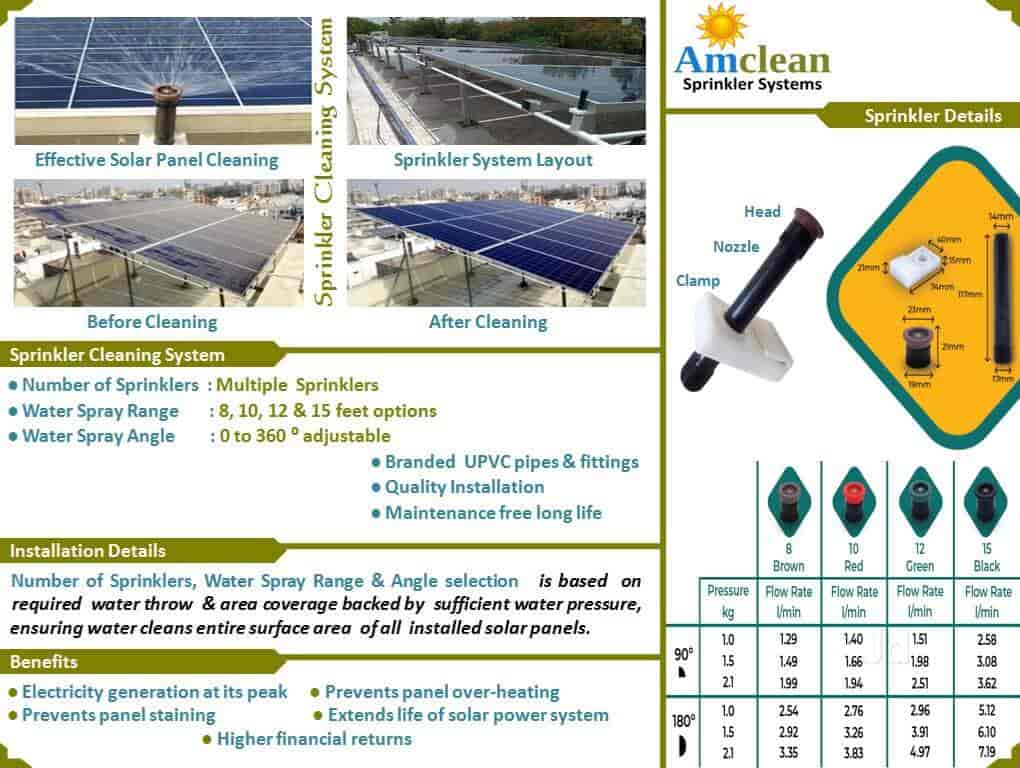
- Semi-Automatic/Sprinkler Systems: More common for larger commercial or industrial installations. These involve fixed sprinkler systems that can be activated remotely. While reducing labor, the upfront installation cost is higher, and they may not provide as deep a clean as manual methods for stubborn grime.
- Robotic Cleaning: Emerging technology, typically for very large utility-scale or commercial arrays. Robots autonomously clean panels, but this isn’t usually an option for standard residential systems.
For residential solar panel cleaning in the US, you’ll almost exclusively be looking at manual cleaning services, which are priced based on the time and effort involved.
Frequency of Cleaning (One-time vs. Annual Maintenance Contracts – AMC)
Many providers offer discounts if you commit to regular cleaning schedules, often through an Annual Maintenance Contract (AMC). Instead of paying a higher rate for a one-off service, an AMC might include 2-4 cleanings per year at a reduced per-service cost. This is often a smart choice for homeowners in dusty areas or those wanting peace of mind.
Location (Regional Labor Costs)
Just like any service, labor costs vary by region within the US. Cleaning services in high cost-of-living areas (e.g., California, Northeast) will generally be more expensive than in regions with lower labor costs. Fuel costs for travel can also play a minor role.
Additional Services (Inspection, Pest Control, Gutter Cleaning)
Some companies offer bundled services. For example, during a cleaning, they might also perform a visual inspection of your panels for damage, check wiring, or even offer add-ons like bird-proofing or gutter cleaning at a discounted rate. These additional services, while beneficial, will naturally add to the overall cost.
Typical Solar Panel Cleaning Price List in the US (2024 Estimates)
Based on the factors above, here’s a general idea of what you can expect to pay for professional solar panel cleaning services across the United States. Keep in mind these are estimates, and local quotes will vary.
| System Size (kW) | Number of Panels (Approx.) | Average One-Time Cost Range (USD) | Notes |
|---|---|---|---|
| 1-5 kW | 3-15 panels | $100 – $250 | Small residential systems, often ground-mounted or easily accessible. |
| 6-10 kW | 16-30 panels | $200 – $400 | Typical residential rooftop systems. |
| 11-15 kW | 31-45 panels | $350 – $600 | Larger residential or small commercial systems. |
| 16-20+ kW | 46+ panels | $500 – $800+ | Larger custom quotes often required due to scale and complexity. |
These ranges assume standard accessibility. Expect higher costs for difficult-to-reach panels or very steep roofs.
US Solar Panel Cleaning Costs: One-Time vs. Annual Contract
Many providers offer a cost advantage if you commit to regular service. Here’s a general comparison:
| Service Type | Cost Per Cleaning (USD) | Annual Savings Potential |
|---|---|---|
| One-Time Cleaning | $100 – $800+ (depending on system size/factors) | N/A |
| Annual Maintenance Contract (2-4 cleanings/year) | $75 – $700+ per cleaning | Typically 10-25% lower per cleaning compared to one-off rates. |
Vadodara vs. USA: Why the Price Difference is Significant
If you’ve seen prices listed for Vadodara, India, you’ve likely noticed they are considerably lower than US estimates. This isn’t just a currency conversion; it’s a reflection of vastly different economic landscapes.
Currency Exchange & Purchasing Power
The Indian Rupee (INR) has a significantly different exchange rate and purchasing power compared to the US Dollar (USD). A price of 300-400 INR for solar cleaning (as seen in some Vadodara listings) translates to roughly $3.60-$4.80 USD. This is an incredibly low figure by US standards, even before considering other factors.
Labor Costs and Economic Factors
The primary driver of this difference is labor cost. Wages for services, including solar panel cleaning, are substantially lower in India due to different economic conditions, cost of living, and average income levels. What constitutes a fair living wage for a service professional in Vadodara is very different from what it is in, say, California or Texas.

Market Maturity and Competition
Both markets are growing, but the specific dynamics of competition, regulations, and consumer expectations differ. A highly competitive market with different overheads and operational costs will naturally yield different pricing.
| Factor | Vadodara, India (Illustrative) | United States (Typical) |
|---|---|---|
| Base Cost for Small System (e.g., 3kW) | ~300-400 INR (~$3.60-$4.80 USD) | $100 – $250 USD |
| Primary Cost Driver | Material cost & basic labor | Skilled labor, insurance, safety equipment, operational overheads |
| Average Annual Cleanings | Often 4-6+ times due to dustier environments | 1-2 times (or 3-4 in very dusty regions) |
So, while the Vadodara prices might seem incredibly attractive, they are not applicable to the US market. When researching costs for your home, always ensure you’re looking at local, US-based estimates.
DIY Solar Panel Cleaning: When is it a Good Idea?
For some homeowners, the idea of DIY cleaning is appealing. It can save money, but it comes with significant caveats.
Pros and Cons of DIY
- Pros:
- Cost Savings: The most obvious benefit. You only pay for supplies.
- Flexibility: Clean whenever you feel it’s necessary.
- Cons:
- Safety Risks: Working on a roof can be dangerous, especially on pitched roofs or with wet surfaces. Falls are a serious concern.
- Potential for Damage: Using the wrong cleaning agents, abrasive brushes, or high-pressure washers can scratch panels, damage anti-reflective coatings, or even lead to micro-cracks, reducing efficiency and potentially voiding warranties.
- Ineffective Cleaning: Tap water can leave mineral deposits (hard water spots) that actually *reduce* efficiency. Specialized de-ionized water is crucial for a spotless, residue-free clean.
- Time & Effort: Cleaning can be physically demanding and time-consuming.
Essential Tools and Safety Precautions
If you insist on DIY, prioritize safety and proper tools:
- Safety Gear: A sturdy ladder, non-slip shoes, safety harness (if on a high or pitched roof), and gloves.
- Proper Cleaning Tools: A soft-bristle brush designed for solar panels, a long extension pole, and a squeegee.
- De-ionized Water: Crucial for avoiding hard water spots. You can buy or rent de-ionization filters.
- Gentle Cleaning Solution: If needed, use a pH-neutral, non-abrasive soap specifically designed for solar panels. Avoid harsh detergents or window cleaners.
When NOT to DIY (Roof Height, Panel Type, Warranty)
Always call a professional if:
- Your panels are on a steep or high roof where ladder work is precarious. Your safety is paramount.
- You have older or particularly fragile panels that might be easily damaged.
- Your warranty specifies professional cleaning or warns against certain DIY methods. Read your warranty document carefully!
- You lack the proper safety equipment or experience working at heights.
- You want the most thorough and residue-free clean, optimizing efficiency without risking damage.
How to Choose a Professional Solar Panel Cleaning Service
When it’s time to hire pros, you want someone reliable, effective, and safe. Don’t just pick the cheapest option; look for value and expertise.
What to Look For in a Provider
- Experience & Reputation: How long have they been in business? Do they have good reviews on platforms like Google, Yelp, or solar forums?
- Insurance: This is non-negotiable. They should have liability insurance to cover any accidental damage to your property and workers’ compensation insurance for their employees.
- Specialized Equipment: Do they use de-ionized water systems, soft brushes, and appropriate safety gear?
- Local Knowledge: Are they familiar with local weather patterns, common pollutants (e.g., agricultural dust, industrial fallout), and roofing styles?
- Clear Pricing: Do they provide a detailed quote that breaks down costs and explains what’s included?
Key Questions to Ask
Before hiring, arm yourself with these questions:
- “What cleaning methods and solutions do you use?” (Look for de-ionized water and soft brushes.)
- “Are you licensed and insured for roof work and property damage?” (Ask for proof.)
- “Can you provide references or show me examples of your work?”
- “Do you offer annual maintenance plans, and what are the benefits?”
- “What safety precautions do your technicians take?”
- “Do you offer any guarantees on your cleaning or for identifying issues?”
Understanding Service Agreements & Warranties
If you opt for an AMC, read the contract thoroughly. Understand the cleaning schedule, what’s included (e.g., visual inspection), cancellation policies, and any guarantees. Also, double-check your solar panel manufacturer’s warranty regarding cleaning. Most recommend professional cleaning, but it’s good to be aware of any specific stipulations.
Maximizing Your Solar Investment Beyond Cleaning
While cleaning is vital, it’s just one piece of the puzzle for a high-performing solar system. Think holistically about your solar health.
Regular Monitoring
Many modern solar systems come with monitoring apps that show real-time production. Regularly checking this data allows you to spot sudden drops in output, which could indicate a need for cleaning or a more serious issue.
Tree Trimming & Shading Management
Over time, trees grow. What wasn’t a shading issue when your panels were installed could become one. Periodically assess your roof for new shadows, especially during different seasons, and trim foliage as needed to ensure maximum sun exposure.
System Inspections
Beyond cleaning, consider an annual or biennial professional inspection. This goes deeper than a visual check, ensuring all electrical components, wiring, mounting hardware, and inverters are functioning correctly and safely. Many solar cleaning companies also offer these inspection services.
Final Thoughts: Don’t Let Dust Dim Your Sunshine
Your solar panels are a long-term asset, designed to save you money and contribute to a greener future. Neglecting their maintenance, especially cleaning, is like buying a high-performance car and never changing its oil. While your search might have started with “Solar Panel Cleaning Services Vadodara Price List,” hopefully, you now have a much clearer understanding of why investing in professional, US-based cleaning is a smart, economical decision for your home. Don’t let a layer of dust keep you from harnessing every ray of sunshine. Get those panels sparkling, and watch your energy savings climb!
Frequently Asked Questions
How much does solar panel cleaning typically cost in the US?
In the US, typical one-time solar panel cleaning costs range from $100 for small residential systems (1-5 kW, 3-15 panels) to $800+ for larger systems (16-20+ kW, 46+ panels). Prices are influenced by system size, roof accessibility, and location. Annual maintenance contracts often offer a 10-25% discount per cleaning.
Why are solar panel cleaning prices in Vadodara, India, so much lower than in the US?
The significant price difference is primarily due to varying economic conditions. Labor costs, which are a major component of service pricing, are substantially lower in India compared to the US. Additionally, currency exchange rates and local market dynamics contribute to the disparity, making direct comparisons between Vadodara and US pricing irrelevant for US homeowners.
How often should I clean my solar panels?
The ideal cleaning frequency depends on your local environment. In most US regions, 1-2 cleanings per year are sufficient. However, if you live in a particularly dusty area, near agricultural fields, industrial zones, or experience heavy pollen seasons, 3-4 cleanings annually might be beneficial to maintain peak efficiency.
Can I clean my solar panels myself?
DIY cleaning is possible for easily accessible panels on low-pitch roofs, but it comes with safety risks and potential for damage if not done correctly. Always use proper safety gear, a soft-bristle brush, and de-ionized water to avoid scratches and hard water spots. For high or steep roofs, or if you’re uncomfortable with heights, professional cleaning is strongly recommended.
What should I look for when hiring a professional solar panel cleaning service?
Look for a provider with experience and good reviews, comprehensive liability and workers’ compensation insurance, specialized equipment (like de-ionized water systems and soft brushes), and clear, upfront pricing. Don’t hesitate to ask about their cleaning methods, safety protocols, and whether they offer annual maintenance plans or guarantees.
Does dirty solar panels really affect efficiency?
Yes, absolutely. Accumulated dust, pollen, bird droppings, and other debris can block sunlight from reaching your solar cells, leading to a measurable reduction in energy output. Studies suggest an efficiency drop of 5-20% or even more in very soiled conditions, directly impacting your energy savings and return on investment.


Post Comment