Solar Panel Installation For Home In Chennai
Navigating Solar Panel Installation for Homes in Chennai: A Comprehensive Guide for the Global Investor & Homeowner
Considering solar power for a home in Chennai? Whether you own property there, are exploring investment opportunities, or simply planning for a future move, understanding the nuances of rooftop solar in this vibrant Indian metropolis is key. Chennai, with its abundant sunshine and growing energy demands, presents a compelling case for solar adoption. But what does it really take to go solar, especially when you might be managing things from abroad? Let’s demystify the process, costs, and benefits, ensuring you make an informed decision.
Table of Contents
- Navigating Solar Panel Installation for Homes in Chennai: A Comprehensive Guide for the Global Investor & Homeowner
- Why Solar Power is a Smart Investment in Chennai
- Understanding Your Options: Types of Solar Systems for Chennai Homes
- On-Grid (Grid-Tied) Systems
- Off-Grid Systems
- Hybrid Systems
- Decoding Solar Panel Installation Costs in Chennai
- Key Factors Influencing Cost:
- Average Cost Breakdown for Residential Systems in Chennai
- ROI and Payback Period
- Navigating Government Subsidies and Incentives for Solar in Chennai
- Central Government Schemes (e.g., PM-Surya Ghar Muft Bijli Yojana)
- State-Specific Incentives (Tamil Nadu)
- Net Metering Policy in Tamil Nadu
- The Step-by-Step Process of Solar Installation in Chennai (for a Remote Owner)
- 1. Initial Assessment & Consultation
- 2. Site Survey & System Design
- 3. Quote & Agreement
- 4. Government Approvals & Subsidy Application
- 5. Procurement & Installation
- 6. Net Metering & Grid Connection
- 7. Post-Installation Support
- Choosing the Right Solar Installer in Chennai: A Guide for Quality & Trust
- Long-Term Considerations & Maintenance for Your Chennai Solar System
- Challenges and Unique Aspects of Solar in Chennai
- Conclusion
Why Solar Power is a Smart Investment in Chennai
For homeowners and investors alike, embracing solar energy in Chennai isn’t just an eco-friendly choice; it’s a strategically sound financial move. The benefits are tangible and far-reaching:
- Immediate Cost Savings: Chennai’s electricity tariffs can be substantial. A well-designed solar system significantly slashes or even eliminates your monthly electricity bills, providing long-term financial relief. Think about the peace of mind knowing your property’s energy costs are under control.
- Environmental Impact: By harnessing the sun’s clean energy, you’re directly contributing to reducing carbon emissions and mitigating the effects of climate change. This commitment to sustainability enhances the appeal of your property and aligns with global environmental goals.
- Energy Independence & Reliability: India’s grid, while improving, can still experience occasional fluctuations or power cuts. An adequately sized solar system, especially with battery backup, provides a degree of energy independence, ensuring uninterrupted power for your home.
- Property Value Enhancement: A modern solar installation is a significant upgrade. It makes your property more attractive and valuable in Chennai’s competitive real estate market, signaling lower operating costs and modern amenities to potential buyers or tenants.
- Government Incentives & Subsidies: Both central and state governments in India are actively promoting solar adoption through various schemes, offering substantial financial assistance that can significantly reduce your initial investment. We’ll dive deeper into these.
Understanding Your Options: Types of Solar Systems for Chennai Homes
When considering solar, you’ll primarily encounter three types of systems, each with distinct advantages and ideal use cases:
On-Grid (Grid-Tied) Systems
These systems are connected to the main electricity grid. Excess electricity generated by your solar panels is fed back into the grid, and you typically receive credits (via net metering) that offset your consumption during times when your panels aren’t producing enough (e.g., at night or on cloudy days).
- Pros: Generally lower upfront cost, no battery maintenance, can significantly reduce grid electricity bills, benefits from net metering policies.
- Cons: Does not provide power during grid outages (unless specifically designed with a grid-tied inverter that has backup capabilities), relies on grid stability.
Off-Grid Systems
Completely independent of the main electricity grid, off-grid systems store excess solar energy in batteries for use when the sun isn’t shining. They are ideal for areas with unreliable grid access or for homeowners seeking complete energy autonomy.
- Pros: Full energy independence, provides power during grid outages, no reliance on utility companies.
- Cons: Higher upfront cost due to batteries, battery maintenance and replacement, requires careful sizing to ensure continuous power supply.
Hybrid Systems
As the name suggests, hybrid systems combine the best features of both on-grid and off-grid setups. They are connected to the grid but also incorporate battery storage. This allows you to store excess solar energy for your own use (e.g., during peak hours or power cuts) while still having the grid as a backup.
- Pros: Provides backup power during outages, optimizes self-consumption, potential for net metering benefits, greater energy security.
- Cons: More complex than on-grid, higher upfront cost than on-grid (but less than a full off-grid system of equivalent capacity).
To help you weigh the options, here’s a quick comparison:
| Feature | On-Grid System | Off-Grid System | Hybrid System |
|---|---|---|---|
| Grid Connection | Yes | No | Yes |
| Battery Storage | No (typically) | Yes (essential) | Yes (optional but recommended) |
| Backup During Outage | No (unless specific inverter) | Yes | Yes |
| Cost | Lowest | Highest | Medium-High |
| Ideal For | Reducing electricity bills, stable grid areas | Remote areas, frequent outages, energy independence | Maximizing self-consumption, grid stability concerns |
Decoding Solar Panel Installation Costs in Chennai
The cost of installing a solar panel system in Chennai varies significantly based on several factors. Understanding these will help you budget effectively, especially when managing your investment remotely.
Key Factors Influencing Cost:
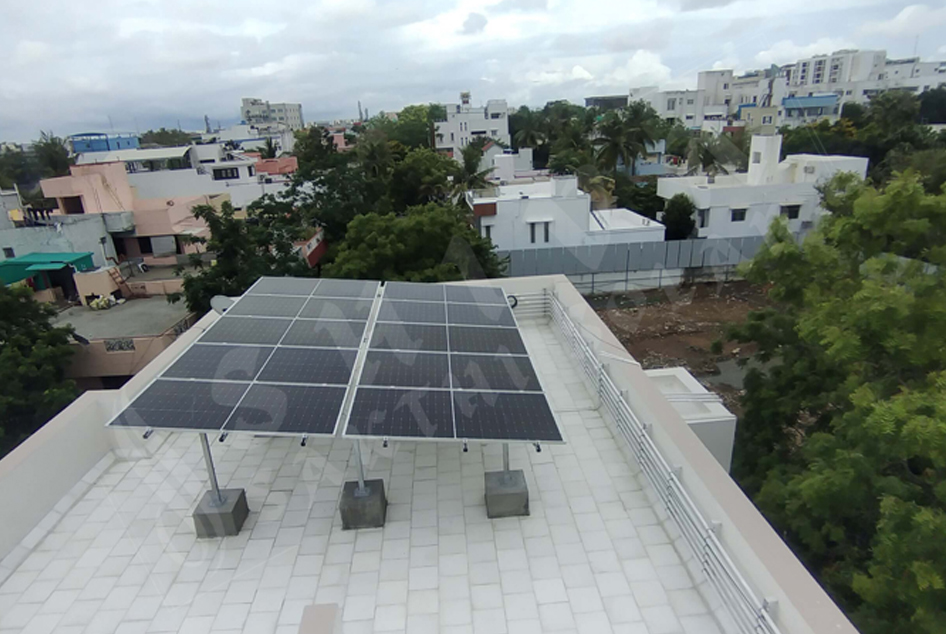
- System Size (kW): This is the primary driver of cost. Larger systems generate more electricity but require more panels and components.
- Panel Type: Monocrystalline panels (more efficient, higher cost) vs. Polycrystalline panels (good performance, lower cost) are common choices.
- Inverter Quality: The inverter converts DC power from panels to AC power for your home. Reputable brands with advanced features (like string inverters, micro-inverters, or hybrid inverters) come at a premium but offer better performance and longevity.
- Battery Storage (for Off-Grid/Hybrid): Batteries are a significant expense. The capacity and type of battery (e.g., lead-acid, lithium-ion) directly impact the total cost.
- Installation Complexity: Factors like roof type, tilt, shading, and the ease of running wiring can affect labor costs.
- Brand Reputation & Warranties: Established installers using high-quality components with solid warranties may have higher quotes but offer greater peace of mind.
Average Cost Breakdown for Residential Systems in Chennai
While prices can fluctuate due to market conditions, here’s an estimated range for common residential solar system sizes in Chennai. We’ll also provide a USD equivalent for easier understanding for our USA audience (using an approximate exchange rate of 1 USD = 83 INR, subject to change).
| System Size (kW) | Estimated Cost (INR) | Estimated Cost (USD) | Approx. Space Required (sq. ft.) |
|---|---|---|---|
| 1 kW | ₹40,000 – ₹65,000 | $480 – $780 | 100 |
| 2 kW | ₹80,000 – ₹1,20,000 | $960 – $1,440 | 200 |
| 3 kW | ₹1,20,000 – ₹1,80,000 | $1,440 – $2,170 | 300 |
| 5 kW | ₹2,00,000 – ₹3,00,000 | $2,400 – $3,600 | 500 |
| 10 kW | ₹4,00,000 – ₹6,00,000+ | $4,800 – $7,200+ | 1000 |
Note: These are estimates. Actual costs will vary based on installer, specific components, and current market rates. Always obtain multiple quotes.
ROI and Payback Period
For most residential solar systems in Chennai, with decent sun exposure and proper sizing, the payback period (the time it takes for your savings to equal your initial investment) typically ranges from 3 to 6 years. This can be significantly accelerated by government subsidies. After this period, the electricity generated by your panels is essentially free, leading to decades of savings.
Navigating Government Subsidies and Incentives for Solar in Chennai
One of the most attractive aspects of installing solar in Chennai is the availability of significant government support. Both the central and state governments offer schemes designed to make solar power more accessible and affordable.
Central Government Schemes (e.g., PM-Surya Ghar Muft Bijli Yojana)
India’s central government frequently rolls out initiatives to boost rooftop solar. A prominent example is the ‘PM-Surya Ghar: Muft Bijli Yojana’, which aims to provide free electricity to households and offers substantial subsidies. For a USA audience, it’s important to understand the general framework:
- Subsidy Amounts: These schemes typically offer a fixed subsidy per kW of installed capacity, up to a certain limit. For instance, the PM-Surya Ghar Yojana offers subsidies up to ₹78,000 for systems 3 kW and above.
- Eligibility: Generally, these subsidies are for residential consumers with grid-connected systems. Specific criteria (e.g., annual income, existing solar installations) may apply.
- Application Process (Remote Owner): The application process often involves registering on a national portal, selecting a local vendor, and submitting documents. If you’re managing remotely, you’ll need to work closely with a trusted local installer who can handle the paperwork and liaise with government bodies on your behalf. They often have experience navigating the bureaucratic aspects.
State-Specific Incentives (Tamil Nadu)
While central schemes are broad, states like Tamil Nadu may also offer additional incentives or streamline processes through their own energy development agencies (e.g., TANGEDCO – Tamil Nadu Generation and Distribution Corporation Limited).
Net Metering Policy in Tamil Nadu
Net metering is a crucial policy that allows residential solar owners to send excess electricity generated by their panels back to the grid. For every unit (kWh) fed into the grid, you receive a credit on your electricity bill. When your system isn’t producing enough, you draw power from the grid, and these credits offset your consumption. Tamil Nadu has a robust net metering policy, making grid-tied systems highly appealing for maximizing savings.
| Subsidy Tier (kW) | Central Government Subsidy (INR) | Central Government Subsidy (USD) |
|---|---|---|
| Up to 2 kW | ₹30,000 per kW (Max ₹60,000) | $360 per kW (Max $720) |
| Above 2 kW up to 3 kW | ₹18,000 per kW (Max ₹78,000 total) | $217 per kW (Max $940 total) |
| Above 3 kW | ₹78,000 (fixed) | $940 (fixed) |
Note: Subsidy amounts are indicative of recent schemes (e.g., PM-Surya Ghar) and are subject to change based on government policies. Always verify the latest information with a certified installer.
The Step-by-Step Process of Solar Installation in Chennai (for a Remote Owner)
Installing solar panels on your Chennai home, even from a distance, is a manageable process if you engage the right partners. Here’s what you can expect:
1. Initial Assessment & Consultation
Start by identifying reputable solar installers in Chennai. Most offer remote consultations. You’ll need to provide details about your property, current electricity bills, and energy consumption patterns. They will assess your needs and discuss system types.
2. Site Survey & System Design
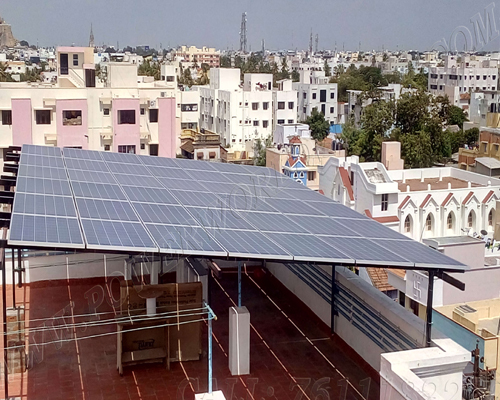
A professional installer will conduct a site survey (this might require a local representative or even virtual tools with your input). They’ll analyze roof structure, shading, sun exposure, and available space to design an optimal system tailored to your home’s energy requirements and local conditions.
3. Quote & Agreement
Based on the design, you’ll receive a detailed quote outlining system components, installation costs, estimated generation, and expected savings. Scrutinize the contract for warranties, payment schedules, and what’s included. Ensure clear communication channels are established for remote management.
4. Government Approvals & Subsidy Application
This is where a good installer truly shines for a remote owner. They should handle all necessary permits from TANGEDCO and guide you through the subsidy application process, including submitting documents and liaising with government agencies. Confirm their experience with this bureaucratic aspect.
5. Procurement & Installation
Once approvals are in place, the installer procures the panels, inverter, mounting structure, and other components. Installation usually takes a few days, depending on system size and complexity. Reputable installers will ensure minimal disruption and adhere to safety standards.
6. Net Metering & Grid Connection
After installation, TANGEDCO will inspect the system. If approved, a bidirectional (net) meter will be installed, allowing you to track both electricity consumed from and fed into the grid. Your system can then be officially connected and start generating power.
7. Post-Installation Support
Ensure your chosen installer offers robust post-installation support, including monitoring, maintenance services, and warranty claims. This is vital for the long-term performance and peace of mind, especially when you’re not physically present.
Choosing the Right Solar Installer in Chennai: A Guide for Quality & Trust
Selecting the right installer is perhaps the most critical decision, particularly when you’re managing a project from afar. Here’s what to look for:
- Reputation & Experience: Look for installers with a proven track record in Chennai. Check their years in business, number of installations, and any local industry affiliations.
- Certifications & Licenses: Ensure they are certified by relevant bodies (e.g., MNRE – Ministry of New and Renewable Energy, India) and hold all necessary local licenses. This guarantees compliance and quality.
- Panel & Inverter Quality: Inquire about the brands they use. Reputable brands like Waaree, Adani Solar, Vikram Solar (Indian), or international players like Trina Solar, Jinko Solar, or Longi Solar are good indicators of quality. Discuss inverter choices – string, micro-inverters, or hybrid systems.
- Warranty & Service: A good installer will offer comprehensive warranties on panels (20-25 years performance), inverters (5-10 years), and their workmanship (typically 1-5 years). Understand their service commitment for maintenance and troubleshooting.
- Customer Reviews & Portfolio: Check online reviews (Google, local directories, social media) and ask for references. A strong portfolio of completed projects in Chennai provides tangible proof of their capabilities.
- Transparent Pricing & Communication: Demand a detailed, itemized quote. Avoid installers with vague pricing. Crucially, they should be excellent communicators, providing regular updates and clearly explaining each step, which is invaluable for a remote client.
Long-Term Considerations & Maintenance for Your Chennai Solar System
Once your solar system is up and running, a little proactive management goes a long way in ensuring its longevity and optimal performance. This is manageable even for remote owners with a reliable local partner.
- Regular Cleaning & Inspection: Chennai’s climate can lead to dust accumulation and bird droppings on panels. Regular cleaning (every 1-3 months, more during dry seasons) is crucial to maintain efficiency. You can arrange for this with your installer or a local caretaker. Annual professional inspections are also recommended.
- Performance Monitoring: Most modern inverters come with remote monitoring capabilities via a mobile app or web portal. You can track your system’s real-time energy generation from anywhere in the world. Set up alerts for any dips in performance.
- Warranty Management: Keep all warranty documents safe. Be aware of the warranty periods for panels, inverters, and the installation itself. If an issue arises, contact your installer immediately.
- Battery Maintenance (for Off-Grid/Hybrid): If your system includes batteries, they will require specific maintenance. Lithium-ion batteries are generally low-maintenance, but older lead-acid batteries may need periodic water top-ups. Understand the battery lifespan and eventual replacement costs.
- Monsoon Considerations: Chennai experiences heavy monsoons. Ensure your panels are securely mounted and drainage is clear to prevent waterlogging or damage. A good installer will consider this during the design phase.
Challenges and Unique Aspects of Solar in Chennai
While Chennai is ripe for solar, it’s wise to be aware of some specific considerations:
- Climate: High ambient temperatures can slightly reduce panel efficiency compared to cooler climates, though Chennai’s abundant sunshine largely compensates. Monsoons also mean periods of lower generation.
- Grid Stability: While solar helps you counter grid fluctuations, the interaction with TANGEDCO and their grid policies is crucial for on-grid systems.
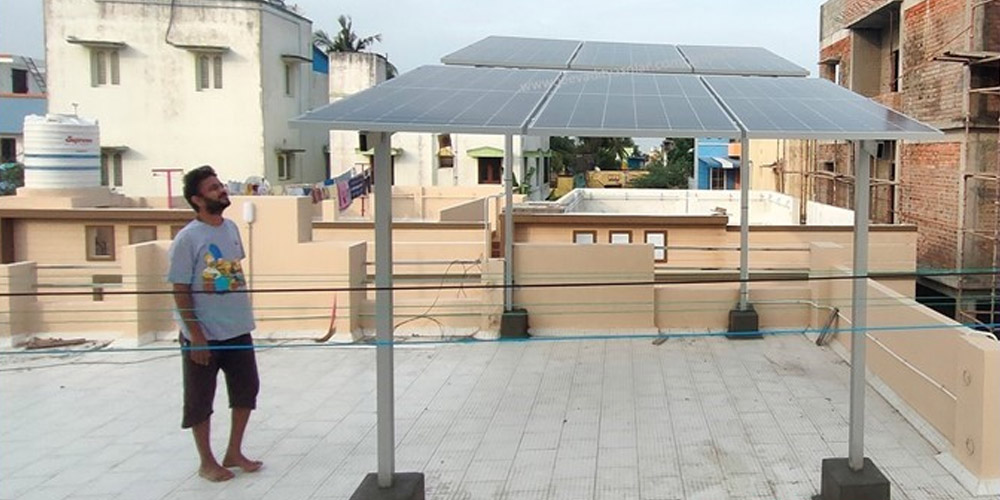
- Space Constraints: As a dense urban area, rooftop space can be limited. This necessitates careful planning to maximize generation within available area.
- Local Regulations: Navigating permits and ensuring compliance with local building codes and TANGEDCO guidelines requires an installer with solid local expertise.
- Trustworthy Installers: As with any booming industry, vetting installers is paramount. Ensure they are established, reliable, and provide excellent post-sales support.
Conclusion
Installing solar panels on your home in Chennai is a forward-thinking decision that offers significant financial, environmental, and practical benefits. By understanding the different system types, navigating costs and subsidies, and partnering with a reputable local installer, you can confidently embark on this journey, even from afar. Chennai’s sunny skies are waiting to power your home, offering a sustainable and cost-effective energy future. With the right strategy and informed choices, your investment in solar will yield dividends for decades to come.
Frequently Asked Questions
What is the average cost to install solar panels for a home in Chennai?
The average cost varies significantly based on system size. For a 1 kW system, expect to pay around ₹40,000 – ₹65,000 (approx. $480 – $780 USD), while a 3 kW system might cost ₹1,20,000 – ₹1,80,000 (approx. $1,440 – $2,170 USD). Larger systems naturally incur higher costs. These figures are estimates and subject to change based on specific components and installer.
Are there government subsidies available for solar panel installation in Chennai?
Yes, both the Central Government of India and the Tamil Nadu state government offer subsidies and incentives. Schemes like the ‘PM-Surya Ghar: Muft Bijli Yojana’ provide significant financial assistance, potentially covering up to ₹78,000 (approx. $940 USD) for systems 3 kW and above. It’s crucial to consult with your chosen installer for the latest subsidy information and eligibility criteria.
What are the main types of solar systems suitable for homes in Chennai?
The primary types are On-Grid (grid-tied), Off-Grid, and Hybrid systems. On-Grid systems connect to the main electricity grid and use net metering. Off-Grid systems are independent and rely on battery storage. Hybrid systems combine both, offering grid connection with battery backup, making them popular for dealing with power fluctuations.
How long does it take for solar panels to pay for themselves in Chennai?
With Chennai’s abundant sunshine and the current subsidy landscape, the typical payback period for a residential solar system ranges from 3 to 6 years. After this period, you essentially enjoy free electricity, leading to significant long-term savings.
Can I install solar panels on my Chennai home if I’m managing it from the USA?
Absolutely. Many reputable solar installers in Chennai are experienced in working with remote clients. They can assist with initial consultations, site surveys, system design, government approvals, subsidy applications, installation, and even post-installation monitoring and maintenance, provided you establish clear communication and trust with your chosen partner.
What are the benefits of net metering in Chennai?
Net metering allows you to send any excess electricity generated by your solar panels back to the grid. In return, you receive credits on your electricity bill, which offset the power you draw from the grid during times of low solar generation. This maximizes your savings and makes grid-tied systems highly cost-effective.
What specific challenges should I be aware of when considering solar in Chennai?
Key challenges include Chennai’s high ambient temperatures (which can slightly reduce panel efficiency), the need for consistent cleaning due to dust, navigating local grid stability issues, potential rooftop space constraints in urban areas, and ensuring you partner with a highly trustworthy and experienced installer who understands local regulations.


Post Comment