What Is Solar Energy In Simple Words
What Is Solar Energy, Really? (And Why Should You Care?)
Ever felt the warmth of the sun on your skin? Seen a sunbeam light up a room? That incredible power, beaming down from space, is the essence of solar energy. Put it this way: the sun is Earth’s giant, free, and incredibly powerful battery charger, and solar energy is how we plug into it.
Table of Contents
- What Is Solar Energy, Really? (And Why Should You Care?)
- The Sun’s Power, Demystified: What Exactly Is Solar Energy?
- How Does This Sun-Power Turn Into Your Power? (The Two Main Ways)
- 1. Photovoltaic (PV) Solar: Turning Light into Electricity (Think Solar Panels)
- 2. Solar Thermal: Capturing the Sun’s Heat (Think Solar Water Heaters)
- Beyond Your Roof: Where Else Is Solar Energy Making a Difference?
- Utility-Scale Solar Farms: Giant Power Plants
- Portable Solar: Power On The Go
- Passive Solar Design: Architecture That Uses the Sun
- Solar Transportation: Fueling the Future
- Why Solar Energy Is a Big Deal (The Benefits You Can’t Ignore)
- 1. Clean & Green: Good for the Planet
- 2. Renewable: It Never Runs Out (Well, for Billions of Years)
- 3. Cost Savings: Good for Your Wallet
- 4. Energy Independence & Security: Less Reliance on Volatile Markets
- 5. Increased Home Value: A Smart Investment
- Addressing Common Solar Myths & Misconceptions
- “Solar doesn’t work on cloudy days.”
- “Solar is too expensive.”
- “What about nighttime or power outages?”
- “Solar panels are bad for the environment to produce.”
- The Future is Bright: Solar’s Role in Our World
It’s not just about shiny panels on a roof; it’s about harnessing the most abundant energy source available to us. And understanding it in simple words isn’t just for science enthusiasts; it’s for anyone who pays an electricity bill, cares about clean air, or simply wants to peek into the future of how we power our lives.
The Sun’s Power, Demystified: What Exactly Is Solar Energy?
Let’s strip away the jargon. At its core, solar energy is simply the energy – both light and heat – that comes from the sun. Our sun is a massive nuclear reactor, constantly fusing hydrogen into helium, a process that releases an immense amount of energy in the form of electromagnetic radiation. A tiny fraction of this radiation reaches Earth, but that fraction is staggering – enough to power all human civilization many times over.
Think of it like this: every single second, the sun sends more energy to Earth than humanity uses in an entire year. Solar energy is our way of catching some of that incredible, ongoing light and heat and putting it to work for us.
Crucially, because the sun is constantly shining (and will continue to do so for billions of years), solar energy is considered a renewable energy source. Unlike fossil fuels, which are finite and take millions of years to form, the sun’s energy supply is practically endless on a human timescale. It’s the ultimate ‘use it or lose it’ power source, so why not use it?
How Does This Sun-Power Turn Into Your Power? (The Two Main Ways)
Now, how do we actually capture this sunlight and turn it into something useful? It’s not magic, it’s clever technology. There are two primary methods we use to transform the sun’s energy into power for our homes and industries:
1. Photovoltaic (PV) Solar: Turning Light into Electricity (Think Solar Panels)
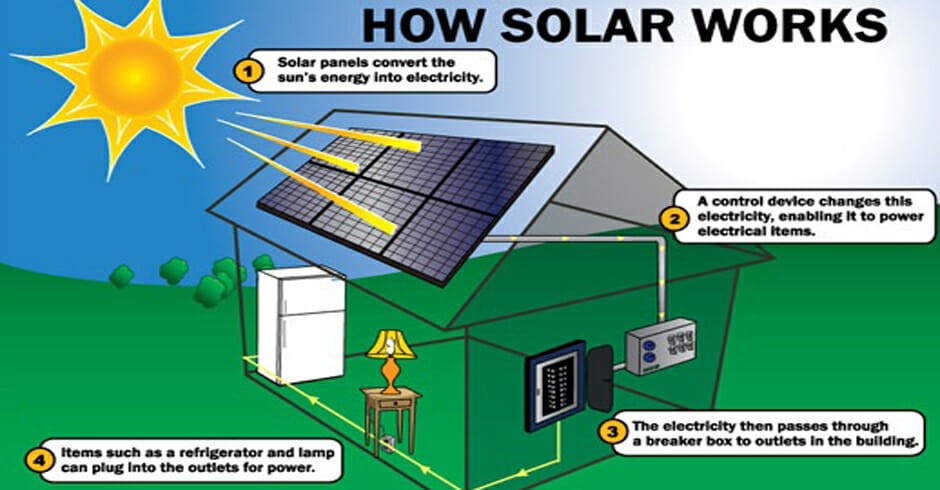
When most people think of solar energy, they picture those sleek, dark panels on rooftops. These are photovoltaic (PV) panels. The word “photovoltaic” literally means “light-electricity.”
Here’s the super simple breakdown:
- Sunshine Hits Panels: Each panel is made up of many smaller solar cells, typically crafted from semiconductor materials like silicon.
- Electrons Get Excited: When sunlight (specifically, tiny packets of energy called photons) hits these silicon cells, it knocks electrons loose from the atoms.
- Current is Created: These freed electrons start moving, creating an electric current. Think of it like a tiny, silent waterfall of electrons.
- Electricity for Your Home: This direct current (DC) electricity then flows into an inverter, which converts it into alternating current (AC) – the type of electricity your home appliances use.
So, in essence, PV solar panels are like tiny, sun-powered factories that directly convert sunlight into usable electricity. They’re what power homes, calculators, streetlights, and even satellites.

2. Solar Thermal: Capturing the Sun’s Heat (Think Solar Water Heaters)
The second major way we use solar energy is by directly harnessing its heat. This is known as solar thermal energy. Instead of making electricity, these systems focus on capturing and transferring the sun’s warmth.
Here’s how it works:
- Collectors Absorb Heat: Special panels, often dark-colored flat plates or tubes, are designed to absorb as much sunlight as possible.
- Fluid Gets Hot: A fluid (like water or an antifreeze solution) circulates through these collectors, getting heated up by the sun’s warmth.
- Heat is Used: This hot fluid then transfers its heat to another medium – for example, to the water in your home’s hot water tank.
So, solar thermal systems are essentially super-efficient, sun-powered water heaters or space heaters. They’re fantastic for providing hot water for showers, heating swimming pools, or even warming entire buildings.
Let’s put them side-by-side for a clearer picture:
| Feature | Photovoltaic (PV) Solar | Solar Thermal |
|---|---|---|
| What it does | Converts sunlight into electricity | Converts sunlight into heat |
| How it works | Photons knock electrons free in silicon cells | Dark surfaces absorb heat, transfer to fluid |
| Main output | Electricity (AC/DC) | Heat (hot water, heated air) |
| Common uses | Powering homes, businesses, electronics, electric vehicles | Heating water, space heating, industrial processes |
| Appearance | Flat, dark blue/black panels with visible cells | Often flat plate collectors or evacuated tubes, usually darker |
Beyond Your Roof: Where Else Is Solar Energy Making a Difference?
While solar panels on homes are the most visible application, solar energy’s reach extends far beyond individual rooftops. It’s powering a silent revolution across various sectors:
Utility-Scale Solar Farms: Giant Power Plants
Imagine fields stretching for miles, covered entirely in solar panels. These are solar farms, also known as utility-scale solar installations. They generate massive amounts of electricity, feeding directly into the main power grid to power entire cities and regions, just like traditional power plants but without the emissions.
Portable Solar: Power On The Go
From small panels that charge your phone on a camping trip to solar-powered backpacks and RVs, portable solar technology is freeing us from outlets. It’s perfect for remote areas, emergency preparedness, or just enjoying the great outdoors without losing touch.
Passive Solar Design: Architecture That Uses the Sun
Not all solar applications involve gadgets and wires. Passive solar design is about carefully designing buildings to maximize the sun’s light and heat naturally. This could mean placing windows to let in warming winter sun, or using overhangs to block harsh summer rays, significantly reducing heating and cooling costs without any active machinery.
Solar Transportation: Fueling the Future
While still emerging, solar is making inroads into transportation. We have solar-powered cars (even if they’re not mainstream yet), solar boats, and even experimental solar-powered aircraft that can fly for days. It’s a glimpse into a future where our movement is powered directly by the sun.
Why Solar Energy Is a Big Deal (The Benefits You Can’t Ignore)
Okay, so we know what solar energy is and how it works. But why should you care? The impact of solar energy is profound, touching everything from our wallets to the health of our planet.
1. Clean & Green: Good for the Planet
This is a big one. Unlike burning fossil fuels (coal, oil, gas), which release harmful greenhouse gases and pollutants into the atmosphere, solar energy production creates no air pollution, no carbon emissions, and no toxic waste during operation. It’s a vital tool in combating climate change and improving air quality, leading to healthier communities.
2. Renewable: It Never Runs Out (Well, for Billions of Years)
As mentioned, the sun is an inexhaustible energy source. We don’t have to dig it up, drill for it, or worry about geopolitical conflicts disrupting its supply. It’s there every day, freely available to anyone with the technology to capture it. This stands in stark contrast to finite fossil fuels, which are dwindling resources.
3. Cost Savings: Good for Your Wallet
For homeowners and businesses, installing solar panels can lead to significant financial benefits. Once the initial investment is made, you generate your own electricity, drastically reducing or even eliminating your monthly electricity bills. Many regions also offer incentives, tax credits, and the ability to sell excess electricity back to the grid (known as “net metering”), creating further savings or even income.
Consider the average residential electricity bill in the US, which can easily be over $100-$150 per month. Over 20-25 years (the typical lifespan of a solar system), those savings really add up.
4. Energy Independence & Security: Less Reliance on Volatile Markets
Generating your own power means you’re less exposed to fluctuating electricity prices driven by global fossil fuel markets. Solar energy provides a sense of energy security, allowing individuals, communities, and nations to be more self-sufficient in their power needs.
5. Increased Home Value: A Smart Investment
Studies consistently show that homes with solar panel installations sell faster and for more money than comparable homes without solar. It’s an upgrade that pays for itself and adds tangible value to your property, making it a smart long-term investment.
| Feature | Solar Energy | Fossil Fuels (e.g., Coal, Gas) |
|---|---|---|
| Source | Sunlight (infinite on human timescale) | Underground deposits (finite, millions of years to form) |
| Environmental Impact (during operation) | No greenhouse gas emissions, no air pollutants | Significant greenhouse gas emissions, air pollution (smog, acid rain) |
| Fuel Cost | Free (sunlight) | Subject to market volatility, extraction costs |
| Energy Security | Increased local control, reduced dependence | Reliance on global supply chains and political stability |
| Job Creation | Rapidly growing sector, creating local jobs in installation, manufacturing | Automation reducing jobs, sector in decline in some areas |
Addressing Common Solar Myths & Misconceptions
Despite its growing popularity, solar energy still faces some common misunderstandings. Let’s clear up a few of them:
“Solar doesn’t work on cloudy days.”
This is a partial truth. Solar panels certainly work best in direct, bright sunlight. However, they still produce electricity on cloudy or overcast days, just at a reduced efficiency. Think of it like a lightbulb – it’s brightest with a clear view, but still emits light when partially covered. Modern panels are quite effective even with diffuse light.
“Solar is too expensive.”
The upfront cost of installing solar panels used to be a major barrier, but this has dramatically changed. Solar energy costs have plummeted by over 70% in the last decade, making it more affordable than ever. When you factor in government incentives (like federal tax credits), state rebates, and the long-term savings on electricity bills, solar often becomes a wise financial investment with a solid return.
“What about nighttime or power outages?”
Good question! Most residential solar systems are connected to the main electricity grid (known as “grid-tied”). During the day, if you produce more electricity than you use, the excess goes back to the grid (and you often get credit for it). At night, or when your panels aren’t producing enough, you draw electricity from the grid as usual. For power outages, a standard grid-tied system will shut down for safety reasons (to protect utility workers). However, if you add a battery storage system, you can store your excess solar energy to use at night or during a power outage, providing true energy independence.

“Solar panels are bad for the environment to produce.”
Like any manufactured product, solar panels require energy and resources to produce. However, extensive lifecycle analyses consistently show that solar panels generate significantly more clean energy over their lifespan than the energy consumed to manufacture them. Plus, the industry is constantly improving manufacturing processes, increasing efficiency, and developing robust recycling programs to minimize environmental impact.
The Future is Bright: Solar’s Role in Our World
Solar energy isn’t just a trend; it’s a fundamental shift in how we power our world. It’s a technology that is constantly improving, becoming more efficient, more affordable, and more integrated into our daily lives.
From powering remote villages to supplying electricity for mega-cities, solar energy offers a path to a sustainable, independent, and cleaner future. It drives innovation, creates jobs, and empowers individuals to take control of their energy consumption.
Understanding solar energy in simple words means recognizing its profound potential. It’s not just a scientific concept; it’s a practical, powerful solution that’s already transforming our homes, our economy, and our planet.
Frequently Asked Questions
What is solar energy in the simplest terms?
Solar energy is simply the light and heat that comes from the sun, which we can capture and use to generate electricity or produce heat for various purposes.
How do solar panels turn sunlight into electricity?
Solar panels (photovoltaic, or PV, panels) contain special cells, typically made of silicon. When sunlight hits these cells, it excites electrons, causing them to move and create an electric current. This current is then converted into usable electricity for your home or devices.
Is solar energy truly renewable?
Yes, absolutely. The sun is an enormous, continuous source of energy that will shine for billions more years. Unlike fossil fuels that are finite and deplete, the sun’s energy is constantly replenished, making solar energy a truly renewable resource.
What are the main benefits of using solar energy?
The main benefits include reducing your electricity bills, lowering your carbon footprint (it’s a clean energy source), increasing your home’s value, and contributing to energy independence. It’s also an abundant and freely available resource.
Does solar energy still work on cloudy days or at night?
Solar panels still produce electricity on cloudy days, though at a reduced efficiency. At night, traditional grid-tied solar systems draw power from the main utility grid. However, if you have a battery storage system, you can store excess solar energy generated during the day to use after sunset.
What’s the difference between solar PV and solar thermal?
Solar PV (photovoltaic) converts sunlight directly into electricity (think solar panels on a roof). Solar thermal systems, on the other hand, capture the sun’s heat to warm water or air, commonly used for hot water heaters or space heating.


Post Comment